
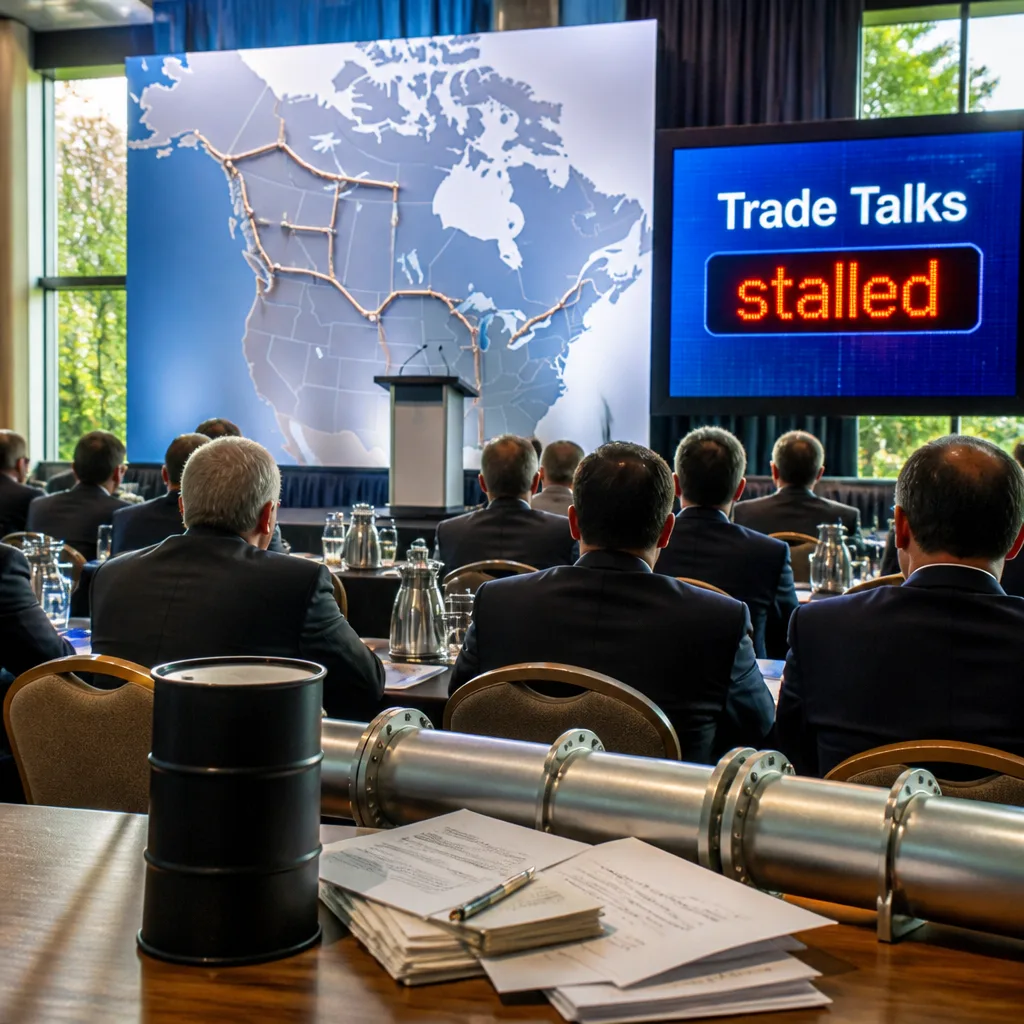
Alberta Premier Danielle Smith said on Monday that the province cannot realistically cut off its energy exports in response to a deterioration in Canada–U.S. trade talks, framing the issue as one of practicality amid rising political tensions between the two countries.
Premier flags limits to provincial leverage
Speaking in the wake of a breakdown in negotiations between Ottawa and Washington, the premier argued that pursuing an energy export shutdown would not be a workable strategy. Her comments came as trade relations between Canada and the United States showed signs of strain, with the potential for retaliatory measures being discussed at the federal level.
At the Western Premiers’ Conference on May 26, 2026, Ms. Smith reiterated the province’s economic reliance on energy markets and suggested that drastic measures such as severing exports would present serious challenges for Alberta producers and Canadian trade links more broadly.
“Cutting off Alberta energy exports 'not viable,'”
The premier also indicated that she has been in communication with stakeholders and other leaders as the situation evolves, stressing a cautious approach rather than immediate escalation.
Implications for markets and national policy
Alberta’s energy sector is a key driver of both the provincial and national economies. Any attempt to halt exports — even as a bargaining tool — would reverberate through supply chains, investment plans and employment across the energy sector.
- Economic disruption: Halting exports could undermine producers’ contracts and revenue streams, with ripple effects for service sectors and regional economies.
- Federal–provincial coordination: The situation underscores the need for Ottawa and provincial governments to align strategies when international trade disputes threaten Canadian industries.
- Market stability: Energy markets, which depend on predictable cross-border flows, could react sharply to any significant supply interruptions.
While the premier’s comments caution against unilateral provincial action, they also highlight the political pressure provinces may place on the federal government to defend regional economic interests during international disputes.
What leaders are weighing
Provincial leaders and industry representatives face a complex calculus: protecting local jobs and investment while avoiding actions that could intensify a trade conflict or contravene international agreements. The premier’s stance suggests a preference for mitigation and diplomacy over drastic measures that could have long-term costs.
| Issue | Potential consequence |
|---|---|
| Export shutdown | Contract disputes, lost revenue, market instability |
| Continued exports | Maintains market stability, requires federal negotiation |
Federal officials, industry groups and international partners will likely monitor further statements from provincial leaders as Ottawa navigates any retaliatory measures or tariff discussions. The premier’s message — that cutting off energy exports is not a viable lever — frames the debate around practical economic realities rather than purely political signalling.
As talks continue, Alberta’s posture will be watched closely by investors and other provinces. The balance between defending provincial interests and preserving national trade relationships will shape how policymakers respond to the unresolved elements of Canada–U.S. negotiations.
For now, Ms. Smith’s comments point toward measured responses and continued dialogue, underscoring the interconnected nature of energy flows and the limits of unilateral remedies in a closely integrated cross-border market.