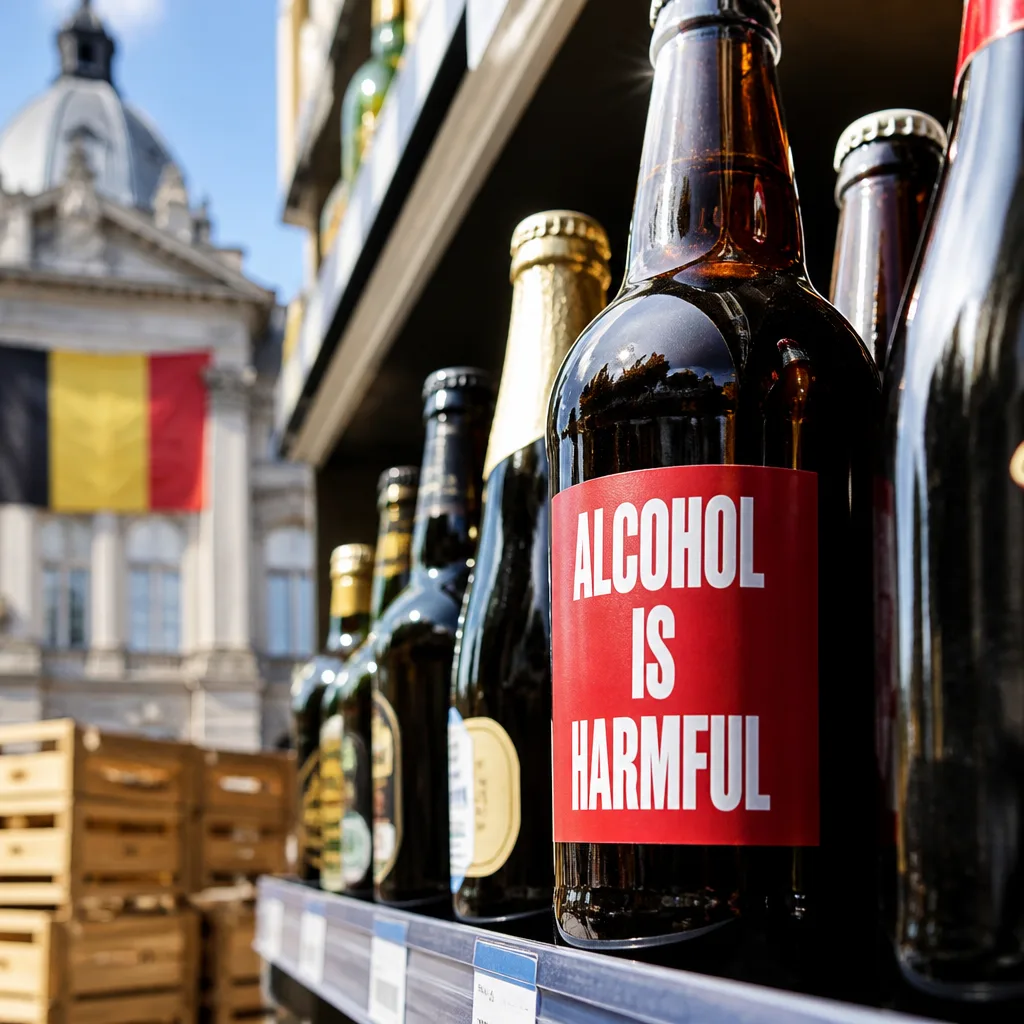
Belgian authorities have proposed replacing the current alcohol health message that targets "abuse" with a simpler, more absolute warning that drinks are harmful to health, touching off a public debate between health officials and the brewing industry.
Government seeks clearer, broader warning
Health Minister Frank Vandenbroucke has defended the plan, saying the change is intended to give young people and adults straightforward information about the risks of drinking. The minister framed the proposed wording as a way to improve protection for minors and to better inform the public about alcohol-related harms.
"Alcohol is harmful. Everyone is free to decide how much they drink, but as public authorities, we want to provide young people and adults with accurate information,"
The government first announced the measure in the spring and it remains under discussion in parliament. Officials say the amendment seeks to remove ambiguity in the current warning by making a direct statement about risk rather than focusing on problematic patterns alone.
Brewers push back, warn of stigma and economic impact
Belgium's brewing sector, including global giant AB InBev, has mounted a visible campaign against the change, arguing it will stigmatize an important national industry and fail to recognise responsible consumption. The industry has taken its case to newspapers and public audiences, running ads that depict everyday social moments with beer and questioning the rationale for a blanket warning.
Krishan Maudgal, head of the Belgian Brewers association, criticised the government approach as paternalistic and pointed to long-term declines in per-capita beer consumption as evidence that Belgians moderate their drinking.
- Industry position: The new wording does not distinguish between moderate and harmful drinking and could unfairly damage the sector.
- Health authorities' position: A clearer message on harm is necessary to inform consumers and protect young people.
Experts say warning may not go far enough
Not all public-health voices oppose the government. Belgium's independent Superior Health Council has reportedly advocated for stronger measures in the past, and some health experts say a simple, unequivocal statement may still fall short of the broader policy changes they recommend to reduce alcohol-related harm.
The debate highlights common tensions in alcohol policy: how to balance industry interests and cultural traditions with public-health objectives, and whether labelling alone can effect behavioural change.
| Stakeholder | Position |
|---|---|
| Health minister and supporters | Support a direct warning to better inform consumers and protect minors |
| Brewing industry | Opposes the change as paternalistic and harmful to the sector; stresses responsible drinking |
| Independent health advisers | Some argue for even stronger measures than the proposed wording |
Context and consequences
The controversy comes amid long-term shifts in drinking patterns: representatives for brewers point to a substantial decline in beer consumption over recent decades to argue that societal habits are changing without heavy-handed regulation. Whether a change in label wording will influence behaviour is uncertain; research on labelling suggests that clear, consistent messages can raise awareness, but changing consumption often requires wider policy tools such as pricing, availability controls and treatment resources.
For Canadian readers and policymakers, the Belgian dispute is instructive. It underscores how a single word in public-health messaging — in this case, the removal of "abuse" and adoption of the simpler phrase that alcohol is harmful — can provoke legal, political and commercial responses. It also reinforces that labelling debates rarely stand alone: they intersect with national identity, economic interests and broader prevention strategies.
The proposal remains under parliamentary consideration in Belgium. As the discussion continues, it will be important to watch whether compromise language emerges, whether industry marketing shifts, and whether independent public-health bodies press for broader regulatory changes alongside any labelling revisions.