Whitehorse, Yukon — A proposal to build a large coal-fired power plant southwest of Braeburn has put new pressure on public debate over the territory’s energy future, grid resilience and climate commitments.
What is being proposed
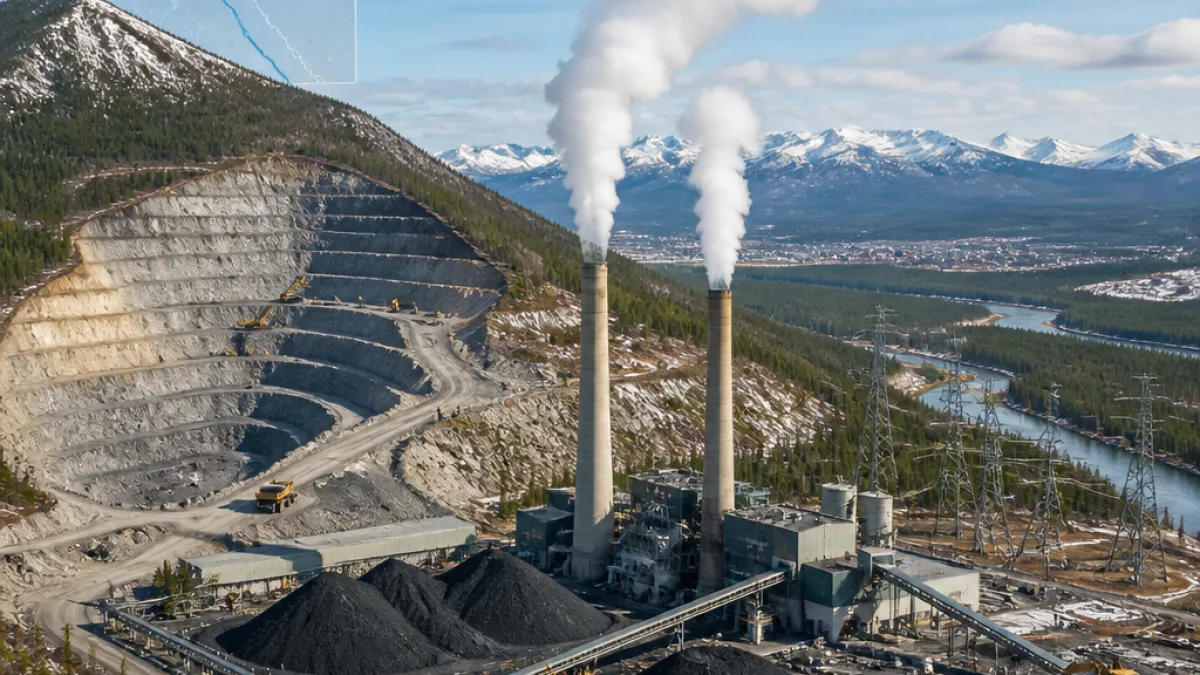
Vancouver-based Strategic Metals has outlined plans for a 100-megawatt coal-fired generating station fed by coal from the nearby Division Mountain deposit. The company says the deposit contains enough coal to supply the plant for more than a century, and that the project would burn about 500,000 tonnes of coal annually. The overall proposal also includes the development of a coal mine to feed the plant.
To date the company’s formal filings amount to a proposal to drill a small number of holes at the site; Strategic Metals has not advanced to detailed permitting or construction applications.
Why the pitch now
Company president Douglas Eaton framed the project as an answer to an energy shortfall in the territory. Yukon’s grid is still powered largely by hydroelectricity, and officials and utilities have warned for months that population growth and increasingly severe winters have put new strain on supply.
“Yukon’s painted themselves in a real hole,” Eaton said. “We're going into this with our eyes open. We understand that it starts with a lot of social environmental baggage, but believe me, if people are willing to set that aside ... and actually listen to what we're saying. I truly think it makes an awful lot of sense."
Eaton also asserted that other options might be less attractive to Yukoners:
“The other alternatives should be less palatable to Yukoners than coal.”
Context: grid strain and delayed alternatives
The proposal comes after a winter in which prolonged cold snaps pushed the Yukon grid close to its limits. At the same time, a previously announced large-scale battery project intended to bolster supply in Whitehorse has been delayed again, reducing a planned near-term buffer for variability in generation.
That combination — rising demand, fewer short-term options and delayed storage capacity — is the backdrop Strategic Metals points to as it promotes coal as a reliable baseload option.
Local and regional questions
A coal-fired plant and a new mine in the Yukon would revive long-simmering debates about northern development, local employment, Indigenous rights, environmental impacts and the territory’s commitments to reduce greenhouse gas emissions.
Key questions for residents and decision-makers include:
- How would emissions from a new coal plant align with territorial and national climate targets?
- What consultation would be required with First Nations whose territories overlap or neighbour the proposed site?
- What are the economic trade-offs compared with renewable alternatives and grid upgrades?
Data at a glance
| Item | Figure |
|---|---|
| Proposed plant capacity | 100 MW |
| Annual coal burn (company estimate) | 500,000 tonnes |
| Estimated supply life (company claim) | More than 100 years |
What comes next
Strategic Metals has only formally proposed drilling a couple of holes at Division Mountain so far. Any move toward construction would trigger environmental assessments, regulatory review and, likely, public consultations. Those processes would examine impacts on water, wildlife, local air quality and downstream communities.
For Yukoners, the project adds urgency to conversations about how to make the territory’s electricity system secure, affordable and consistent with climate responsibilities. Alternatives mentioned by utilities and experts elsewhere include expanded hydro capacity, diesel and natural gas backups, battery storage, and distributed renewable generation paired with demand management — each with its own costs, timelines and social implications.
As the idea advances from initial exploration to potential permitting stages, residents, First Nations and municipal governments will have opportunities to review details and raise concerns. The territory’s capital, Whitehorse, where grid reliability and future growth are most concentrated, is likely to be central to those discussions.
The Strategic Metals proposal is the latest reminder that the North’s energy choices carry outsize weight: decisions about one plant or storage project can shape economics, environment and community life across vast distances.
Kaylee Johns is WE NEWS’s Yukon correspondent. She reports on resource development, Indigenous affairs and northern infrastructure from Whitehorse.