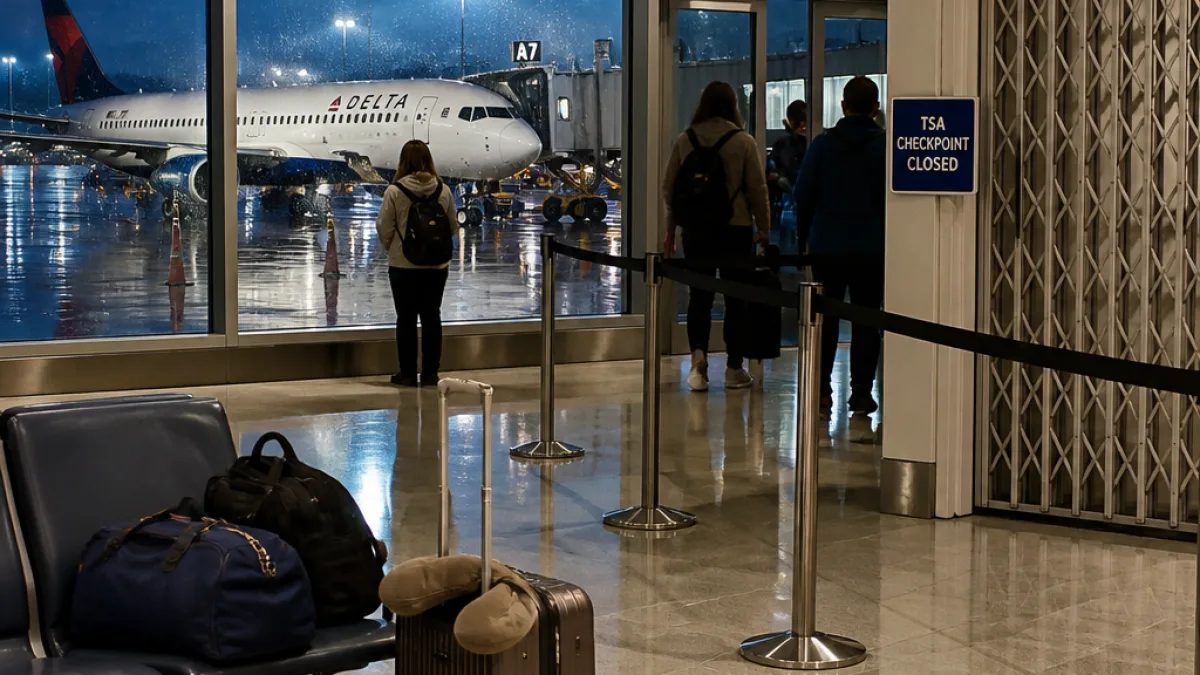
Passengers on Delta Air Lines flight DL749 from Los Angeles to Tampa were left stranded and separated from their checked baggage after the aircraft diverted to Fort Myers, Fla., when thunderstorms blocked Tampa arrivals, according to reports. The flight later continued to Tampa without several travellers who had exited the secure area to retrieve luggage and were prevented from re-entering because the Transportation Security Administration had closed operations for the night.
What happened aboard DL749
Flight DL749, operating between LAX and TPA, was routed to Southwest Florida International Airport (RSW) after storms prevented the aircraft from landing in Tampa. Airport staff instructed passengers to recover checked bags from the aircraft; many passengers left the secure zone to do so. When weather conditions improved, Delta prepared to resume the flight to Tampa, but passengers who had exited the secure area were unable to return because TSA had shut down for the night. Some of those passengers also discovered their checked baggage had continued on the resumed flight.
"Those outside could not return — TSA had shut down for the night."
The airline had not provided a public comment at the time of reporting. The incident underlines the complications that can arise when passengers follow airport or airline staff directions during an unplanned diversion.
Why this matters to travellers from Delta and the Lower Mainland
Even though the diversion occurred in Florida, the operational circumstances have broad implications for travellers who transit through busy U.S. hubs or fly cross-border from B.C. The episode highlights three practical risks:
- Loss of access to reboard if passengers exit the secure area during a diversion and security checkpoints close;
- Separated checked baggage when an aircraft departs without all original passengers;
- Unexpected overnight costs and logistics if carriers resume a flight and passengers are left at an intermediary airport with no hotel or transportation arranged.
Weather remains the leading reason flights divert, and while airlines typically contend that weather disruptions exempt them from some forms of compensation, the direction given to passengers — for example, to leave secure areas — could raise questions about where responsibility lies when that guidance results in being unable to reboard.
Timeline (reported)
| Event | Reported detail |
|---|---|
| Origin | LAX (Los Angeles International Airport) |
| Scheduled destination | TPA (Tampa International Airport) |
| Diversion | RSW (Fort Myers / Southwest Florida International) |
| Key issue | Passengers left secure area to retrieve luggage; TSA closed; flight departed to TPA without them |
Practical advice for Delta residents who travel
For those in Delta and the broader Lower Mainland who travel regularly, the episode is a reminder to plan for unexpected diversion scenarios:
- Consider keeping essential items and documents in carry-on baggage rather than checked bags to avoid being stranded without necessities if your checked luggage continues on without you.
- Before leaving a secure area, confirm with airline and airport staff what the plan is and whether security checkpoints will remain open if you step out.
- Document instructions you are given (names, times, what you were told) — that information may be useful if you pursue compensation or reimbursement later.
These precautions are particularly pertinent for cross-border travellers who may rely on short connections or carry non-replaceable items on longer itineraries.
Legal and consumer advocates note that while weather disruptions often absolve airlines of certain obligations, operational decisions and directions given to passengers could change the liability assessment. Passengers affected in this Florida diversion reported being left roughly 110 miles from their destination with no immediate hotel or transport arranged — a situation that can carry both financial and emotional costs.
Delta Air Lines had not issued an official comment when the reports were filed. For now, the episode stands as a cautionary tale: following staff instructions during diversions may be necessary in the moment, but travellers should also be aware of the consequences of leaving secure areas after a diversion, especially late at night when security screening may not resume for several hours.
West Coast travellers planning flights this storm season would be wise to build in extra time and to carry essentials in their carry-on should a diversion occur.