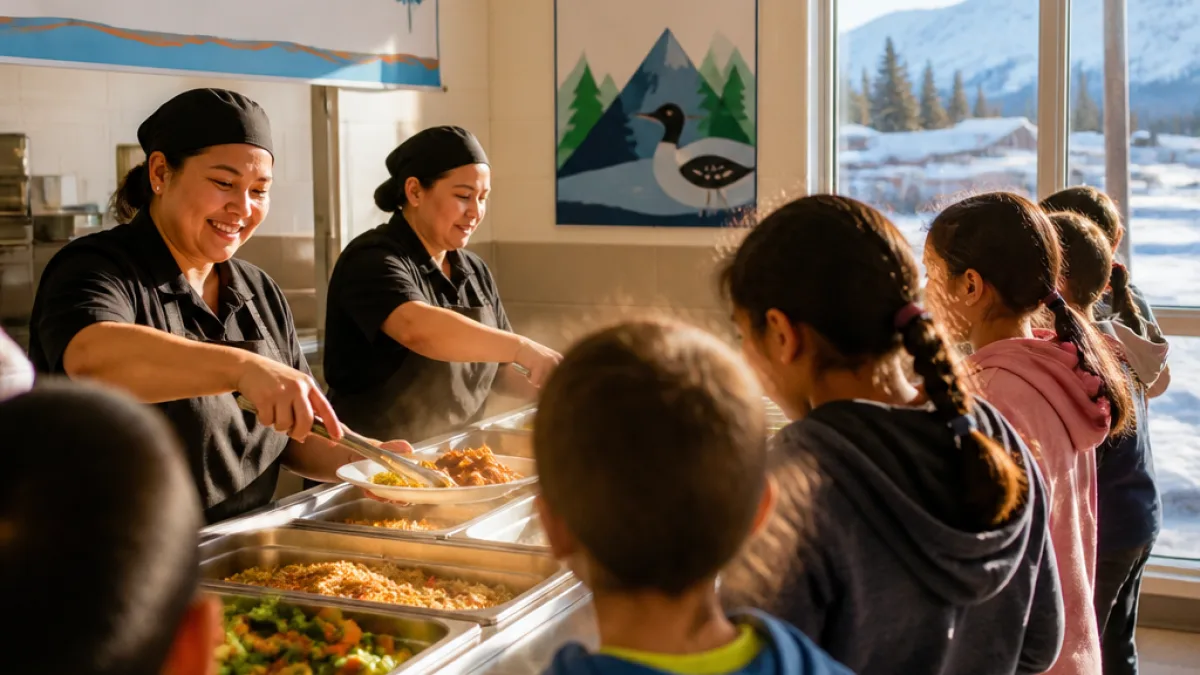
The Yukon government’s universal hot-lunch pilot is now operating in full for the new school year, providing warm, nutritious meals to students at seven schools as part of a program funded at roughly $5.3 million and supported by the federal National School Food Program.
Pilot expands after slow start
The initiative originally launched in late April but ran for only a few weeks before the previous school year ended. Officials have said administrative work and heavy snow contributed to the delayed and abbreviated opening.
The pilot is being delivered in partnership with the Yukon First Nation Education Directorate (YFNED), which oversees First Nation initiatives connected to the project. Courtney Wheelton, director of First Nation Initiatives at YFNED, said staff are now prepared to run the program through the school year.
“It definitely was a slow start…But it gave us a good little window to try some things out and to get ready for this school year,”
Wheelton said feedback from students and communities has been positive. “We hear from our team that kids will come by every day and say, ‘What’s for lunch?’ and they get excited. There is a little bit of anticipation for lunchtime,” she told CBC.
How the pilot is structured
The territory confirmed the pilot will run until March 2027 and covers lunches for all students at the seven participating schools. The territorial government has said it is tracking the success of the program.
| Aspect | Detail |
|---|---|
| Cost | $5.3 million (approx.) |
| Scope | Universal lunches for students at seven schools |
| Duration | Pilot runs until March 2027 |
Local response and expected benefits
YFNED and school staff have reported enthusiasm among pupils, who have shown interest in daily menus and look forward to mealtimes. Wheelton said this early feedback is informing adjustments and will be considered when the pilot concludes.
- Students expressing excitement and anticipation for lunch
- YFNED using early weeks to trial operations and menus
- Territorial government monitoring program outcomes over the pilot period
The program’s combination of territorial funding and federal support aims to test whether universal, school-provided meals can be delivered sustainably in Yukon communities. Officials will be watching participation, logistics and community response as measures of success.
Operational challenges and next steps
Program delivery in Yukon faces unique logistics, including extreme weather and the administrative complexity of launching new systems across multiple communities. Organizers said the abbreviated initial launch provided an opportunity to identify practical issues and adjust operations ahead of a full school-year rollout.
As the pilot progresses, YFNED and the territorial government will gather feedback from students, families and school staff to refine menus and service models. Results collected through to March 2027 will inform any future decisions about extending or expanding school food programs in the territory.
For families and school communities seeking more information about the pilot’s operations at specific schools, contacts at local school administrations and YFNED will be the primary points of information as the program settles into the year.
This report is based on information provided by the Yukon government, the Yukon First Nation Education Directorate and reporting by CBC News.