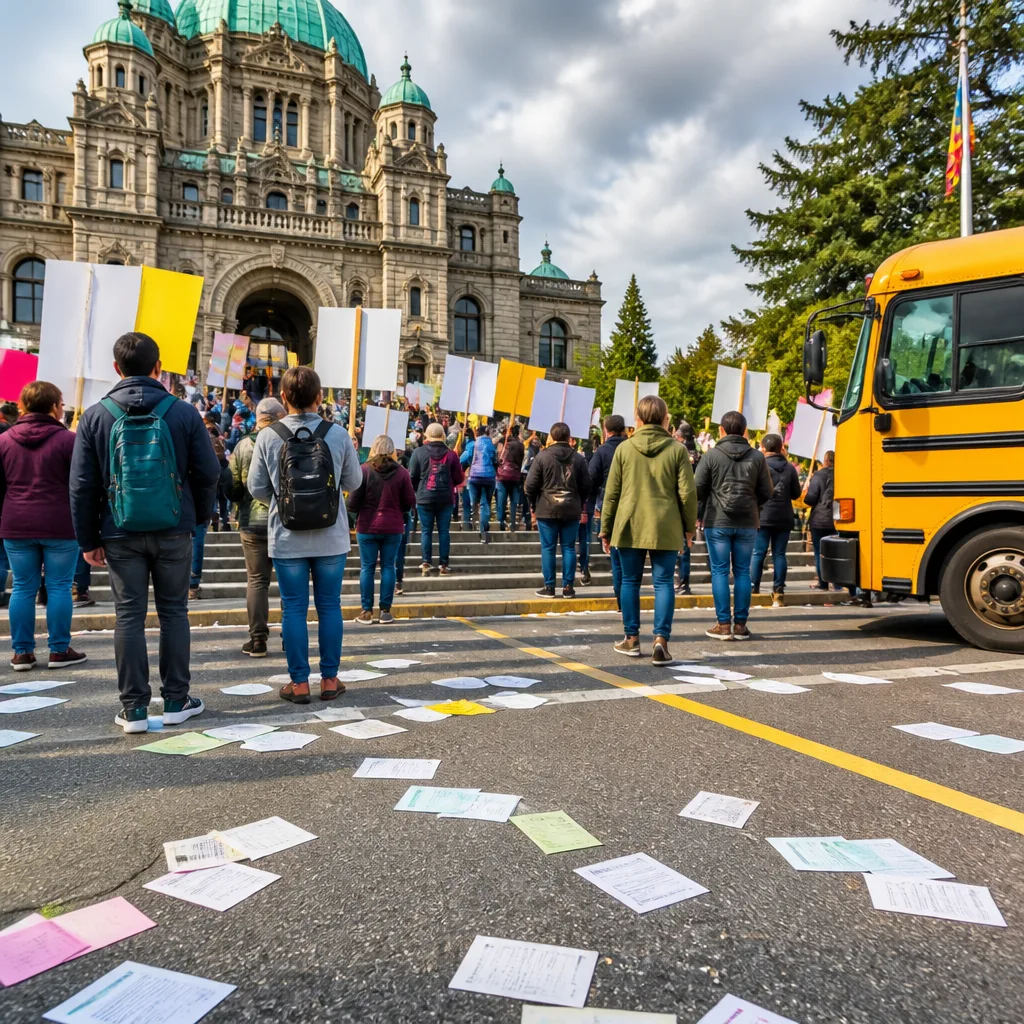
Teachers, parents and community supporters gathered in dozens of Ontario municipalities on Saturday to protest changes to the province’s education system as collective agreements for educators were set to expire on Monday.
Public pushback over governance and funding
Demonstrators organised rallies outside school boards and provincial offices to voice frustration with recent provincial actions affecting the English public-school system, including the imposition of supervisory measures on several school boards and legislation intended to alter board governance and oversight.
At one of the larger gatherings outside Queen’s Park, a representative of the Ontario English Catholic Teachers’ Association framed the protests as a defence of public education priorities and classroom resources. Participants said decisions made by the province had intensified worries about classroom conditions, supports for students and local control of boards.
“We’re out here to make sure that everybody knows how important it is that education is a priority in this province,” said Lisa Lacaria, first vice-president for the Ontario English Catholic Teachers Association.
Concerns voiced by parents and educators
Those who attended the rallies highlighted several intersecting concerns. Among the issues most frequently raised were:
- Underfunding in classrooms and insufficient resources to meet student needs;
- Changes to governance that reduce the number of elected trustees and increase provincial oversight;
- Contract negotiations between the province and education workers that had not been resolved as the school year approached.
Speakers and signs at the events highlighted a fear that recent provincial policy steps could weaken local decision-making and leave classrooms without necessary supports.
Local impacts already appearing
Some boards have signalled cuts or restructuring tied to enrolment and budget pressures. For example, the Toronto District School Board has indicated it expects to eliminate 289 teaching positions as part of adjustments related to declining student numbers, a development that adds urgency to the conversations about staffing and services available to students.
| Issue | Detail |
|---|---|
| Collective agreements | Set to expire Monday |
| Toronto District School Board cuts | 289 teaching positions expected to be cut |
Organisers said the rallies were timed to send a clear message to provincial decision-makers ahead of the new school year. They urged negotiations to address classroom needs and expressed concern about how sweeping changes to governance and oversight could affect student services.
Community members also stressed the ripple effects any disruptions to staffing or funding can have on families, particularly those needing additional student supports or special programming. The protests united a range of stakeholders — from teachers’ associations to parents’ groups — in calling for more stable, well-resourced classrooms.
What’s next
With collective agreements expiring and school doors set to open imminently, attention will turn to whether the province and education unions can reach agreements that avert further labour action and address the concerns raised at Saturday’s rallies. In the meantime, education workers, parents and trustees will continue to watch for announcements about staffing, funding and governance changes that will shape the coming school year.
The demonstrations underscored a broader debate about how best to prioritise and govern public education — and the degree to which communities will accept changes that they fear may reduce resources and local accountability.