Nova Scotia has unveiled a pilot training programme intended to bolster leadership across the province’s fire services, announcing a new partnership with Dalhousie University to create the Nova Scotia Fire Service Leadership Certificate.
Practical, province-focused training
The certificate is being offered as a series of six customised online courses that can be completed over about 18 months, with an estimated study commitment of three hours per week. Officials say the curriculum is built around the realities modern firefighters face and is aimed at both current officers and those preparing to move into leadership roles.
Applications open on Dalhousie’s website in September for the first two pilot cohorts, which are expected to start in January and April 2027. The courses are fully transferable and may count toward Dalhousie’s existing fire leadership programming.
What the program covers
The province and university outlined six core areas of study. They are designed to give front-line leaders skills in both operational and administrative functions of fire services.
- Station operations
- Fire prevention and suppression
- Municipal administration
- Finance
- Human resources
- Organizational leadership
| Feature | Detail |
|---|---|
| Program length | 18 months (part-time) |
| Delivery | Online with virtual sessions |
| Pilot cohorts | Jan. and Apr. 2027 |
| Provincial investment | $209,000+ |
Province stresses investment in people
Minister of Emergency Management Kim Masland framed the initiative as an investment in the people who lead local fire departments.
“Our firefighters step up when their communities need them most. They deserve the training, tools and support they need to lead with confidence,” the minister said in a release.
The minister said the partnership with Dalhousie aims to strengthen fire services across communities and support leaders so they can better manage the complex demands of modern emergency response, from personnel matters to municipal coordination.
Format designed to build connections across the province
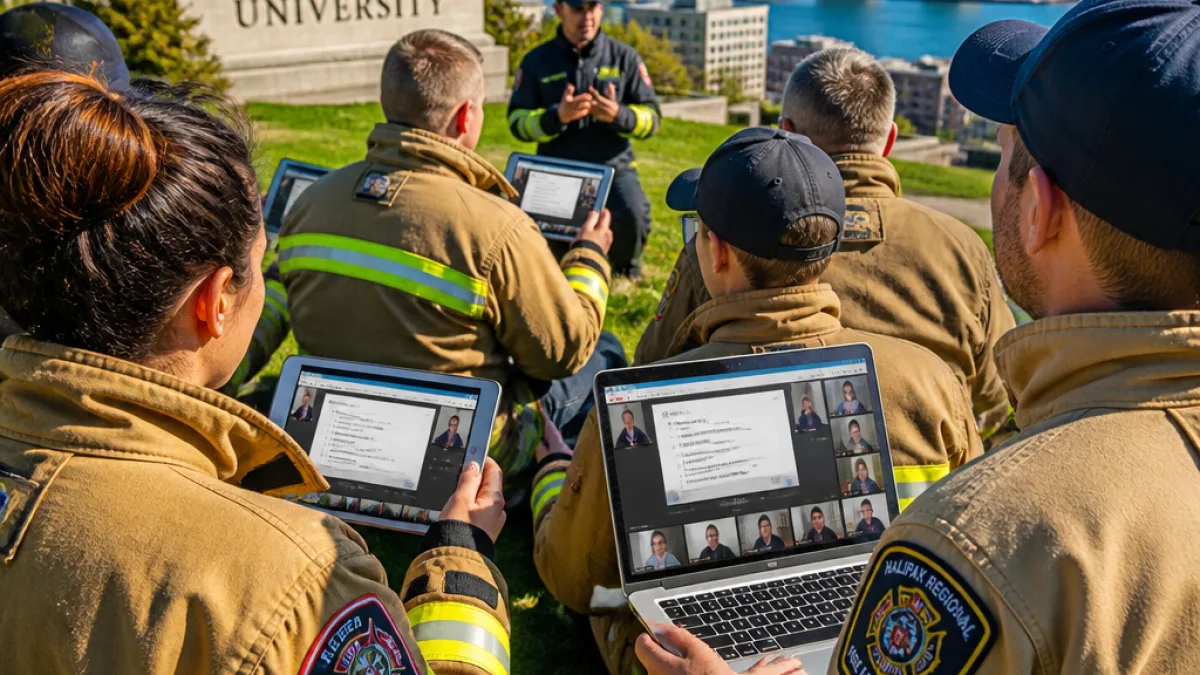
Program organisers say the virtual sessions will rely on case studies and examples drawn from Nova Scotia, allowing participants from different regions to learn from each other and form a network of fire service leaders. That is significant in a province where rural and regional departments often operate with small staffs and rely on mutual aid arrangements.
By making the courses transferrable into Dalhousie’s broader leadership stream, the certificate offers a pathway for continued professional development for fire officers seeking formal credentials.
Funding and accessibility
The provincial contribution of more than $209,000 supports course development and the initial pilot launch. Details on participant fees — if any — were not released in the announcement; prospective applicants should consult Dalhousie’s registration pages when applications open in September.
What this means for communities
Fire departments across Nova Scotia face evolving expectations: emergency medical assistance, wildfire risk management, industrial incidents and the administrative demands of overseeing volunteers and career crews. Investing in leadership training seeks to equip officers with the tools to manage those diverse responsibilities while improving coordination with municipal governments and other emergency services.
For smaller, rural departments, province-specific content and online delivery could lower barriers to accessing professional development. The networking element may also improve mutual-aid planning and shared learning between larger urban departments and volunteer brigades.
Applications for the pilot cohorts open in September on Dalhousie University’s website. Firefighters and department administrators interested in the programme should check Dalhousie’s continuing education or fire service pages for admission criteria, course schedules and any tuition details.
As Nova Scotia prepares to pilot the certificate early next year, officials say the intent is to scale and refine the offering based on feedback from the first cohorts, with an eye to strengthening leadership across the province’s patchwork of fire services.