ABP Education, the learning arm of India’s ABP Group, has acquired an early‑stage equity position in Noida‑based start‑up YoLearn Private Limited, the company behind the voice‑first tutoring platform YoLearn.ai.
The partnership pairs a century‑old publisher’s content, marketing and distribution apparatus with a fledgling artificial intelligence product that lets students ask textbook‑linked questions aloud and receive spoken answers augmented by sketches and practice materials. The collaboration signals a broader shift: a large publishing house taking ownership — rather than only offering distribution — of an AI tutoring company.
What the product does
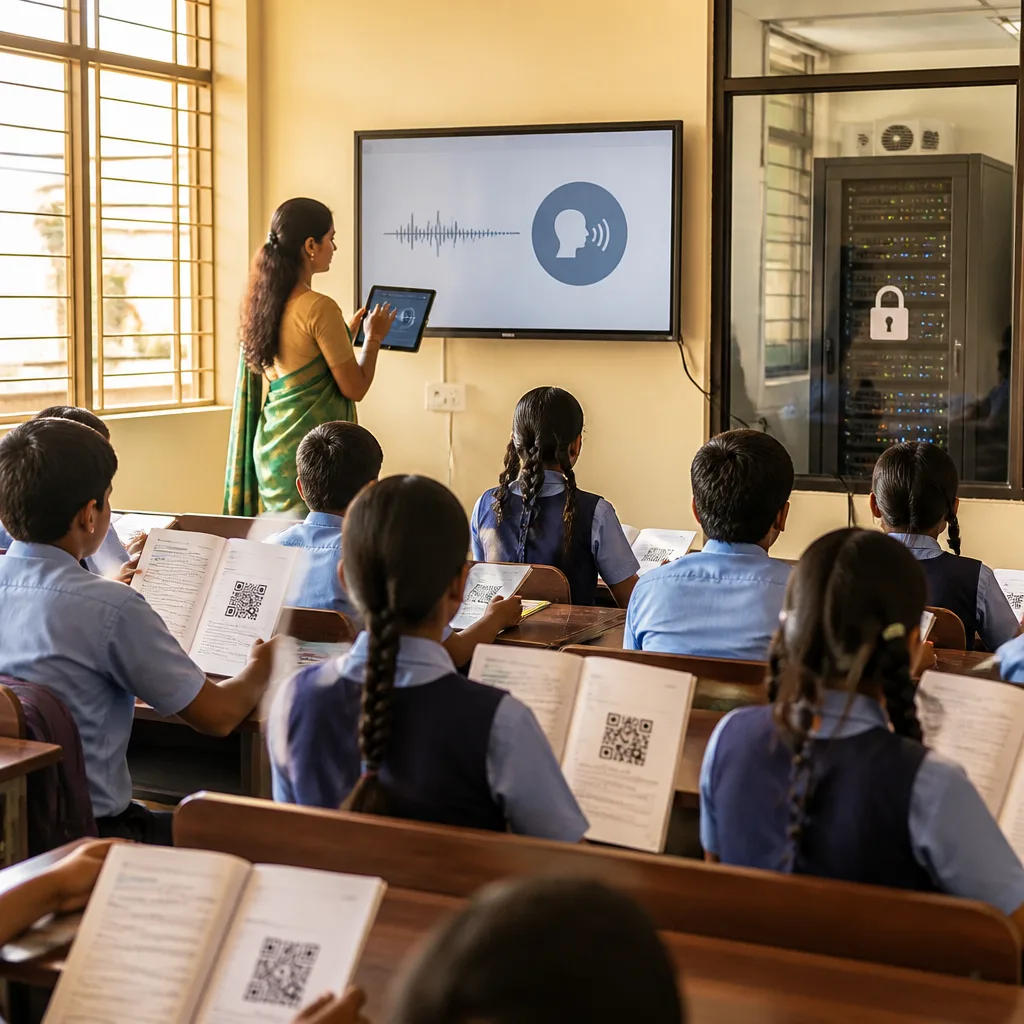
Founded in January 2025 and led by IIT BHU alumnus Kirti Prakash Mishra, YoLearn.ai converts existing textbooks into interactive, voice‑enabled tutors. Students scan a code found in their books and can pose questions in any of 22 Indian languages. The system responds by voice, draws diagrams and worked solutions on an interactive sketchpad, generates practice tests aligned with board marking patterns, and furnishes progress updates to parents for CBSE, ICSE and state boards.
"What's the deal?"
Scope, aims and rollout
Under commercial agreements with ABP Group companies Headword Publishing and KIPS Learning, YoLearn.ai will convert those firms’ school books into content‑aligned tutors branded as Headword.ai and kipslearning.ai. The alliance already covers roughly 25,000 schools and an estimated nearly 100 million reachable learners, with longer‑term ambitions framed in the partnership documents.
According to the partners’ stated goals, the initiative aims to:
- empower 150 million students with AI‑enabled learning;
- train over 150,000 teachers in AI‑enabled classroom instruction;
- eventually scale personalised AI learning for all 250 million K‑12 students in India.
The platforms are scheduled to roll out with the 2026–27 academic session on web, Android and iOS.
Privacy and safety
ABP and YoLearn emphasise that the products are built to be privacy‑first and child‑safe. Student data will be hosted in India; voice audio is processed in real time and is not stored; and verified parental consent will be required before account activation in compliance with India’s DPDP Act, 2023.
Why this matters
The deal is notable for several reasons. For a large publisher, taking an equity stake in an AI tutoring company represents a more strategic, long‑term bet than a standard distribution agreement. For the start‑up, aligning every textbook with a linked AI tutor converts a labour‑intensive school‑by‑school sales approach into a catalogue‑led model where each book becomes an on‑ramp to the platform.
Observers of digital learning will watch how the partnership balances scale with quality and safety. Tying tutoring directly to the materials students already use could increase uptake quickly, but it also raises questions about how curriculum alignment, assessment standards and teacher professional learning will be governed as AI tools enter classrooms at scale.
| Metric | Figure |
|---|---|
| Target students empowered | 150 million |
| Teachers to be trained | 150,000 |
| All K–12 students in India (ambition) | 250 million |
| Schools in alliance reach | 25,000 |
| Languages supported | 22 |
For Canadian readers following global education technology trends, the arrangement is an early example of traditional education publishers reshaping their businesses around AI and digital services — taking ownership positions rather than remaining content suppliers. The emphasis on in‑country data hosting and non‑retention of voice recordings shows how regulatory frameworks and privacy concerns are shaping product design in education technology.
As textbook companies and school systems worldwide consider similar partnerships, questions will persist about accountability, curriculum control, and whether teacher training keeps pace with the speed of technological adoption. For students and families, the promise is more personalised help tied to the materials they already use; the test will be how those tools perform in classrooms and whether protections for learners remain robust as systems scale.