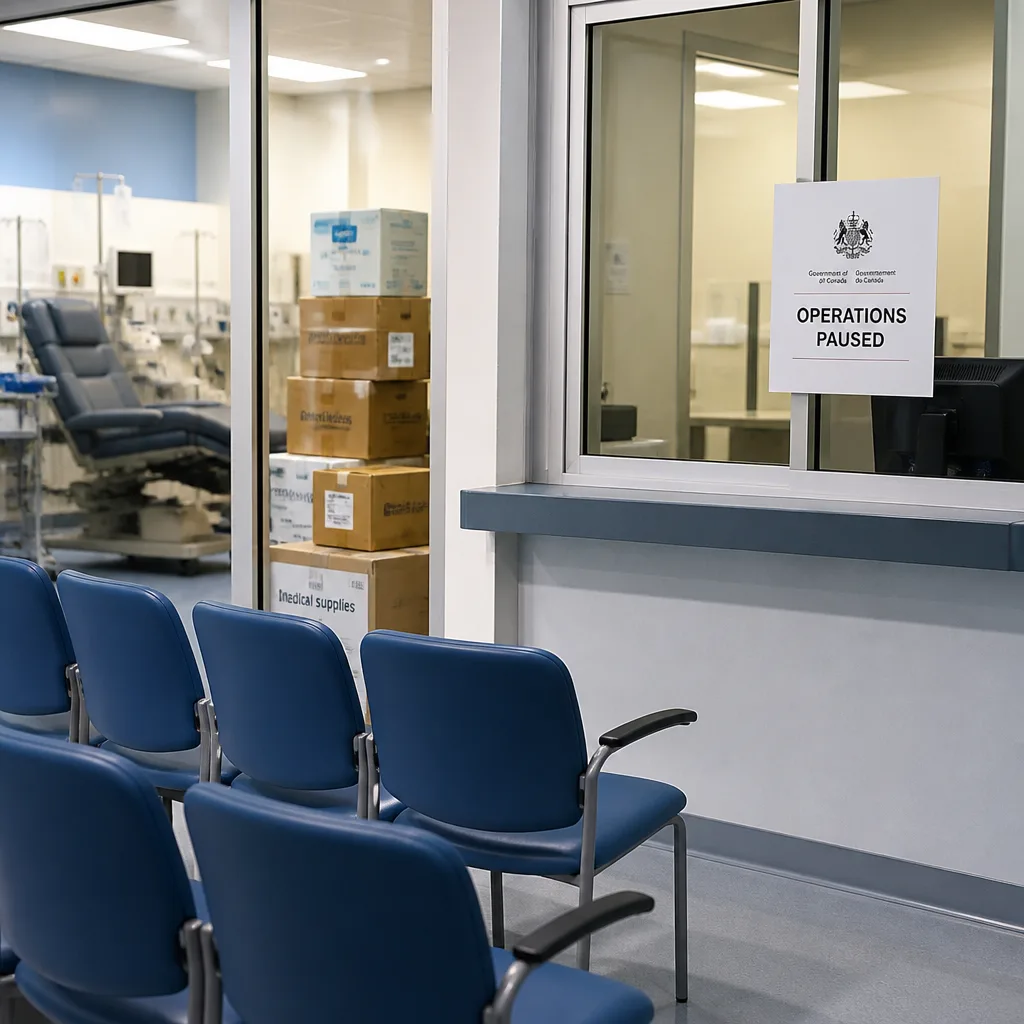
A private plasma collection company has voluntarily suspended donation operations at all of its Canadian centres after federal inspectors identified a series of compliance concerns.
Nationwide pause follows Health Canada findings
Grifols, which operates for‑profit plasma clinics across the country, told media it has paused collection at all Canadian sites while it addresses attention from regulators and the public. The announcement came the same day that Health Canada published the results of an inspection that assigned a notice of non‑compliance to one Grifols location in Winnipeg.
The Health Canada summary reported problems related to the validation, calibration, cleaning or maintenance of critical equipment and shortcomings in records of staff qualifications, training or competency evaluation. The department said an inspection remains ongoing at a Grifols clinic in Etobicoke, Ontario.
"The temporary closure will have no impact on the safety and security of Canada’s blood supply and the federal agency will ‘continue to work collaboratively with Grifols to ensure these concerns are addressed,'" a Health Canada spokesperson said.
Regulatory history and provincial reach
Health Canada has issued a total of six notices of non‑compliance for Grifols clinics since 2022 across multiple provinces. The agency listed clinics in New Brunswick, Saskatchewan, Alberta, Ontario and Manitoba among those previously flagged.
| Metric | Details |
|---|---|
| Notices of non‑compliance since 2022 | 6 |
| Affected provinces (reported) | New Brunswick, Saskatchewan, Alberta, Ontario, Manitoba |
Grifols said in a statement that donor safety and the safety of plasma collection has never been compromised. The company characterised the decision to stop collections as voluntary and said it has informed Health Canada.
Deaths, autopsy and calls for policy change
Advocates and some family members have pressed for an end to paid plasma donation after the deaths of two people who had donated at the Winnipeg clinic. A representative for one family said an autopsy found the donor had an enlarged heart and that the stress of donation contributed to the death. Health Canada, however, stated it found no links between the two deaths and the donation process in its assessment.
The deaths prompted heightened scrutiny from public advocates and policymakers concerned about the safety of compensated donation models. The company and the federal regulator are now both under pressure to demonstrate how risks are being mitigated and to restore public confidence.
- Grifols reported a voluntary cessation of collections nationwide and has informed Health Canada;
- Health Canada issued a notice of non‑compliance for a Winnipeg site and has reported six such notices for Grifols locations since 2022;
- Investigations are ongoing, including an inspection at an Etobicoke clinic; Health Canada says the national blood supply is not at risk.
The federal regulator emphasised that the temporary halt should not imperil the national blood supply, while also signalling it will work with the company to resolve identified deficiencies. For now, donors, patients and health authorities will be watching closely as Grifols and Health Canada follow through on corrective measures and further inspections.
The broader debate over paid plasma donation — weighing the benefits of a larger plasma pool against concerns about donor welfare and quality control — remains unresolved at the national level. The current situation underscores the challenges of regulating a sector that operates across provincial lines and within a mixed public‑private framework.
As investigations continue, officials will need to provide clear timelines and evidence of remediation to reassure both donors and recipients that procedures meet safety standards and that the integrity of plasma collection is maintained across the country.