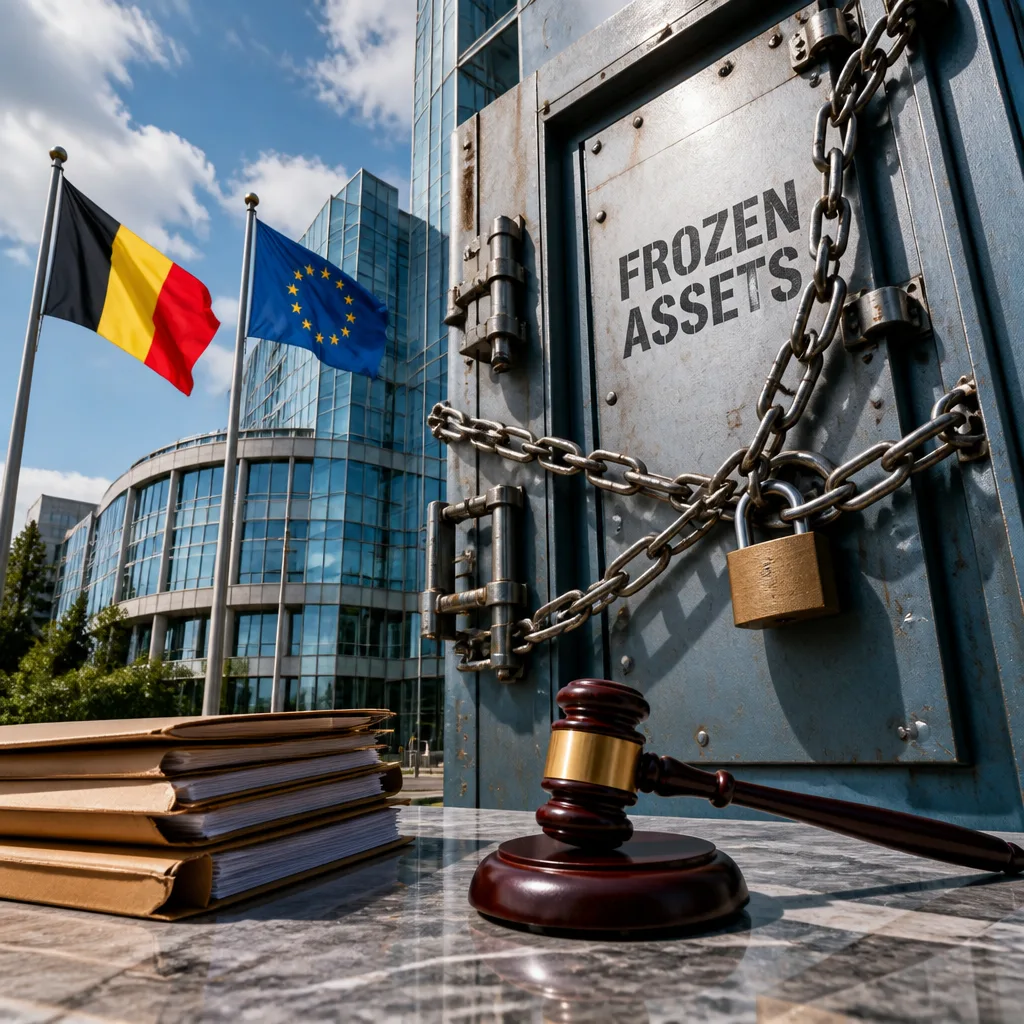
Belgium has made a firm public refusal to join EU proposals to use immobilised Russian assets to bankroll support for Ukraine, a move that could derail efforts by several member states to revive a plan that proponents estimate could mobilise roughly €200 billion.
Belgian government says door closed
Defence Minister Theo Francken said on Flemish television that Belgium will not countenance repurposing frozen Russian funds. He described the stance as “non-negotiable” and warned that prime ministerial resistance would hold. The most substantial portion of the assets in question is held at Euroclear, a securities depository based in Belgium.
“This is non-negotiable, the door is closed,” the defence minister told VRT.
The declaration follows renewed pressure from Sweden, Poland, the Netherlands and Spain, which have urged the European Commission to examine legal and policy options for channeling immobilised Russian assets to Ukraine. Those proposals have resurfaced amid growing concern in Kyiv over a looming winter and a funding shortfall; Ukrainian President Volodymyr Zelenskyy this week said his government faces a €23.5 billion gap.
Political fractures within Belgium and the EU
Belgium’s opposition to the scheme has deep domestic roots. At a dramatic European summit last December, Belgian leader Bart De Wever blocked a German and European Commission-led effort to establish a €210 billion reparations-style loan for Ukraine, citing fears Belgium could face legal retaliation from Russia.
The public divergence among Belgian ministers is notable. Foreign Minister Maxime Prévot has been reported to speak more tentatively, suggesting Belgium might be open to mechanisms that share legal responsibility across EU countries. But Francken’s unequivocal comments reflect a hardline position within the government.
Supporters press for renewed action
Sweden, Poland, the Netherlands and Spain have acknowledged the legal hurdles involved and asked the European Commission to explore ways forward that would not saddle any single country with a disproportionate burden. The issue is expected to be on the agenda when European foreign ministers meet in Ireland next week.
- Supporters pressing the Commission: Sweden, Poland, the Netherlands, Spain
- Key Belgian opponents: Defence Minister Theo Francken; political leader Bart De Wever previously blocked a plan
- Assets concentrated at: Euroclear, Belgium
Francken also criticised persistent pressure from the Baltic states, singling out Lithuania, Latvia and Estonia for repeatedly raising the idea. He warned they should be cautious about repeatedly bringing the matter forward and pressing Belgium into a corner, while noting Belgium provides significant support to the Baltic countries.
| Issue | Details |
|---|---|
| Estimated immobilised Russian assets | ~€200 billion (majority held at Euroclear) |
| Previous proposal | €210 billion reparations-style loan blocked last December |
| Ukraine shortfall cited | €23.5 billion funding gap mentioned by Zelenskyy |
The debate cuts to core questions about legal risk, solidarity and the distribution of responsibility within the EU. Using frozen assets held in EU jurisdictions would likely trigger complex litigation and diplomatic fallout, concerns Belgium has repeatedly emphasised. Proponents argue innovative solutions are needed to sustain Ukraine’s defence and reconstruction; opponents warn of unintended consequences and legal exposure.
With foreign ministers set to discuss the matter imminently, the clash between a group of willing member states and a key host of the assets could shape whether the Commission pursues fresh legal avenues or retreats in the face of intra-EU resistance.
The coming weeks will test whether member states can bridge divergent legal assessments and political calculations to present a united approach — or whether the issue will remain a source of division as Ukraine braces for a difficult winter.