As leaves begin to turn, the City of Saskatoon is rolling out a fall package of transit changes aimed at improving punctuality, restoring school-year service and adding capacity where demand is expected to rise.
More buses where students and commuters need them
The adjustments target several high-ridership corridors and routes commonly used by students returning to elementary, high school and post-secondary classes. The city says the changes will improve reliability and on-time performance, restore school-year service levels and add capacity on busy runs.
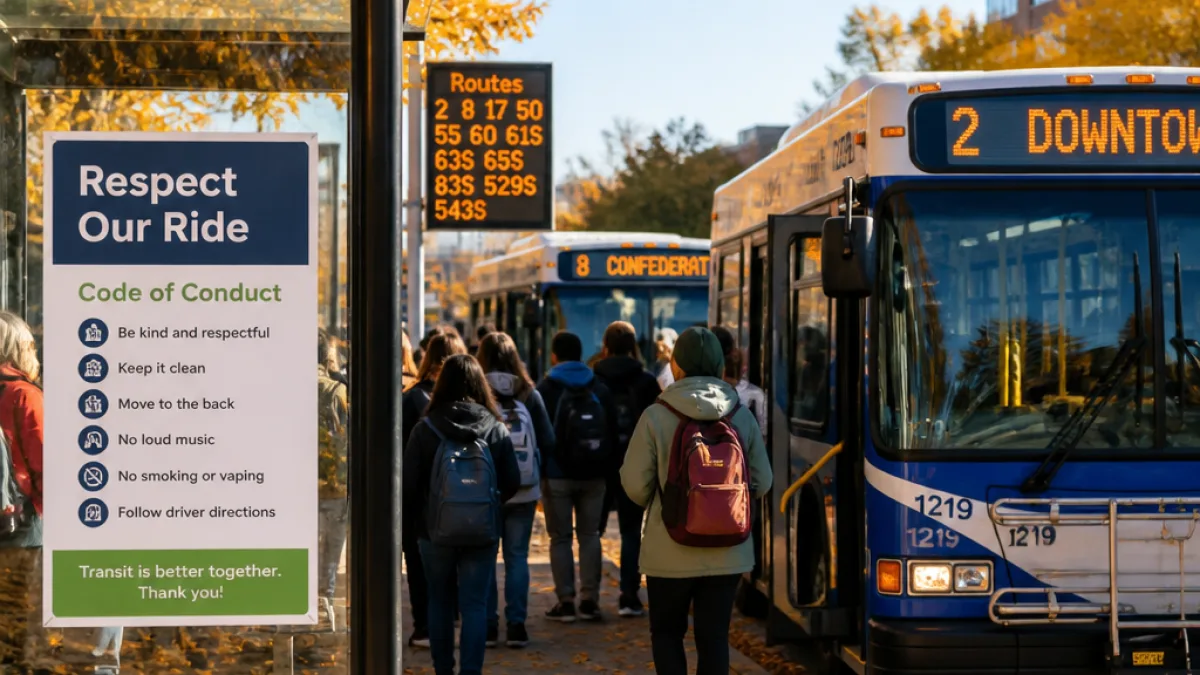
On busy corridors, the city specifically named routes 2, 8, 17, 50, 55 and 60 for additional frequency and capacity. Routes relied on by school-aged riders — including 61, 63, 65 and 83 — will return to peak-period and school-year service levels. High school routes 529 and 543 are also listed for reinstated service.
University-area riders should see improvements from routing changes affecting routes 16 and 17 near the University of Saskatchewan campus, the city said.
Enforcement, code of conduct and the new bylaw
The operational changes come as the city prepares to introduce a new transit bylaw and a transit code of conduct this September. Mayor Cynthia Block said the bylaw will underpin the city’s move toward a transit-policing approach aimed at addressing issues such as fare evasion.
“At any time, someone could be asked to leave the bus, but also could be asked for their ticket,”
Block said the code of conduct will be posted at terminals and on buses as a reminder to riders about expected behaviour. She told a local radio show the city consulted other transit systems — including London, England — in shaping the approach and that the move is part of a broader enforcement strategy, not a plan to place a police officer on every bus.
“We gleaned this from a lot of information that we learned from around the world about how important it is to remind people to be respectful,” she said. The mayor added the city has optimism the measures will improve the transit experience for everyone.
What riders can expect
The city has not published a full timetable in its announcement included with the changes, but identified targeted improvements. Riders can expect:
- Increased frequency on high-demand routes: 2, 8, 17, 50, 55, 60
- Return to school-year and peak-period service on student routes: 61, 63, 65, 83, 529, 543
- Routing changes near the university to improve access on 16 and 17
City officials say the moves are meant to coincide with the return to classes and with an eye to improving on-time performance, but they did not tie the service adjustments to specific ridership forecasts or provide a launch date beyond the general fall timing.
| Route | Planned change |
|---|---|
| 2, 8, 17, 50, 55, 60 | Additional frequency and capacity |
| 61, 63, 65, 83, 529, 543 | Restore peak-period / school-year service |
| 16, 17 | Routing changes near University of Saskatchewan |
Context and community consequences
For many Saskatoon residents, the changes will be most immediately felt by students and regular commuters who rely on predictable service to get to schools, campuses and workplaces. Restoring school-year service means some runs that were scaled back during off-peak summer months will resume, matching bus capacity to classroom schedules and peak travel times.
At the same time, the introduction of a bylaw and code of conduct signals a municipal attempt to address safety, fare compliance and behaviour on board — issues transit staff and unions have raised in recent months. The city says the bylaw supports a broader enforcement strategy; how that will be operationalized — including who will enforce infractions and how transit staff will be protected — has not been fully detailed in the announcement.
Riders seeking specifics on schedules, stop changes or exact start dates for the adjustments should monitor official Saskatoon Transit channels for detailed timetables and maps in the coming weeks.
The city’s move to tweak routing and service for the fall reflects an attempt to balance rising demand, rider safety and reliable service as Saskatoon heads into the busy school season.