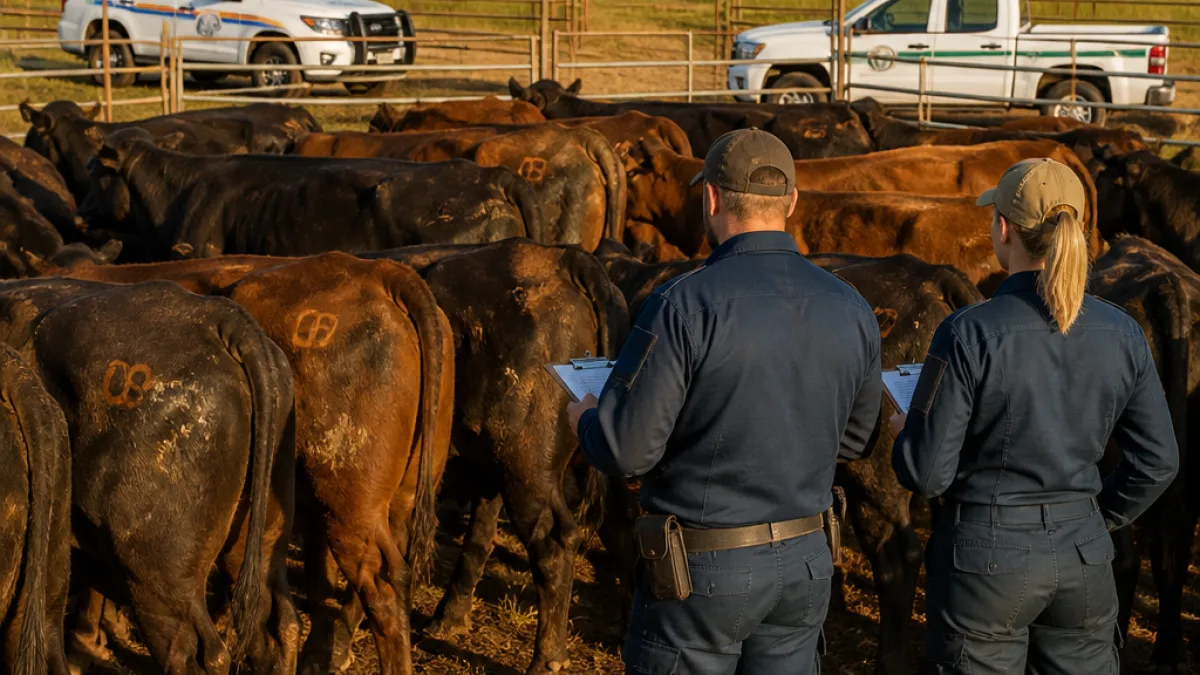
RCMP in Saskatchewan allege nearly 200 head of cattle in the Rural Municipality of Martin were discovered with altered or fraudulent brands after an investigation that began in early July.
Investigation uncovers widespread branding irregularities
Mounties say the probe started after police received a report about suspicious livestock in the RM of Martin, located east of Regina. Officers, working with Livestock Services of Saskatchewan, inspected a total of 197 head of cattle and determined the brands had been tampered with.
According to the RCMP, 99 animals showed an altered brand applied over top of an original brand, while the remaining 98 were found to bear a new brand that investigators say was applied fraudulently.
“Investigation determined that 99 head of cattle carried an altered brand being applied over-top of the original brand. The remaining 98 were branded fraudulently with a new brand.”
Police have charged a 52‑year‑old man from the RM of Martin with two counts: altering a brand on cattle and fraud over $5,000. He is scheduled to appear in provincial court in Moosomin in September.
Why brands matter to prairie producers
Livestock branding remains a primary method of identifying ownership for cattle in Saskatchewan. Brands are recorded and regulated to protect producers from theft and to establish provenance when animals are moved or sold. Altering a brand or applying a fraudulent brand can disrupt traceability, complicate sales and insurance claims, and put producers at financial risk.
Because the RCMP worked alongside Livestock Services of Saskatchewan in this investigation, it underscores the way policing and provincial livestock authorities collaborate when ownership or branding disputes arise.
Local impact and practical implications
For ranchers and farmers in the region, the discovery of altered brands raises several practical concerns:
- Record keeping: Producers should maintain accurate records of brands, tag numbers and movement documentation.
- Inspections: Routinely check herds and report any suspicious activity to local authorities.
- Cooperation with agencies: Work with Livestock Services and police when discrepancies appear to help protect herds and evidence.
Some livestock producers rely on additional methods of identification such as electronic tags and detailed sale records to supplement traditional branding. Those measures can assist investigators when allegations of fraud surface.
What the charges mean
The accused faces a provincial court process that will determine whether the Crown can prove the charges. 'Altering a brand' is treated seriously because it strikes at the core of property rights in agricultural communities, while a fraud charge over $5,000 suggests authorities believe the alleged misconduct involved significant value.
At this stage, the RCMP statement does not provide details on how the investigation began, whether any cattle were recovered by identified owners, or how many complainants are involved. The accused’s identity was disclosed only in relation to his age and municipality in the RCMP release; further details will be developed through the court process.
Numbers at a glance
| Item | Count |
|---|---|
| Total cattle inspected | 197 |
| Altered brands over originals | 99 |
| New fraudulent brands | 98 |
The community will be watching the case as it moves through court in Moosomin. For now, police say charges have been laid and the provincial court will be the venue for next steps in September.
Anyone with information about this or similar incidents is encouraged to contact Saskatchewan RCMP or local Livestock Services authorities to assist ongoing efforts to protect producers and trace livestock ownership.