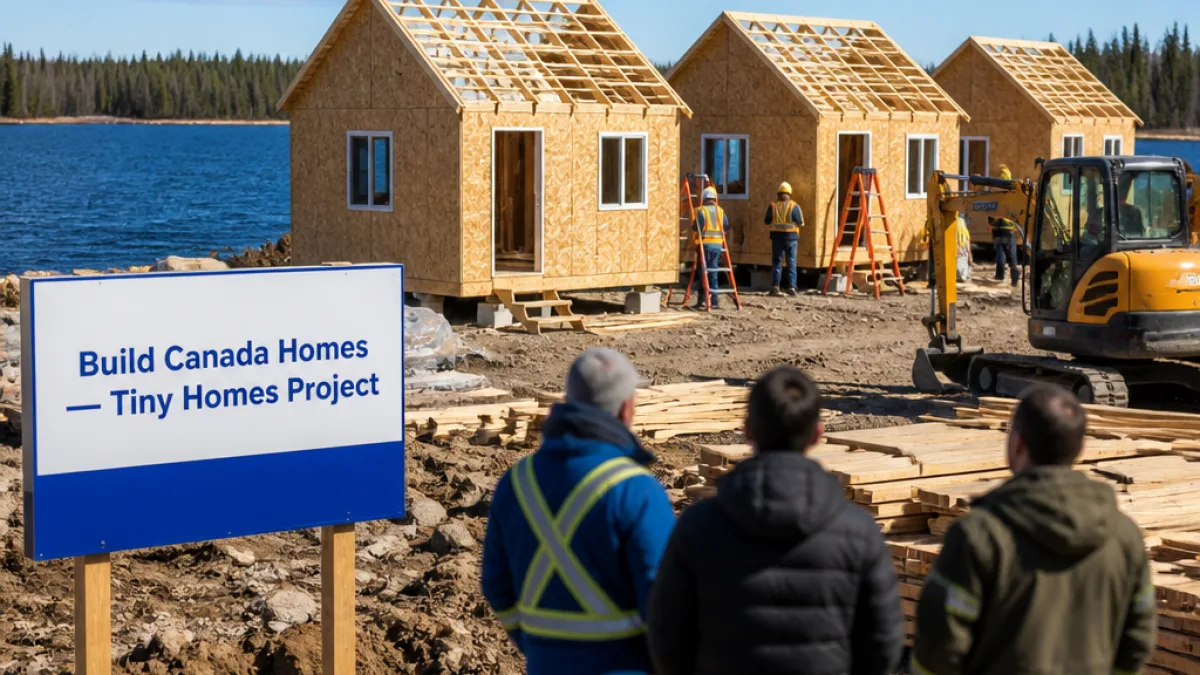
The federal and provincial governments, in partnership with Métis Nation–Saskatchewan, have launched a small but targeted housing project in northern Saskatchewan that will create 12 tiny homes for single Métis citizens with low incomes.
Where the homes will go
Officials gathered in Buffalo Narrows to mark the start of construction on the project. The development will place:
- six tiny homes in La Loche,
- three in Cumberland House, and
- three in Buffalo Narrows.
The units are being built as affordable rental housing specifically for single Métis citizens with low incomes. The partners say the tiny homes are expected to be completed by spring 2027.
Program context and partners
The project is part of the federal government's broader Build Canada Homes initiative, described by Ottawa as a program to boost the pace of affordable homebuilding across the country and to support transitional and supportive housing. The announcement frames the effort as part of a national push to bring down housing costs, cut red tape and build homes more quickly.
At the provincial level, the work is being coordinated through the Saskatchewan Housing Corporation. The three-way partnership includes the Government of Canada, the Government of Saskatchewan and Métis Nation–Saskatchewan.
Local impact and limitations
While the number of homes is modest, the project aims to target a specific and often underserved group in northern communities: single Métis residents on low incomes. Tiny homes can offer a faster, lower-cost route to creating rental units compared with traditional construction, and they are often used to fill immediate housing gaps or provide transitional accommodation.
Still, the addition of 12 units will not solve the broader housing shortages experienced across the province, especially in northern and Indigenous communities where demand and needs are high. The announcement frames the tiny homes as one part of a much larger federal and provincial effort to increase housing supply and to build “deeply affordable and community housing” for low-income households.
How this fits into federal priorities
Build Canada Homes is positioned as a multi-pronged program intended to:
- accelerate delivery of affordable housing;
- support transitional and supportive housing for people experiencing homelessness;
- partner with private developers to add options for the middle class; and
- strengthen supply chains and create construction-related jobs.
Officials say investments under the program are being directed along a housing continuum to meet community needs across Canada, with projects ranging from deeply affordable units to supportive housing models.
Project details at a glance
| Community | Number of tiny homes |
|---|---|
| La Loche | 6 |
| Cumberland House | 3 |
| Buffalo Narrows | 3 |
| Expected completion | Spring 2027 |
What to watch for next
Community members and local leaders will likely watch construction timelines and tenant-selection processes closely. The announcement says the homes will be rental units for single Métis citizens with low incomes, but details on eligibility, rent levels and supports tied to the units were not released in the initial statement.
Small-scale developments like these can serve as pilot projects for larger investments or tailored housing programs in remote and northern settings. Observers will want to know whether the tiny-home approach eases immediate pressure on local housing markets, and whether it will be replicated in other northern communities.
The involvement of Métis Nation–Saskatchewan signals an intent to deliver housing with Indigenous partnership and local input. For northern Saskatchewan communities that have long faced housing shortages and higher construction costs, projects that combine federal funding, provincial delivery mechanisms and Indigenous collaboration could offer a model — provided timelines, supports and community needs are aligned.
More information on tenant selection, unit design and the supports that will accompany the tiny homes is expected as construction progresses toward the spring 2027 completion date.