The Saskatchewan NDP is urging the provincial government to stop construction of large artificial intelligence data centres until a formal policy framework is in place and local concerns are addressed.
Calls for a pause after major expansion announcement
The demand for a moratorium came a day after Prime Minister Mark Carney and Premier Scott Moe announced that Bell Canada would expand its data‑centre operations in the Rural Municipality of Sherwood. Opposition leader Carla Beck says the government moved too quickly and that residents in affected communities have not been given adequate information.
At a news conference, Beck said the NDP will press for a process that ensures transparency and that future governments will be held to the same standards if an agreement is reached. She argued the public has been denied meaningful input on projects that can have significant local effects.
“There’s more regulations to set up a lemonade stand in this province right now than (there) seems to be to build an AI data centre.”
Beck’s remarks reflect growing scrutiny over hyperscale data centres, which can demand large amounts of power and water and may affect local infrastructure, municipal services and electricity costs.
Local questions remain about water, power and economic value
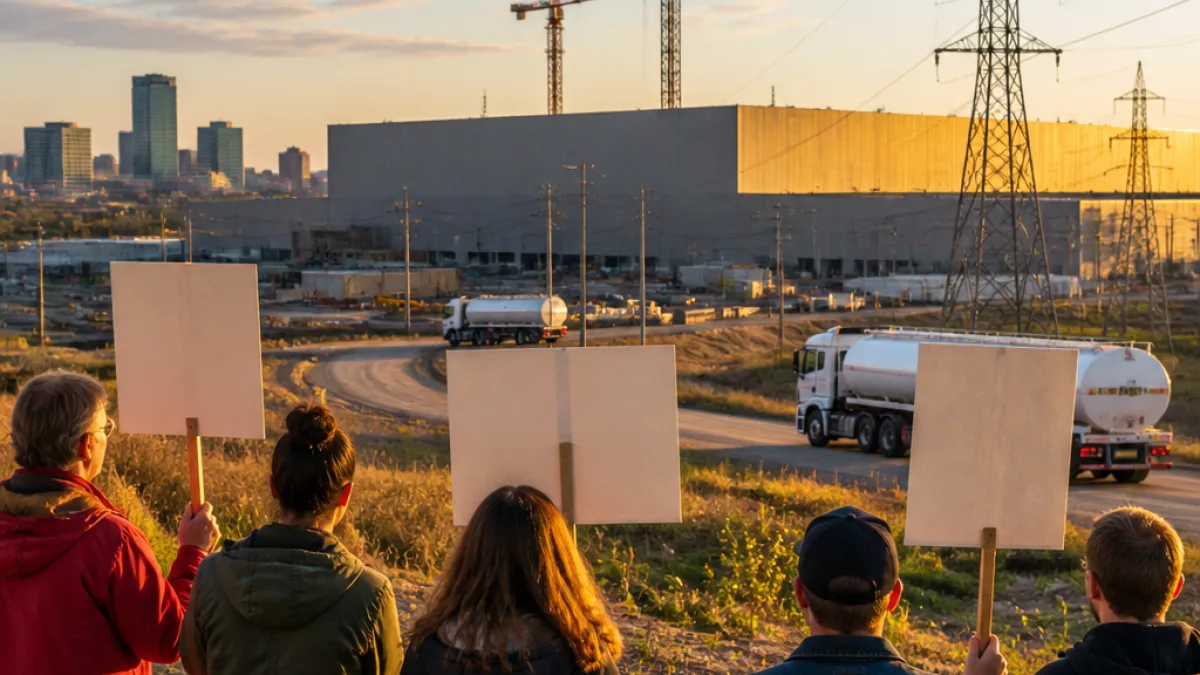
The NDP’s innovation, technology and AI critic, Brittney Senger, spoke in the RM of Corman Park — an industrial area just north of Saskatoon being pitched for a potential hyperscale site — and said residents have been left with more questions than answers after municipal engagement sessions.
Concerns raised by residents, according to Senger, include:
- Potential effects on local water supplies.
- Impacts to the provincial power grid and possible effects on electricity rates.
- Uncertainty about economic benefits and environmental consequences.
Senger said a town hall held in Saskatoon earlier in September left lingering worries that have not been fully addressed by developers or the provincial government.
What a moratorium would mean
The NDP proposal would place a temporary halt on construction of large‑scale AI data centres in the province until officials create and implement a framework that defines what applicants must disclose about community impacts before building begins. The party says such a framework should be binding and publicly accessible.
Neither the provincial government nor Bell Canada has issued a detailed public response to the moratorium demand in the coverage provided. The announcement of Bell’s planned expansion was presented as a major investment for the region, but the precise timeline, scale and mitigation measures associated with proposed sites have not been made part of the record cited by the Opposition.
Balancing growth with local capacity
Hyperscale data centres are critical infrastructure for modern digital economies: they store and process large volumes of data and are increasingly used to train and serve artificial intelligence models. At the same time, their operation can consume substantial electricity and water, and they require connections to robust fibre and transmission networks.
Municipalities and nearby residents often want clarity on issues such as emergency services capacity, road use during construction, tax arrangements and environmental monitoring. The NDP argues that those details should be established before construction begins, to avoid unilateral decisions that local communities will have to live with.
| Primary concern | What residents want to know |
|---|---|
| Water use | Sources, volumes required, and safeguards for local supply |
| Power supply | Grid capacity, potential rate impacts, and backup plans |
| Economic benefits | Jobs, local procurement, tax arrangements and long‑term commitments |
The NDP says those topics and more should be part of a transparent application process.
Next steps and what to watch for
With the public announcement of Bell’s expansion, provincial scrutiny is likely to increase. The NDP has signalled it will continue to press the government for a formal response and for development rules that involve affected communities earlier in the process.
Residents and municipal leaders watching the files will be looking for:
- Any provincial policy or regulation proposals that set disclosure and consultation requirements for large‑scale data centres.
- Detailed impact assessments from applicants addressing water, power, environmental and municipal impacts.
- Commitments from developers about local hiring, procurement and community investments.
The debate highlights a familiar challenge on the Prairies: how to attract investment in new technology infrastructure while ensuring rural and urban communities retain a meaningful voice in decisions that affect their infrastructure, environment and budgets.
As discussions continue, both the scale of planned investment and the questions raised by residents will shape whether Saskatchewan adopts a stricter regulatory approach or proceeds with the current approval pathway.