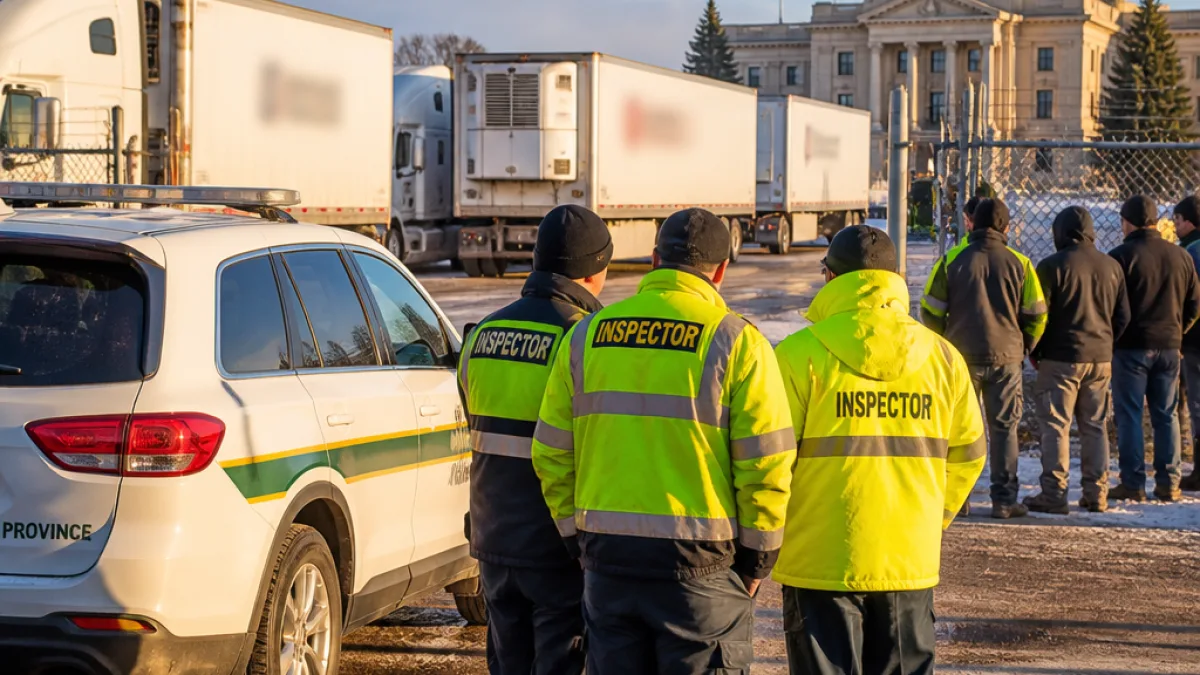
The Saskatchewan Trucking Association is endorsing recent provincial enforcement aimed at trucking companies accused of misusing immigration programs and exploiting foreign workers, saying action is necessary to protect vulnerable employees and preserve confidence in recruitment pathways.
Association says enforcement protects workers, honest carriers
Susan Ewart, executive director of the association, said the organisation supports the provincial government’s use of the Immigration Services Act and related rules to investigate alleged offences.
“They are actively engaged in ensuring that those who use those programs are doing so properly,”
Ewart told media the province’s enforcement is intended to keep immigration pathways available to reputable businesses while discouraging misuse by a small number of operators. She noted that immigration has become an important tool for the sector as companies work to address longstanding recruitment challenges and an ageing workforce.
Charges laid in two recent cases
Recent enforcement activity has led to charges against two Saskatchewan trucking companies under provincial immigration law. The cases involve allegations tied to the recruitment and treatment of foreign workers.
| Company | Individual named | Legislation cited | Alleged date range |
|---|---|---|---|
| Escalade Transportation (Regina-based) | Hafiz Tariq Ayub | Foreign Worker Recruitment and Immigration Services Act, 2013 | November 2022 to August 2023 |
| JD Trucking (Regina and Moose Jaw) | Jorawar Singh | Immigration Services Act, 2024 | On or about April 9 (year not specified) |
The provincial government announced the charges. JD Trucking operates offices in both Regina and Moose Jaw, while Escalade is based in Regina.
Industry context: immigration as part of the solution
Trucking companies across the Prairies have increasingly relied on immigration pathways to fill vacancies as the sector grapples with an ageing workforce and recruitment difficulties. Ewart acknowledged immigration is only one response to staffing shortfalls, but called it an important option for employers seeking qualified drivers.
She said enforcement helps ensure those programs remain usable by ethical firms and do not become a route for exploitation. That, she added, protects both workers and the reputation of carriers who follow the rules.
- Protecting workers: Enforcement can help prevent misuse of recruitment programs and abusive workplace practices.
- Level playing field: Action against offending employers safeguards businesses that comply with regulations.
- Confidence in programs: Visible oversight can keep immigration pathways available to credible operators.
What this means locally
For drivers and employers in Regina, Moose Jaw and other Saskatchewan communities, the investigations are a reminder of the legal obligations tied to recruiting foreign workers. Employers using provincial immigration programs must follow the conditions set out under Saskatchewan law; failure to do so can lead to charges that carry legal consequences and damage business reputations.
For newcomers who come to the province through employer-supported pathways, the association’s position and the government’s enforcement signal an effort to prioritise safety and fairness. That message matters in rural and urban communities where employers and employees depend on mutual trust and clear rules.
The Saskatchewan Trucking Association also emphasised that most carriers operate ethically. Ewart said enforcement is aimed at the exceptions rather than the industry as a whole.
The provincial government has previously taken action in other immigration-related matters, including charging employers and ordering compensation in cases involving unlicensed immigration consultants. Those precedents form part of a broader enforcement landscape intended to protect newcomers and maintain the integrity of immigration programs.
At the same time, the sector continues to search for long-term recruitment solutions beyond temporary fixes, including training and retention initiatives for domestic workers. The balance between meeting immediate labour needs and ensuring legal and ethical recruitment remains a central issue for Saskatchewan’s trucking industry.
As the charged cases progress through the legal system, local employers and advocacy groups will be watching for outcomes that could shape future compliance expectations and the administration of provincial immigration programs.