City moves to remove infected trees as residents call for faster replanting
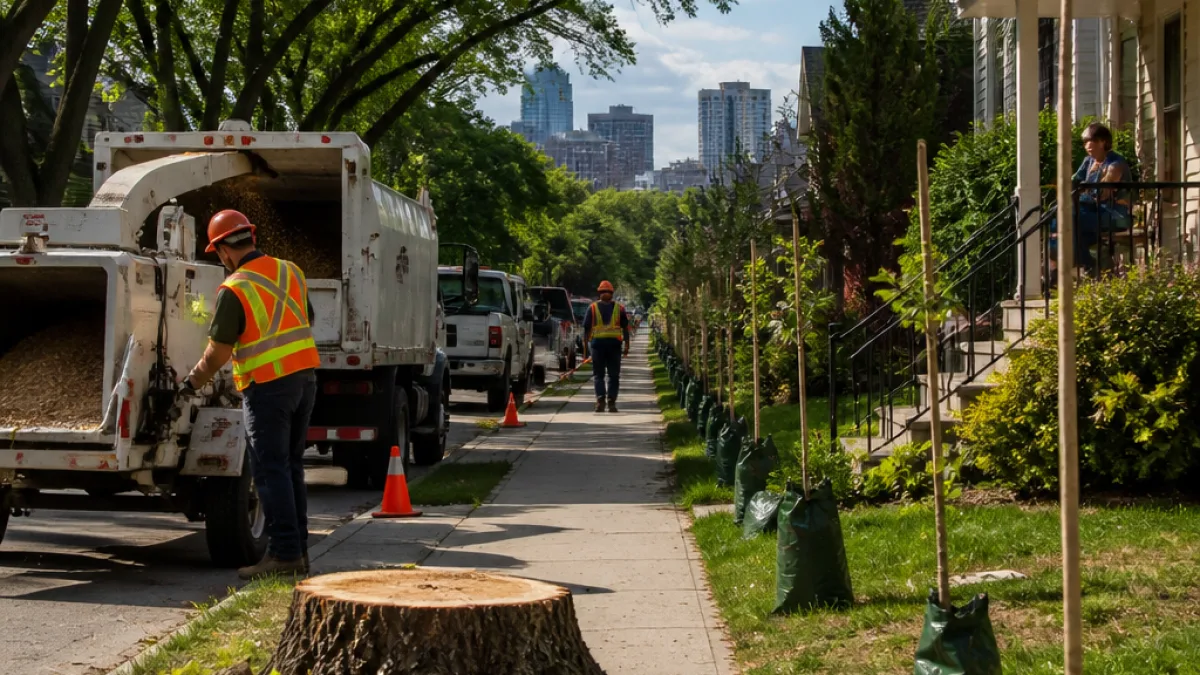
Nearly two dozen elm trees in Saskatoon have been confirmed positive for Dutch elm disease (DED) this year, prompting the City to remove affected trees and promise replacements. Residents whose walks and yards have long been shaded by the stately elms say they accept removals to stop the spread, but many want clearer plans and faster action to fill the gaps in the urban canopy.
Director of parks Thai Hoang said the city is developing a long-term response plan aimed at keeping as many trees alive for as many decades as possible. The city also committed to a one-for-one replacement policy: a new tree will be planted for every tree taken down because of DED.
Local reactions range from acceptance to disappointment
Some residents expressed mixed feelings about losing elms. Tyler Baptist, one neighbour quoted by CBC, described the removals as sad but necessary, and voiced hope the city would replant and replace removed specimens. Another resident, Schirly Schrenk, said she moved to Saskatoon partly because of its leafy streets and has enjoyed walking her dog under the canopy. She said she understands why removals are happening but thinks the city should do more to keep remaining trees healthy.
“I always enjoyed the trees,” Schrenk told reporters. “I guess that's necessary as far as I'm concerned, because it w
The incomplete quote as published reflects residents' emotional connection to the elm-lined streets and the frustration that comes when long-standing urban trees disappear. While some accept the need for removals to prevent further spread of the disease, calls for more thorough replacement and maintenance were common.
City priorities: longevity and planting site considerations
Hoang said the urban forestry team will prioritise the longevity and long-term survival of replacement trees. He noted planting capacity will depend on the conditions at each site, suggesting not every location can support every species or size of replacement tree immediately.
The city's approach attempts to balance immediate public-safety and disease-control needs with longer-term canopy recovery. That includes careful species selection and siting to give new plantings the best chance to thrive, rather than simply replacing in kind where conditions no longer suit elms or other large-canopy species.
- Confirmed DED cases in Saskatoon this year: nearly two dozen
- Replacement policy: one new tree planted for every tree removed
- City priority for new plantings: longevity and long-term survival
| Item | Detail |
|---|---|
| Confirmed infected trees | Nearly two dozen |
| Replacement commitment | One-for-one planting |
| Planting focus | Long-term survival, site-dependent capacity |
Residents raised questions about interim appearance and safety after removals, as well as the timeline for replanting. The city indicated that planting capacity depends on site conditions, which can include underground utilities, soil quality and space constraints that affect what species and how many trees can be planted at a given location.
Urban foresters across prairie cities face similar dilemmas: the need to control DED and other pests while trying to sustain canopy cover that moderates summer heat, improves stormwater absorption and supports neighbourhood character. For Saskatoon, which has long been noted for its tree-lined streets, the loss of mature elms presents both an ecological and civic challenge.
Residents say they want a transparent timeline and assurances the replacements will be visible and effective. Several suggested the city step up maintenance of remaining trees to reduce future losses, an idea Hoang acknowledged by highlighting the plan to mitigate further loss and maintain those trees that can remain healthy for decades.
As removals proceed, the city’s long-term plan and planting decisions will determine whether Saskatoon can preserve its leafy identity in years to come or whether neighbourhoods will see prolonged gaps where mature elms once stood.