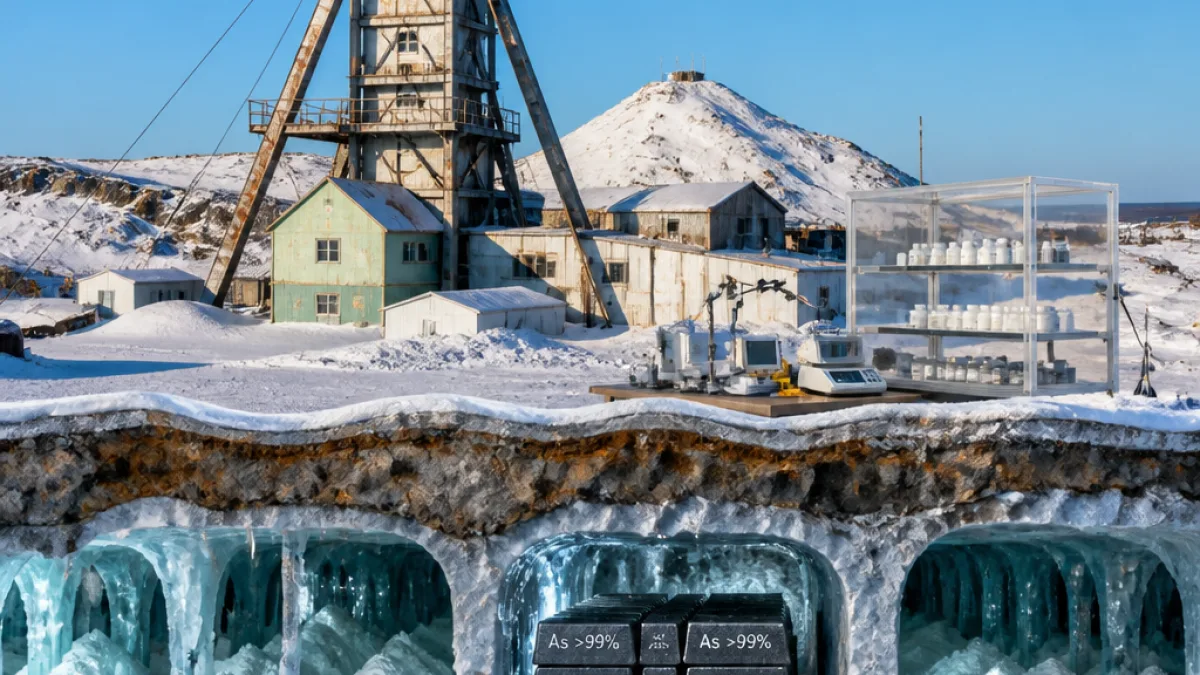
Researchers have taken a sample from the massive arsenic trioxide stockpile stored beneath the closed Giant Mine on Yellowknife’s outskirts and converted it into metallic arsenic that measured better than 99 per cent purity, according to published accounts of the work.
From hazardous dust to high-purity metal
The pile of arsenic trioxide — the legacy of decades of gold roasting at the Giant Mine — amounts to about 261,000 short tons (about 237,000 metric tonnes), numbers researchers say would fill the equivalent of seven 10-storey buildings or roughly 9,480 dump trucks. That stockpile is locked into chambers and mined-out stopes between 80 and 250 feet below ground at the Giant site, where the federal government has long kept the material frozen as part of a remediation strategy.
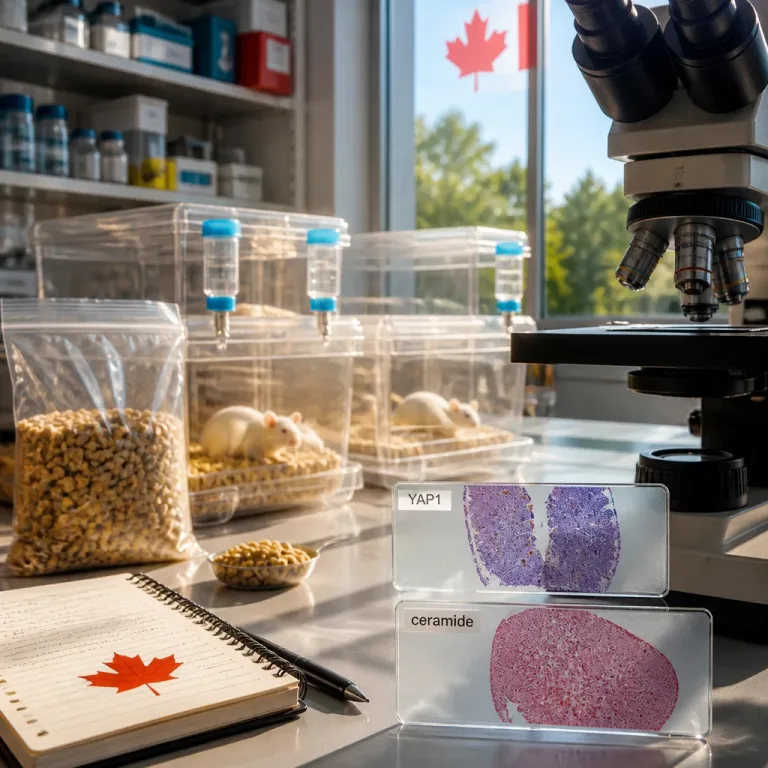
A collaborative team from the University of British Columbia and the Geological Survey of Denmark and Greenland (GEUS) worked with samples from that underground stockpile. They converted arsenic trioxide to elemental, metallic arsenic and examined the product under a synchrotron beam at the Canadian Light Source in Saskatoon.
“The structure of it is completely different than commercial arsenic,” said GEUS researcher Case van Genuchten, while noting the converted material was very pure.
Why the stockpile exists
Giant Mine produced significant quantities of gold during its operating life. The ore contained gold bound inside the mineral arsenopyrite — an iron, sulphur and arsenic compound. Historical treatment involved roasting the ore, a process that liberated arsenic as a gas and produced a fine arsenic trioxide dust. Operators piped that dust into underground chambers and stopes; accumulation continued until the mine’s operator, Royal Oak Mines, declared bankruptcy in 1999.
Since then, federal records say arsenic trioxide was left in most of the purpose-built underground containment zones, and the Crown has maintained a frozen containment approach as the official management method.
Potential uses and wider context
Arsenic is not only an environmental hazard. It also plays roles in modern technology: gallium arsenide supports radio-frequency functions in many electronic devices; arsenic compounds appear in some solar technologies and batteries; and elemental arsenic has been added to critical-mineral lists in several countries, including the United States.
- Stockpile size: 261,000 short tons (237,000 metric tonnes)
- Equivalent: seven 10-storey buildings or about 9,480 dump trucks
- Storage depth: chambers and stopes 80–250 feet below surface
| Item | Figure |
|---|---|
| Arsenic trioxide in stockpile | 261,000 short tons (237,000 tonnes) |
| Chambers used | 14 of 16 set aside |
| Depth range | 80–250 feet |
The researchers’ conversion and structural analysis demonstrate that the waste material can be processed into a high-purity form with properties that differ from commercial arsenic. Those findings raise several lines of inquiry for Yellowknife residents and officials: whether recovery could play a role in remediation or resource strategies, what new processing would mean for long-term containment, and how any prospective uses would be balanced against ongoing public-health and environmental concerns.
Local implications and next steps
Giant Mine’s arsenic has been central to a decades-long remediation challenge that involves federal authorities and affected communities. Keeping the dust frozen underground has been the chosen management strategy to date, but converting a sample from that inventory into metallic arsenic — and finding it to be unusually structured yet highly pure — will likely inform technical discussions about long-term options.
At this stage, the reported work is laboratory-based and limited to samples. The feasibility, scale and safety of extracting and processing stockpiled arsenic from the Giant site remain complex questions. Any movement toward recovery, reuse or alternative treatment would intersect with regulatory frameworks, remediation plans and community consultation processes that govern the Giant Mine clean-up.
For Yellowknife, the research underscores that the legacy material beneath the city is not only an environmental liability but also a subject of emerging technical interest — one that could reshape how stakeholders think about remediation and the possible value, risks and responsibilities tied to the site.