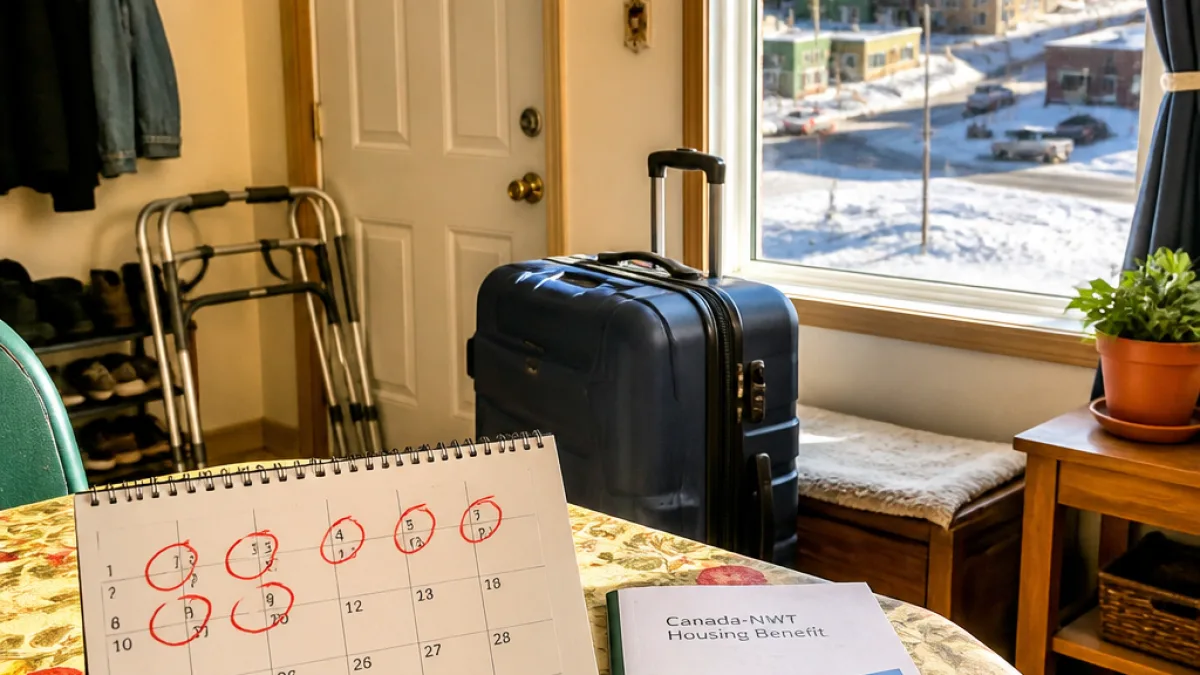
A 74‑year‑old woman who returned to Yellowknife to be near family says she narrowly avoided homelessness after securing long‑term house‑sitting that will carry her through the waiting period required to access rental assistance.
Return to the North met with no affordable options
The woman, who lived in Yellowknife from the early 1970s until 1986 and again from 2005 to 2018, returned to the city in June but said she could not find affordable accommodation despite applying to multiple apartment buildings. She told Northern News Services her search found little that matched her needs, and that a key barrier was the requirement to live in the city for nine months before qualifying for the Canada‑NWT Housing Benefit.
She also said the presence of a small dog complicated her search because many rental units do not accept pets. She argued it would be "cruel" to force older single adults to give up companions to secure housing and said she would have rather slept outdoors than abandon the animal.
“If push came to shove, I would have slept on a park bench instead of abandoning my companion.”
Short vacancy and steep market rents
Her experience is reflected in a citywide situation in which the rental vacancy is estimated at about one per cent. Even recently opened developments offering small, privately priced units moved quickly off the market: she said the Nest’s 300‑square‑foot apartments were listed at $1,900 and were gone soon after opening.
- Age: 74
- Years lived in Yellowknife: early 1970s–1986; 2005–2018; returned June
- Local vacancy rate: 1%
- Subsidy waiting period: nine months residence required for Canada‑NWT Housing Benefit
Policy gap highlighted by long waiting requirement
The waiting period for the Canada‑NWT Housing Benefit is a central issue in this account. The woman argues the residency rule fails people who have long histories in the city but who have been absent for a period, and called on governments to consider applications on an individual basis rather than applying a strict time cutoff.
She said long‑term house‑sitting will likely carry her through the nine months so she can apply for the subsidy, and she hopes to be placed in one of the units at a new downtown shelter when it opens.
Community responses and potential local solutions
In describing alternatives, she suggested encouraging residents to make spare rooms available or to add secondary suites, pointing to underused housing capacity in private homes as one immediate measure to relieve pressure. Room rentals and suites are often seen as stopgap options in small markets facing acute shortages.
Her case underscores broader questions about how the city and territorial programs manage eligibility for subsidies, protect seniors and support pet owners — a demographic often vulnerable to loss of housing security. The intersection of low vacancy, rising rental costs and eligibility rules for assistance is shaping the lived experience of residents who depend on both family proximity and affordable housing.
| Item | Detail |
|---|---|
| Residence history | Early 1970s–1986; 2005–2018; returned June |
| Age | 74 |
| Local vacancy rate | 1% |
| Example market rent | $1,900 for a 300‑sq‑ft unit (Nest) |
| Subsidy requirement | Nine months residence to qualify for Canada‑NWT Housing Benefit |
As Yellowknife prepares for ongoing pressure on housing, cases such as this one humanize the policy choices facing municipal and territorial authorities. For older residents returning to the city, the combination of low vacancy and eligibility rules for subsidy can mean difficult trade‑offs between family, shelter and companionship.
The woman’s experience concludes on a cautiously hopeful note: by securing a long‑term house‑sitting arrangement she believes she will complete the residency requirement for the subsidy and avoid homelessness, at least for the immediate term.