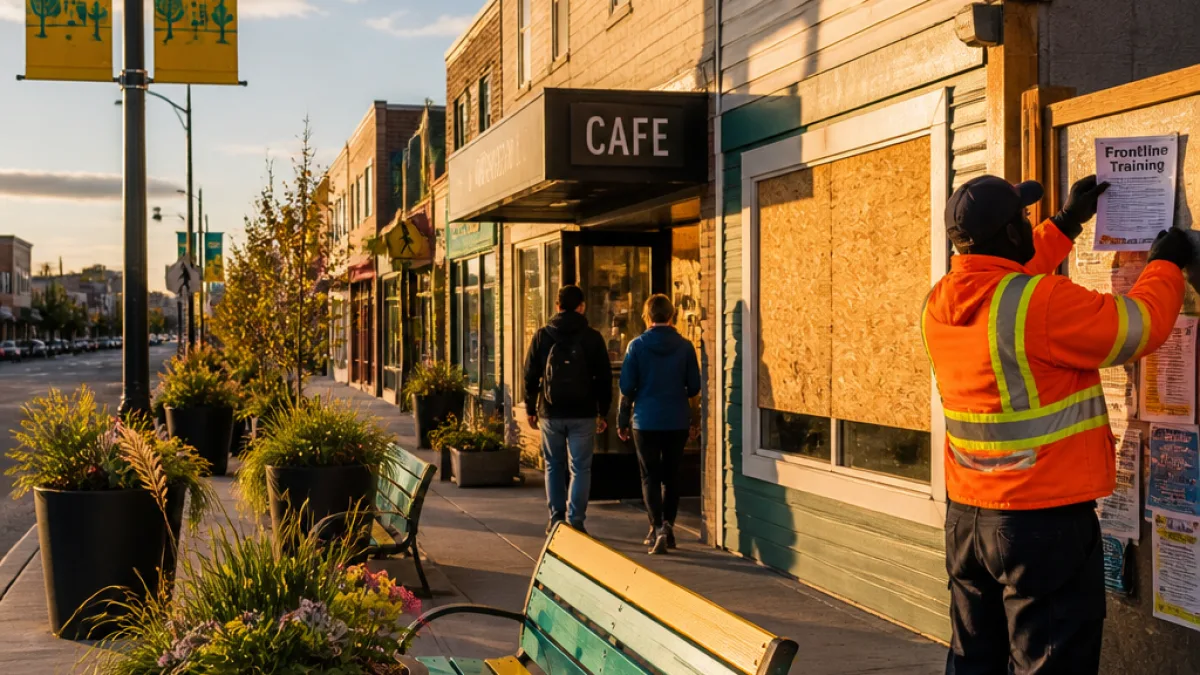
As Yellowknife approaches a municipal election, downtown business owners are setting out a grounded agenda for what they want to see from candidates who promise to "revitalize downtown." Their priorities centre on immediate, practical measures — training for frontline staff, targeted beautification, and stronger collaboration with territorial and federal partners to address underlying socio‑economic issues that affect safety and customer confidence.
Business owners demand practical supports, not slogans
Owners and operators who make their living in Yellowknife’s core say they are committed to the downtown but want municipal leaders to present concrete plans, not rhetoric. The Territorial Agrifood Association, which runs the downtown shop Tastes of the North, says despite a recent break‑in that damaged the store and resulted in stolen food and equipment, it remains loyal to the downtown location.
“We're committed to the Yellowknife downtown. Personally, I live just down the street. All of our staff are within walking distance,”
That is how Janet Dean, executive director of the Territorial Agrifood Association, described her organisation’s attachment to the neighbourhood. She told CBC News the incident — a broken window and stolen inventory — had consequences for staff and operations but did not deter the association from staying in the core.
Three themes for candidates: training, beautification, partnership
Business owners identified a trio of practical interventions they want council candidates to prioritise:
- Frontline training: equipping retail and service staff to interact effectively and safely with a diverse public, including people experiencing homelessness or addiction challenges.
- Beautification funds: small capital improvements and streetscape investments to make downtown more inviting — lighting, greenery, public art and repairs to damaged storefronts.
- Intergovernmental action: asking the city to coordinate with the territorial and federal governments on social supports, shelter options and addiction services to tackle root causes of visible socio‑economic issues.
Those suggestions reflect the broad challenge confronting elected municipal officials: the city controls planning, upkeep and local enforcement, but many drivers of downtown decline — housing, health and income supports — are largely under territorial or federal jurisdiction.
What candidates are promising — and what they control
Many candidates have included vague language about "revitalizing downtown" in their platforms. Business owners say they want specifics: timelines, budgets and measurable outcomes. They also want assurance that city initiatives will tie into the broader service network so investments in the downtown are not undermined by gaps in social or health services.
City council has tools that can be used to support businesses directly: permit decisions, property‑tax incentives, streetscape projects and municipal grants. But when it comes to homelessness, addictions, mental health and income supports, the territorial government and federal programming hold greater authority and resources.
| Issue | Primary level of government |
|---|---|
| Streetscape improvements, permits, bylaws | Municipal |
| Housing, shelters, income supports | Territorial / Federal |
| Policing and outreach coordination | Municipal / Territorial |
Business leaders in the core say they expect council candidates to acknowledge those limits and to propose a realistic mix of municipal action and formal requests for territorial or federal co‑operation.
Local loyalties, broader consequences
For many small and non‑profit retailers, the downtown is not just a commercial district; it is cultural and social infrastructure. Tastes of the North, which sells locally produced foods and crafts, exemplifies that dual role. The group’s investment in the downtown speaks to a wider community interest in maintaining an active, walkable city core.
But without a plan that addresses both the visible signs of decline and the less visible systemic drivers — affordable housing, social services and supports — business owners warn that incremental efforts may stall. They want candidates to focus on measurable improvements that can restore foot traffic and confidence, while pressing higher levels of government to provide complementary supports.
As the campaign unfolds, voters in Yellowknife’s downtown neighbourhoods will be watching whether candidates offer detailed, actionable strategies or fall back on broad pledges. For small businesses still recovering from break‑ins and rising operating pressures, the difference between policy and performance will determine whether the downtown can be sustained as a lively, inclusive part of the city.