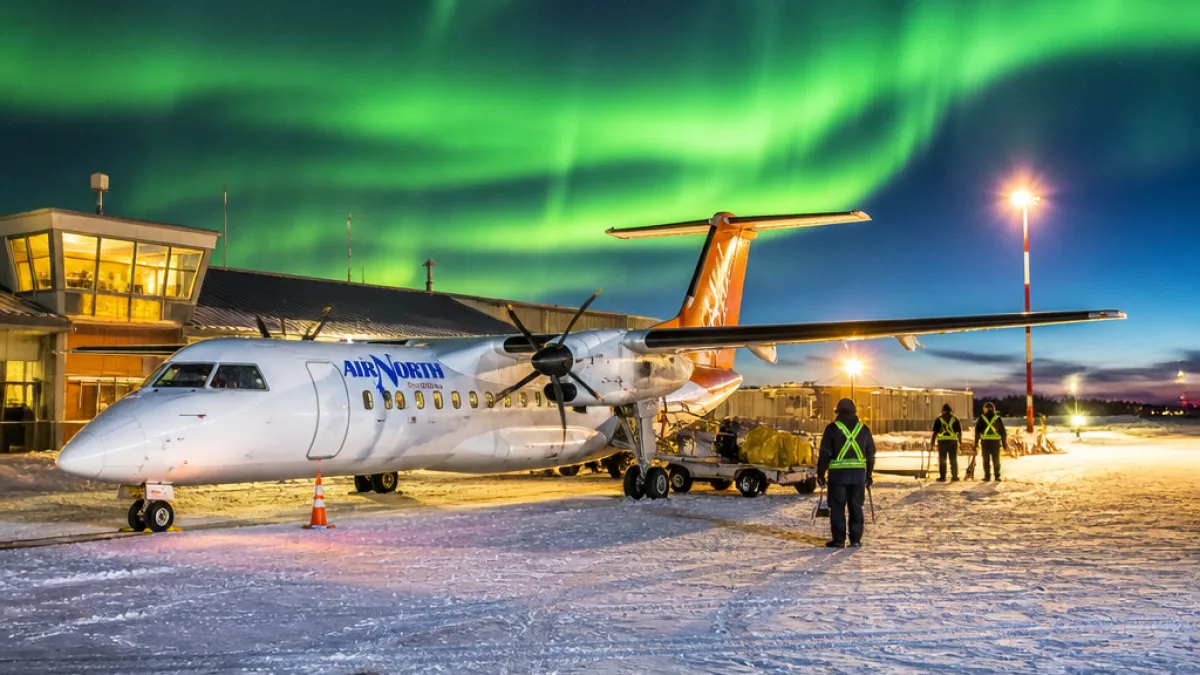
Air North has announced a major schedule expansion that will bring year‑round air service between Edmonton (YEG) and Yellowknife (YZF) beginning in December 2026, a move the airline says strengthens reliable connections across Canada’s North and opens new opportunities for travel, business and government movement.
What the new service means for the North
The planned Edmonton–Yellowknife route will effectively create continuous, scheduled connectivity between Whitehorse and Yellowknife by linking the airline’s existing Yukon operations with the Northwest Territories hub. That matters in a region where surface routes are limited and air travel is often the most practical option for moving people, supplies and services between territories and to southern Canada.
Airlines and communities in the North have long argued that dependable, year‑round service is critical for economic resilience, health care access and family ties. The carrier framed the change as an investment in the North’s long‑term prosperity and the mobility of residents, Indigenous governments and industry.
“Our mission is to offer Canada’s best regional air network, and that means continually investing in the connections that matter most to the communities we serve,” said Benjamin Ryan, Chief Commercial Officer of Air North, Yukon’s Airline.
Practical impacts for travellers and organisations
For Yellowknife and the Northwest Territories, the new route provides another scheduled gateway to Alberta’s transportation hub. Edmonton is a key connection point for international and southern domestic flights, medical referrals, higher education, and business links. Year‑round north–south service reduces dependence on seasonal or charter options and aims to lower travel uncertainty in winter months.
Local organizations that operate across territorial boundaries — including Indigenous governments, territorial departments, resource companies and non‑profit service providers — could see benefits in planning, logistics and cost predictability as regular scheduled seats become available.
- Start date: December 2026 (year‑round)
- Route: Edmonton (YEG) — Yellowknife (YZF)
- Regional effect: Establishes continuous Whitehorse–Yellowknife connectivity via Air North network
Economic and tourism expectations
Air North framed the expansion as a boost for northern tourism and local economies. Easier travel could increase visitor numbers to Yellowknife and surrounding communities, supporting hotels, guiding businesses, hospitality workers and cultural tourism operators. The prospect of more frequent, scheduled flights also makes Yellowknife more accessible for conventions, sport events and intergovernmental meetings.
That said, the economic payoff will depend on sustained demand, seasonal tourism patterns and competitive pricing. For communities reliant on air links, the reliability of schedules and the ability of airlines to maintain capacity through winter conditions are as important as the mere existence of routes.
Service reliability and northern realities
Operating in northern airspace presents unique challenges: weather windows can be narrow, and aircraft and crews must be prepared for extreme conditions. Air North has positioned the expansion as part of a long‑term commitment to the North. Whether that translates into consistent, resilient service will be judged by passengers and community partners over coming seasons.
Local decision‑makers, health authorities and businesses will be watching routing, frequency and pricing as the December start date approaches. For many, the announcement offers a degree of certainty absent in a market where seasonal suspensions or route changes are not uncommon.
| Aspect | Potential local benefit |
|---|---|
| Year‑round scheduling | Improved planning for travel, business and health transport |
| Whitehorse–Yellowknife link | Easier inter‑territorial travel for residents and governments |
| Edmonton gateway | Enhanced connections to southern Canada and international flights |
Next steps and what to watch for
Air North has released a broad outline but has not disclosed detailed schedules, frequencies, fares or aircraft types for the December launch. Those specifics — along with ticketing availability and codeshare or interline arrangements with other carriers — will shape how the new service is used by northern travellers and organisations.
Residents, businesses and officials in Yellowknife and across the territory should expect further announcements in the coming months about flight times and bookings. If the route achieves steady load factors and reliable operations, it could become an important fixture in the North’s transportation network.
For now, the announcement underlines an ongoing industry recognition: dependable air links are central to the social and economic life of Canada’s northern communities.