Yellowknives Dene First Nation leaders and the Tłı̨chǫ Government announced a consensus on a proposed corridor for the Arctic Economic and Security Corridor (AESC) on Saturday, signalling the next phase in plans for an all-season route that would link the Northwest Territories highway system to Nunavut.
What was agreed
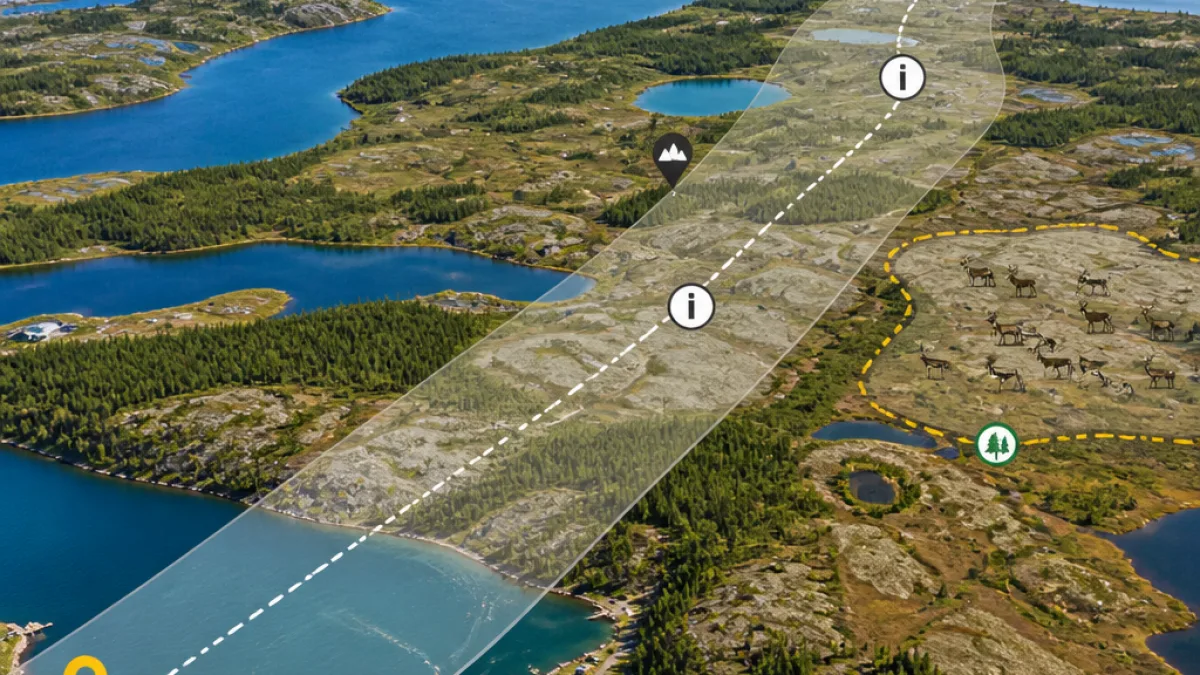
The two Indigenous governments said the agreed band is roughly 30 kilometres wide. They stressed the announcement identifies a proposed corridor only — not a final road alignment — and that a precise route will be chosen after further engineering, environmental assessment and regulatory work.
Leaders said the corridor decision now allows them to begin broader engagement with communities, neighbouring Indigenous governments and other interested parties about detailed routing, impacts and mitigations.
“What people tell us in the weeks and months ahead will help shape the path forward. This is the start of an important conversation – not the end of it – and by working together, we can build a stronger outcome for our communities and for the future.”
The statement attributed those words to Yellowknives Dene First Nation Chief Ernest Betsina and Chief Fred Sangris, reflecting the emphasis both governments placed on consultation and Indigenous-led decision-making.
Project context and priorities
The proposed AESC is envisioned as an all-season highway from the Yellowknife area to the Nunavut border, intended to connect to a proposed road through Nunavut that would reach the Grays Bay Port on the Arctic Ocean. Earlier agreements between the Yellowknives Dene First Nation and the Tłı̨chǫ Government formalized joint Indigenous leadership on advancing the corridor.
Key priorities identified by the Indigenous governments in selecting the corridor include:
- Protecting caribou and other wildlife;
- Supporting long-term prosperity for Indigenous communities;
- Affirming Indigenous leadership in designing and delivering major infrastructure; and
- Connecting Tłı̨chǫ communities such as Wekweètì and Gamèti with year-round road access.
Next steps and assessments
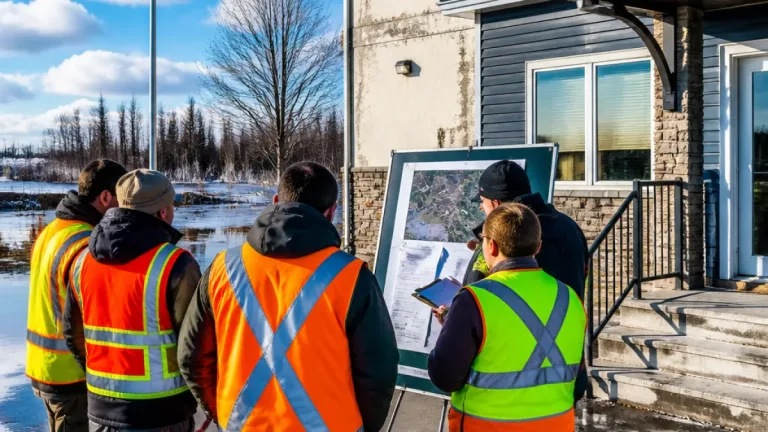
Officials said the corridor agreement is an initial planning step. Engineers, environmental practitioners and regulators will still need to carry out route-level design, detailed environmental assessments and engagement processes before any final alignment is selected or construction decisions are made.
That work will include consultations with communities along and near the corridor, harvesters and wildlife specialists to identify and mitigate impacts on traditional land use and caribou migration routes.
Local implications
For communities in the central and western parts of the territory, a permanent, all-season connection could change logistics, costs and access to services. Leaders have pointed to improved access for remote Tłı̨chǫ communities as a central benefit.
At the same time, the route cuts through the Slave Geological Province, an area of interest for mineral exploration. That raises questions about how development, conservation and Indigenous rights will be balanced as planning proceeds.
Timeline and governance
The two Indigenous governments signed a memorandum of understanding in November 2025 to jointly lead advancement of the AESC. The Government of the Northwest Territories later joined that agreement in January 2026. With the corridor agreed, proponents said they will now undertake engagement and technical work before a final route is proposed.
| Item | Detail |
|---|---|
| Corridor width (approx.) | 30 km |
| Project scope | All-season highway linking N.W.T. highways to Nunavut border, intended to connect to Grays Bay |
| Lead governments | Yellowknives Dene First Nation and Tłı̨chǫ Government (with territorial and federal partners) |
| Next steps | Engineering, environmental assessment, regulatory review, and community engagement |
Challenges ahead
Environmental protection — especially of caribou habitat — and meaningful involvement of communities that use the lands will be central to whether the proposal advances. The proponents have framed the corridor as a platform for Indigenous-led planning, but the detailed technical and regulatory stages will determine route feasibility, costs and mitigation measures.
As the project moves into more detailed study, residents and stakeholders can expect numerous consultation opportunities. Those processes will shape the corridor’s final footprint and the conditions attached to any approval.
This consensus marks a tangible step toward a potential land link to Nunavut’s Arctic coast, but it also sets a course for complex negotiations over environment, rights and regional development that will play out over months and years.