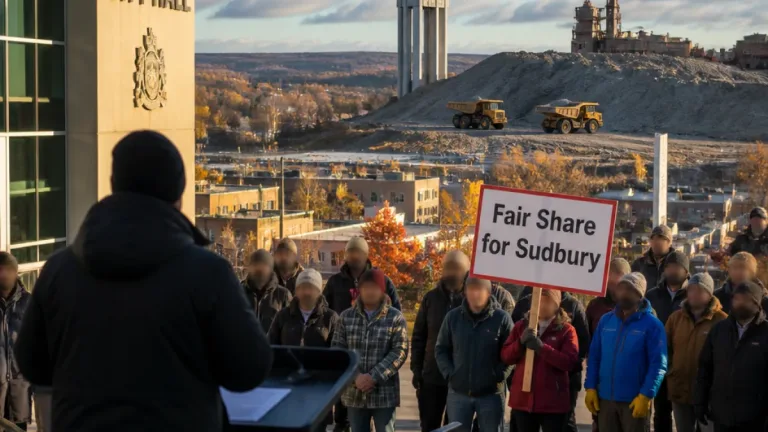

Yellowknife voters will head to the polls this October at a time of economic contrast: legacy mine closures that have already shaken the local economy sit alongside federal announcements that promise large-scale investment in the Northwest Territories.
Economic uncertainty and opportunity
Business analysts and local experts say the incoming council will need to balance managing immediate fallout from industry retrenchment with preparing the city for potential new growth driven by national projects.
One high-profile development is the Department of National Defence’s plan to spend between $5 to $8 billion in the territory, a multi‑year commitment that could deliver substantial direct and indirect economic activity. Separately, the federal endorsement of a road linking Yellowknife to the Nunavut border — framed as a nation‑building project — introduces possibilities for enhanced trade, travel and resource servicing.
Local role: facilitation and preparedness
Yellowknife will not control the timing or scope of these federal projects, but municipal leaders can influence outcomes by setting the regulatory and planning conditions that allow economic activity to flow. Economists say the city must ensure it can attract capital and labour without creating unnecessary barriers.
"Shockingly, it's quite positive ... Though we shouldn't kid ourselves, we're definitely entering a period of turmoil," said economist Graeme Clinton, reflecting both optimism and caution about the city's prospects.
Clinton, the author of a 2024 report that examined the territory’s post‑diamond‑mining future, suggested Yellowknife’s existing economic base could already support a population of about 30,000 and might grow to as much as 35,000 within 25 years if opportunities materialize and are managed well.
- Immediate challenge: respond to mine closures that have reduced local employment and municipal revenues.
- Short‑to‑medium term: plan for potential activity associated with defence spending and the proposed Nunavut road.
- Ongoing need: attract and retain skilled workers while ensuring housing, services and infrastructure keep pace.
Policy levers and practical priorities
Municipal governments have a narrower toolkit than territorial or federal authorities, but their decisions on zoning, permitting, infrastructure investment and community supports can accelerate or impede private sector responses. Local business groups have urged the city to avoid creating regulatory bottlenecks and to take steps that maintain a healthy supply of both capital and labour.
| Issue | Municipal levers |
|---|---|
| Housing and population growth | Zoning reform, development approvals, servicing land |
| Workforce attraction | Partnerships with training providers, childcare supports, municipal incentives |
| Infrastructure for large projects | Local permitting, road and utility coordination, community engagement |
City hall will also face the political task of explaining trade‑offs to residents: short‑term pressures such as budget constraints and service delivery must be balanced against longer‑term investments that could support growth.
What the electorate should expect
Residents should expect the next council to be asked to move quickly on planning matters while retaining public accountability. That means clearer timelines for approvals, robust community consultation on change, and targeted efforts to bolster essential services that underpin any expansion — from water and sewer capacity to emergency services and transit.
How Yellowknife navigates the transition away from a diamond‑dependent economy while positioning itself for potential federal investment will be a central theme in the October campaign. Candidates will be judged on their ability to marry practical municipal governance with an understanding of large, externally driven projects and their local implications.
For voters, the choice in October is not simply who will run municipal services for the next four years; it is which leadership team can steer Yellowknife through a period of upheaval and opportunity, making the most of federal projects while managing the social and economic costs of change.