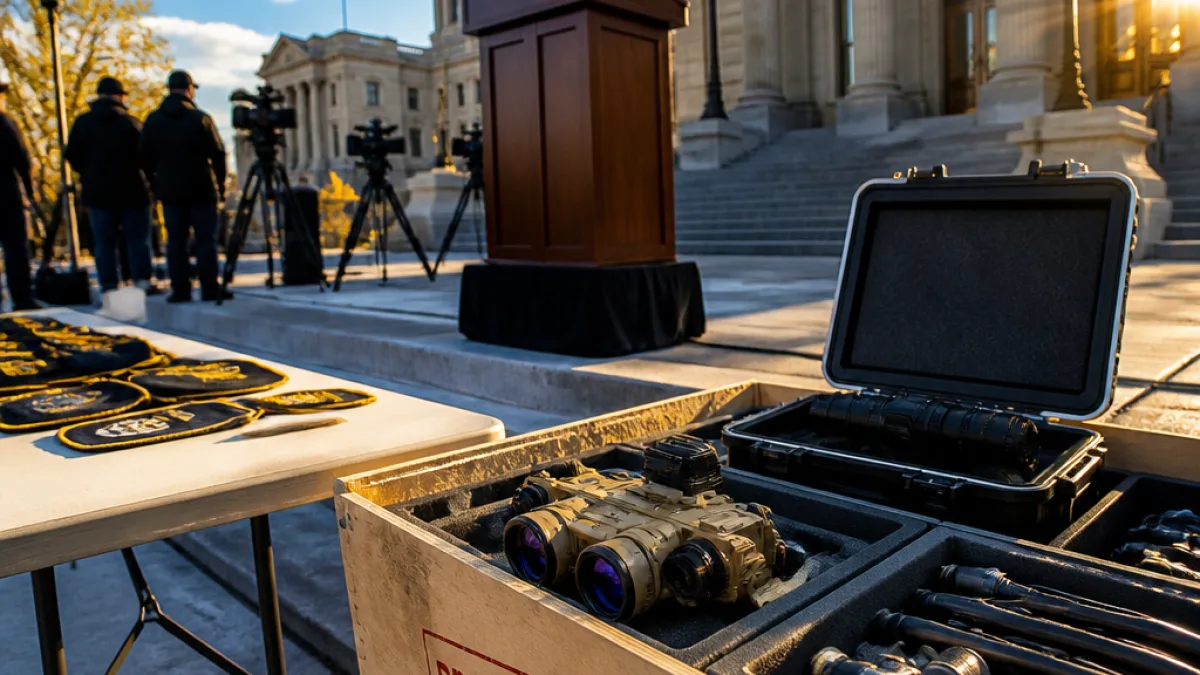
REGINA — Saskatchewan's plan to equip its fledgling marshals service with high-tech tactical weapons and tools has been put on hold after officials said a purchase request was issued without proper authorisation.
Minister says bid was started 'rogue'
Community Safety Minister Michael Weger told reporters the procurement request for items such as sniper rifles, sound cannons and night-vision goggles was not approved by his office and stemmed from an employee acting beyond their remit.
"I'll take overly ambitious over lazy any day of the week, but (the employee was) overly ambitious on starting the process of a specialized unit when we're not ready for that yet," Weger said.
Weger said neither his office nor Chief Marshal Rob Cameron were aware of the bid request until last week. He described the broader plan for a tactical response capability as unsettled and said he lacks the information necessary to endorse such a unit at this time.
What was on the bid request
The request circulated last month sought a range of tactical items intended for a specialised team that would support RCMP and municipal police agencies. The list included:
- Sniper rifles
- Sound cannons
- Thermal camera
- Night-vision goggles
- Hydraulic breaching tools
- Multi-shot launcher
The marshals have said no purchases were completed and that the tactical-capability need was identified as the service began operations.
Marshals still building their ranks
Saskatchewan's marshals began operations last year with a mandate to assist other policing agencies in addressing rural crime, gang activity and drug offences, and to arrest high-risk offenders who have outstanding warrants. The service currently employs 27 officers and has a stated hiring goal of 70 personnel.
| Marshals service | Current staff | Target staff |
|---|---|---|
| Provincial marshals | 27 | 70 |
Weger said the focus should remain on recruitment and building the service's capacity to work alongside the RCMP and other police forces before expanding into specialised tactical roles. He indicated any future decision to form such a unit would require provincial approval.
Political pushback
The Opposition New Democratic Party seized on the revelation, criticising the bid request and questioning oversight and transparency within the new service. The marshals' mandate and its relationship with existing policing bodies have been scrutinised since the unit's launch.
For now, the minister has paused any move toward acquiring the proposed equipment and said the province will need detailed justification and evidence of operational need before entertaining a tactical capability.
What comes next
Weger suggested discussions about a specialised response team are premature until the marshals reach their staffing goals and can provide comprehensive information about the need for such a capability. He said he learned of the procurement effort only recently and wants a formal process and chain of command for any future steps.
The marshals service was created to support rural communities across the province, where residents and municipal leaders have raised concerns about property crime and violent incidents outside major urban centres. Any changes to equipment or role would carry implications for inter-agency coordination, training, oversight and costs.
For the time being, the province's position is clear: no tactical weapons or gear will be acquired without provincial approval and an evidence-based case demonstrating requirement and oversight. The pause places emphasis back on recruitment and partnerships with established policing agencies while ministers, marshals and critics debate the appropriate scope of the new force.
Further announcements are likely once the marshals provide additional information about operational needs and the government completes its review.