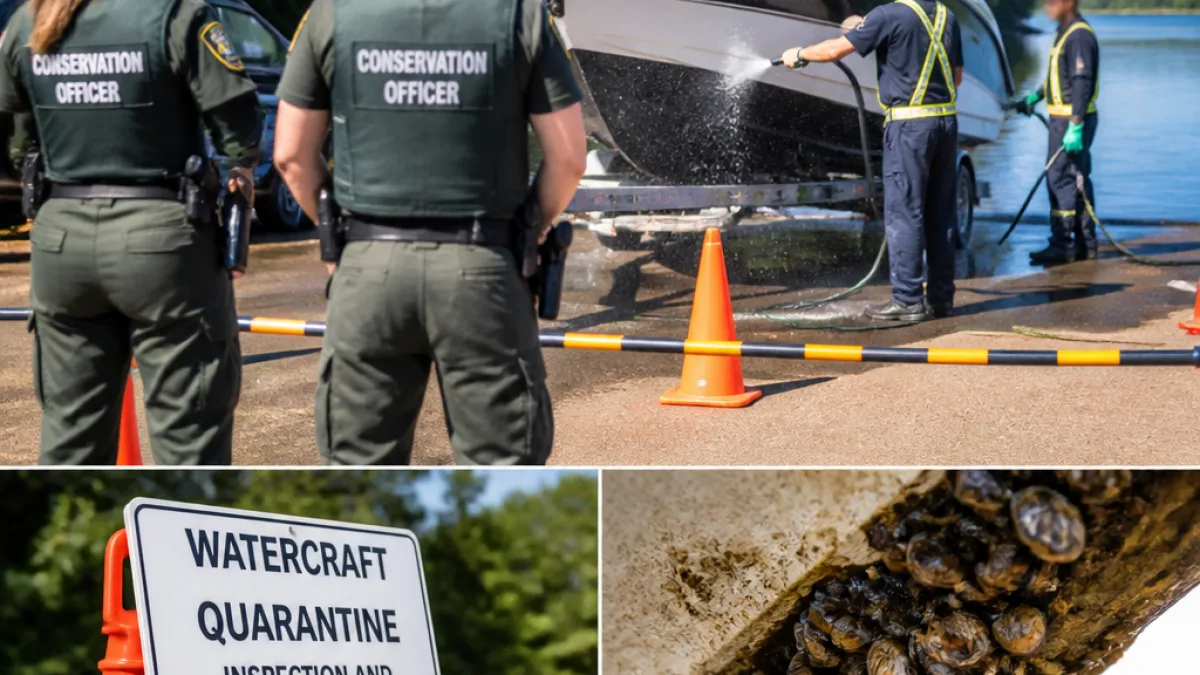
Conservation officers at Blackstrap Provincial Park discovered zebra mussels on a boat during a routine inspection, prompting immediate action to prevent the invasive species from reaching Saskatchewan waterways.
Inspection led to quarantine and charges
The boat, which had recently been in Lake Ontario, was detained while officers worked with the provincial Ministry of Environment to decontaminate the vessel and place it under an additional 30-day quarantine before it could enter any provincial waterbody. The owner, an Ontario resident, was charged with transporting a prohibited species under provincial regulations.
“Watercraft inspections are critical to ensuring Saskatchewan’s waterways are protected from the spread of aquatic invasive species,”
said Environment Minister Darlene Rowden in the provincial news release.
Why this matters for Saskatchewan
Zebra mussels are considered one of the most harmful aquatic invasive species. Once established in a lake or river, they are exceptionally difficult and costly to eradicate. They attach to infrastructure, damage boats, clog water intake systems and alter aquatic ecosystems by filtering plankton and changing food webs.
What authorities are asking boaters to do
Both the Ministry of Environment and Community Safety stressed the role of inspections and basic boating hygiene in stopping the spread. Community Safety Minister Michael Weger emphasised inspections as a frontline defence.
“Watercraft inspections are not just a regulatory requirement; they are one of the most effective tools we have for stopping aquatic invasive species from entering and damaging Saskatchewan’s waterways,”
Officials reminded watercraft owners of the province’s Clean, Drain and Dry guidance and the legal duty to stop at open inspection stations.
- Stop at open inspection stations when transporting a watercraft.
- Follow Clean, Drain and Dry: remove plants and animals, drain water from all equipment, and dry gear before entering another waterbody.
- Report suspected invasive species sightings to provincial authorities.
Immediate response and enforcement
Conservation officers carried out the initial inspection and, with the Ministry of Environment, imposed quarantine measures to prevent the vessel’s spread. After decontamination, the boat remains under a 30-day isolation period before the quarantine is lifted.
| Action | Outcome |
|---|---|
| Inspection at Blackstrap Provincial Park | Zebra mussels detected |
| Decontamination | Completed; vessel remains under quarantine |
| Quarantine period | 30 days additional isolation |
| Legal action | Owner charged with transporting a prohibited species |
Broader context
Zebra mussels were first detected in the Great Lakes region in the late 1980s and have since spread to multiple freshwater systems in North America. They are commonly moved between waters on boat hulls, bilges, live wells, anchors and other equipment. That pattern is why routine inspections and responsible boating practices are central to provincial prevention efforts.
Conservation officers are continuing inspections throughout the late summer and into early fall to intercept any further risks. The province reiterated that anyone moving a boat must stop at open inspection stations and comply with provincial rules designed to keep Saskatchewan lakes and rivers free of aquatic invasive species.
The discovery at Blackstrap is a reminder to recreational boaters that even short trips to other provinces or the Great Lakes carry a risk of transporting invasive species. Authorities say vigilance, prompt reporting and adherence to simple cleaning steps remain the best defence.
For the public, more information and guidance on aquatic invasive species prevention is available through the provincial Ministry of Environment website and conservation offices.