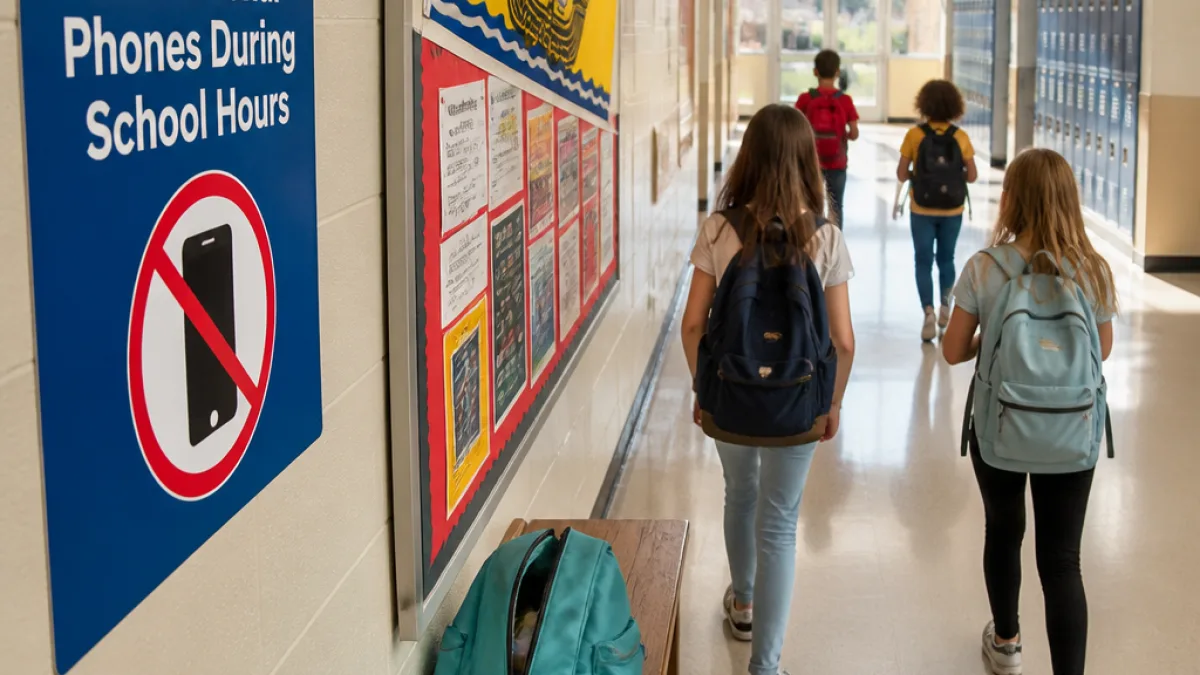
FREDERICTON — New Brunswick is implementing a province-wide ban on elementary students using personal mobile devices during the school day starting in September, with the restriction extended to high school students in February, the provincial government announced Friday.
Policy aims and scope
The Liberal government says the rule will cover personal cellphones and other mobile devices brought from home. At the same time, provincial officials said school-owned devices and networks will be configured to block access to social media sites, while students will still be able to use personal laptops and tablets for classroom learning purposes.
“That’s why we’re taking action to reduce distractions, limit exposure to social media sites and support the well-being of students,”
The quote was attributed to Education Minister Claire Johnson, who said the decision responds to concerns about excessive screen time and the impact of social platforms on children and youth.
Where New Brunswick sits among provinces
New Brunswick’s approach brings its rules closer to those in other provinces but with a distinct timetable and scope for implementation:
- Quebec currently enforces a blanket ban on personal mobile devices for all grades.
- Ontario has restrictions for kindergarten to Grade 6 and prevents older students from using phones during class time.
- Other provinces maintain a mix of policies, ranging from allowing phone use during breaks to leaving regulation to local school boards.
| Jurisdiction | Ban or restriction |
|---|---|
| New Brunswick | Elementary ban Sept; high school ban Feb; social media blocked on school networks |
| Quebec | Blanket ban for all grades |
| Ontario | Kindergarten to Grade 6 ban; older students restricted during class |
Reasons and expected impacts
Government officials framed the measure as a response to concerns around mental health and learning disruptions associated with excessive screen time and social media. The policy is intended to reduce classroom distractions and to support student well-being by limiting access to certain online platforms while at school.
School boards and administrators will be tasked with implementing the ban, and the government indicated networks and school devices will be adjusted to prevent access to social media. The policy maintains flexibility for instructional technology: devices serving educational purposes — including personal laptops and tablets — will remain permissible in the classroom.
What parents, students and schools should know
Officials did not outline details about enforcement measures, disciplinary steps for non-compliance, or exemptions for medical or safety reasons in the initial announcement. School communities are likely to seek clarity on:
- How the ban will be enforced during recess, lunch and before/after school on school property.
- Whether and how emergency communication between students and families will be accommodated.
- Support and resources for schools to implement network-level blocking of social media sites.
Education stakeholders — including parents, teachers and school boards — will be watching for follow-up guidance from the department that clarifies operational details and answers questions about student safety and classroom needs.
Context and next steps
New Brunswick joins a number of jurisdictions across Canada that have sought to regulate student device use amid growing debate over screen time, privacy and classroom focus. While Quebec has the strictest province-wide ban, other regions rely on board-level policies or classroom rules. The staged rollout in New Brunswick — first elementary, then high school — provides a predictable timetable for schools and families but also raises questions about consistency and enforcement for older students when their turn arrives in February.
The department’s announcement did not include an implementation handbook or specific dates beyond the two general start points. School communities are likely to receive more detailed direction from the Education Department and local school districts in the coming weeks.
As the new school year approaches, New Brunswick’s policy change will be closely monitored for its effects on student behaviour, classroom learning and overall well-being.