FREDERICTON — NB Power has taken a significant step toward converting the Belledune Generating Station from coal to a biomass fuel source after securing supply agreements with domestic producers of sustainably sourced pellets made from wood residue and agricultural hemp.
Transition from imported coal to local biomass
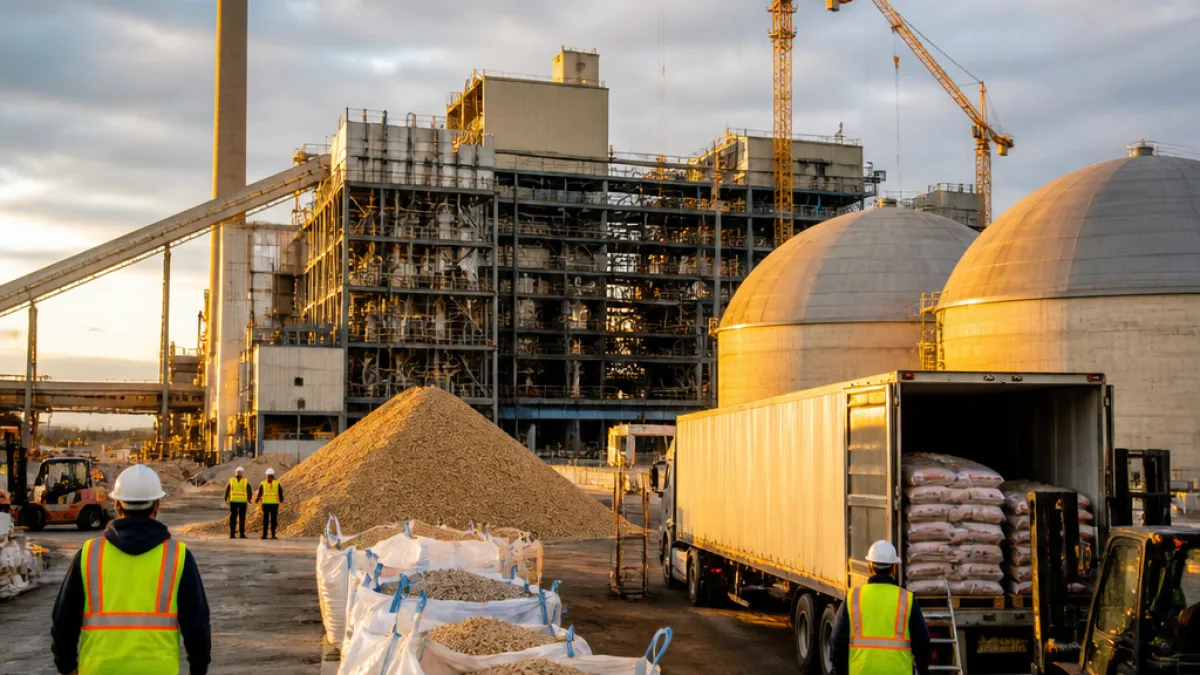
The utility says the new contracts provide the bulk of the biomass fuel the northeast New Brunswick station will need to replace coal currently bought from foreign suppliers. The pellets are to be produced from residual material left by forestry operations — including branches and other wood scraps on the forest floor — and from agricultural hemp.
With those supply chains in place, NB Power confirmed it can begin equipment upgrades at Belledune designed to burn high-density pellets in a high-efficiency boiler to create steam that will drive the plant’s turbines.
Belledune supplies about 15 per cent of New Brunswick’s electricity, making the plant’s future fuel source a matter of provincial significance for both reliability and greenhouse-gas planning.
Federal deadline and national context
The move follows federal requirements to phase out coal-fired electricity by 2030. NB Power’s publicly posted timeline shows the Belledune conversion will be completed between 2028 and 2030, a window that aligns with Ottawa’s deadline and gives the utility time to carry out equipment modifications and commissioning.
Belledune is one of only eight remaining coal-fired power plants in Canada. There are four in Nova Scotia and three in Saskatchewan. Ontario eliminated coal-fired power in 2014, and Alberta completed its phase-out in 2024.
“These milestones give us confidence in the path forward as we continue working to maintain reliable service for customers while preparing for a future without coal,”
NB Power chief executive Lori Clark said in a statement, underscoring the utility’s aim to balance reliability with the transition away from coal.
Local supply, local impacts
Securing domestic pellet suppliers is intended to reduce dependence on foreign coal imports and to root the new fuel supply in the provincial economy. The pellets will come from material that is generally considered a byproduct of forest operations, rather than from whole-tree harvesting.
NB Power indicated that the material used will be sustainably sourced residues — a point that will be central to public and regulatory scrutiny as the project proceeds. The utility has spent much of the last decade searching for a viable replacement fuel for Belledune; the new agreements move the project from planning into execution.
- Fuel type: Wood and agricultural hemp pellets made from forestry residues
- Plant role: Provides about 15% of provincial electricity
- Conversion timeline: Equipment work and conversion aimed for 2028–2030
Questions ahead
As NB Power begins equipment upgrades, observers will be watching for details about logistics — pellet production rates, transportation, storage capacity at the plant, and long-term contracts to ensure uninterrupted fuel supply. The supplier agreements announced on Thursday secure the majority of the projected fuel needs, the utility said, but further operational details and timelines for the upgrade work have not been released in full.
The conversion also raises questions about how the supply chain will integrate with New Brunswick’s forestry sector and what regulatory oversight will ensure that harvesting and residue collection meet sustainability standards. NB Power said the pellets are sourced from residue left on the forest floor and other scraps, not whole-tree removals, but watchdogs and communities are likely to seek more detailed assurances as work proceeds.
| Item | Figure |
|---|---|
| Belledune share of NB electricity | 15% |
| Planned conversion completion | 2028–2030 |
| Remaining coal-fired plants in Canada | 8 |
New Brunswickers, including both anglophone and francophone communities across the province, will be affected by the shift in a number of ways — from potential changes in forestry work patterns to the assurance of reliable electricity supply as the plant moves off coal. The conversion is emblematic of the region’s dual goals of meeting national environmental commitments while maintaining energy reliability and supporting local industry.
NB Power has framed the supply agreements as a necessary step to begin physical work at Belledune. Further announcements are expected as the utility moves into the next phase of equipment retrofits and commissioning.