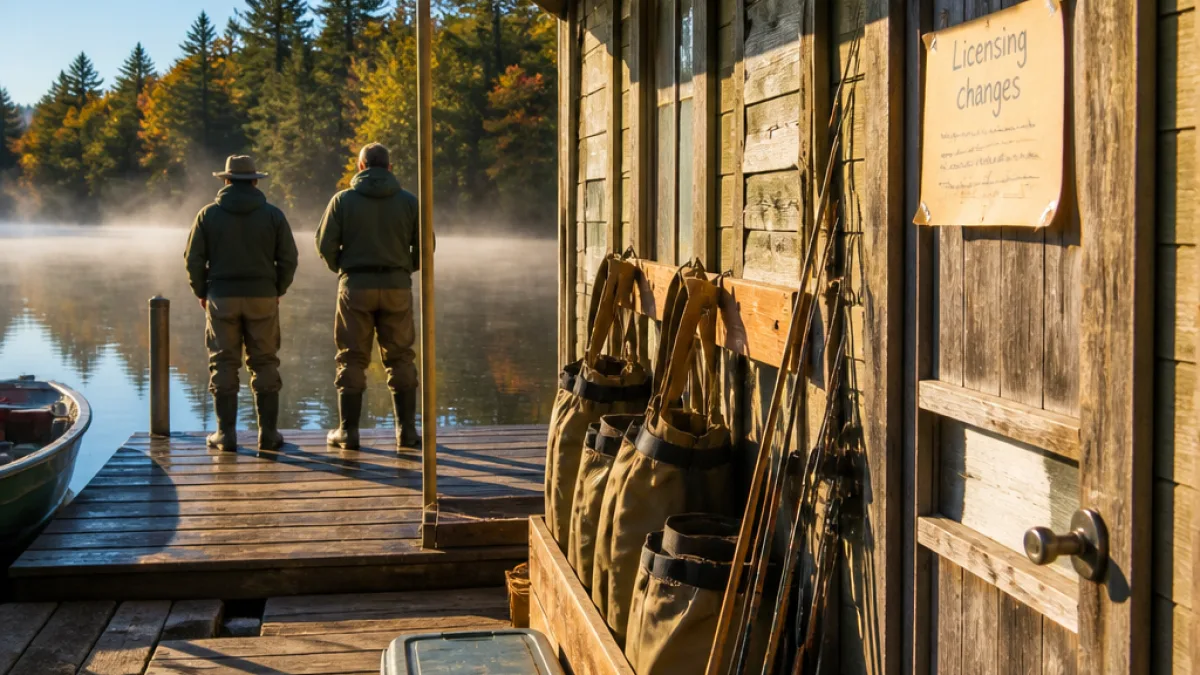
New Brunswickers in the tourism and outfitting sectors and American anglers who travel to the province are expressing alarm after the provincial government signalled it could move to restrict hunting and fishing licences issued to U.S. visitors in response to an ongoing trade dispute with the United States.
Deep roots, sudden uncertainty
For decades, anglers from Maine and other New England states have crossed the border to fish New Brunswick rivers and lakes. Some, like Bradford Burns, have bought property and camps here and spend weeks each year chasing salmon and trout. Burns, who grew up in Friendship, Maine, said he has travelled to the province regularly for about 25 years, often staying for extended periods to fish the Cains River and the Miramichi.
"Every day it's a little different. Some of them pass up the river through the pool... It's just interesting to me and exciting and very natural and wild," Burns said of his time fishing in New Brunswick.
News that Ottawa and provincial authorities are considering tighter rules as part of their response to the trade dispute has left some American visitors and local outfitters scrambling to understand what the change would mean for bookings, income and long-standing cross-border relationships.
Economic and community implications
Outfitters and camp owners in rural New Brunswick rely on seasonal visitors to sustain businesses during the spring-to-fall tourism cycle. The potential restriction threatens not only guiding and lodging revenues but also secondary spending in small-town stores, restaurants and service shops. Those concerns echo through communities that depend on outdoor tourism to supplement employment and provincial income.
Officials have framed the measure as a response to trade measures and diplomatic tensions with the United States. But for local operators the effect would be immediate and specific: shorter seasons, fewer clients and a lingering uncertainty that could deter bookings in upcoming months.
Cross-border ties and personal investments
Many American anglers have personal and financial ties to New Brunswick. Burns said he has invested heavily in fishing camps and in rights to prime pools near Blackville, and that those assets are part of what keeps him returning. "I really got into it," he said about his passion for inland salmon fishing, adding that the natural and social environment here are major draws.
For visitors who spend weeks at a time, travel is more than a hobby: it is a seasonal rhythm that supports friendships, small businesses and property maintenance. Restrictions on licence access could therefore ripple beyond the immediate loss of angling days.
Questions about implementation and scope
At this stage the government’s intent has prompted questions rather than answers. Anglers and outfitters want to know which licences would be affected, how quickly any change would be introduced, whether exceptions would be made for repeat visitors or those holding property, and what the provincial government would offer as mitigation for lost business.
Until details are public, outfitters say they cannot plan. Cancellations or hesitancy to book could reduce income in communities already challenged by demographic and economic shifts.
Practical considerations for visitors and businesses
Visitors planning trips to New Brunswick this fall should monitor official announcements and confirm the status of provincial licences before travelling. Outfitters and camp operators are advised to communicate clearly with international clients about potential changes and to examine booking policies regarding deposits and cancellations.
- Check provincial licensing websites for the latest rules before travel.
- Contact outfitters directly to confirm bookings and refund policies.
- Keep records of past visits and property ownerships, which may be relevant if exemptions are announced.
Local voices call for clarity
Operators and frequent visitors are urging the provincial government to move quickly to provide specific information so businesses can adapt or seek support. For many, the issue is not merely economic but cultural: fishing trips create and sustain cross-border friendships and local customs that mark life in parts of rural New Brunswick and neighbouring U.S. communities.
| Detail | Information from reporting |
|---|---|
| Longtime visitor example | Bradford Burns — has travelled to N.B. about 25 years; owns camps and fishing rights near Blackville |
| Key rivers mentioned | Cains River; Miramichi |
| Hometown of visitor | Friendship, Maine |
As the province refines its response to the trade dispute, small businesses and visiting anglers will be watching for concrete proposals and timelines. The outcome will affect not only licences on paper but the livelihoods and traditions of people on both sides of the border who have long shared New Brunswick's rivers and wilderness.
Coverage will continue as officials release further details.