The New Brunswick government has issued an equine health advisory after a horse that took part in a recent show in Sussex may have been exposed to Equine Herpesvirus Type 1 (EHV‑1), a contagious virus that can cause respiratory and neurological illness as well as pregnancy loss in horses.
Who is affected and why
Nicole Wanamaker, the province’s chief veterinary officer, alerted exhibitors, trainers and horse owners who attended the 4‑H Round Up Show at the King’s County Fair Draft Horse Show earlier this month that a horse present at the event had been boarded at the same facility as an animal that recently tested positive for EHV‑1.
Wanamaker said the horse with a confirmed case of EHV‑1 was not present at the Sussex show, but because of the shared boarding connection there remains a potential risk of exposure for horses that attended.
What the province is advising
The chief veterinary officer is urging those who were at the show to take specific biosecurity and monitoring steps immediately:
- Isolate horses that attended the show from other animals for 14 to 21 days.
- Monitor horses closely for clinical signs, including fever, lethargy or reduced appetite.
- Contact a veterinarian without delay if a horse develops a fever above 38.9°C or exhibits other signs of illness.
Why EHV‑1 is a concern
Equine Herpesvirus Type 1 is recognised as a highly contagious disease of horses. According to the provincial advisory, EHV‑1 can present with respiratory symptoms, cause neurological disease in severe cases and result in pregnancy loss in broodmares. Because the virus can spread rapidly among horses, early detection and isolation are key to limiting outbreaks.
Practical steps for horse owners
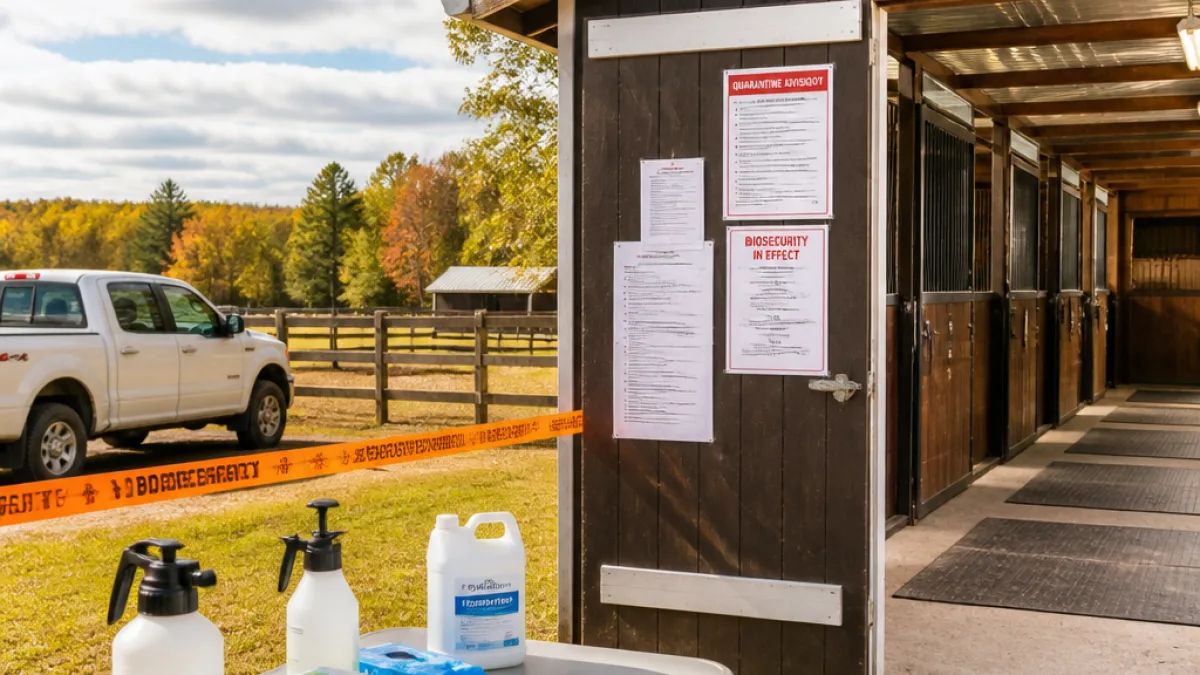
Owners and trainers who were at the Sussex show should review their stable management and biosecurity measures. Practical steps include limiting movement on and off premises, reducing shared use of tack and equipment, cleaning and disinfecting communal areas, and maintaining accurate records of horses and their contacts to support contact tracing if required.
Veterinarians can provide advice tailored to individual operations and determine whether testing or additional measures are warranted if clinical signs appear.
Monitoring timeline and signs
The province’s 14‑ to 21‑day isolation recommendation aligns with the period during which exposed horses may develop signs of infection. Horse owners should be vigilant throughout that timeframe and should seek veterinary assessment promptly when fever or behavioural changes occur.
| Issue | Provincial guidance |
|---|---|
| Isolation period | 14–21 days |
| Fever threshold | > 38.9°C |
| Key signs to watch | Fever, lethargy, reduced appetite |
Local impact and context
The advisory follows routine surveillance and reporting procedures designed to limit spread when an infected animal is identified. Events such as 4‑H shows and county fairs bring together horses from multiple stables and regions, increasing the potential for exposure if even one animal has contact with an infected horse or contaminated equipment. The province’s message is precautionary: although the confirmed positive animal did not attend the Sussex show, the shared boarding connection justifies targeted isolation and monitoring to protect the broader equine community.
Horse owners and exhibitors in New Brunswick rely on prompt communication from veterinary and government officials to manage risks to their animals and livelihoods. Those with concerns or with horses developing symptoms have been asked to contact their private veterinarian or provincial animal health authorities for direction.
This advisory underscores the importance of strict biosecurity at events and boarding facilities, timely reporting of symptoms, and co‑operation between owners, veterinarians and government animal health officials to reduce the risk of disease spread.
WE NEWS will follow up with any new information from provincial veterinary services or local veterinarians as it becomes available.