A community born of recovery
When Stu Greenoff settled in Newfoundland nearly 16 years ago after leaving Blackpool, England, he could not have predicted the role the province would play in his own recovery journey — or that his experience would lead to the creation of a local peer group now known as the HeadCase Community.
"When Stu Greenoff moved to Newfoundland from Blackpool, England, nearly 16 years ago, he didn’t know the province would eventually become the place where he would begin dealing with his own mental health and addiction issues."
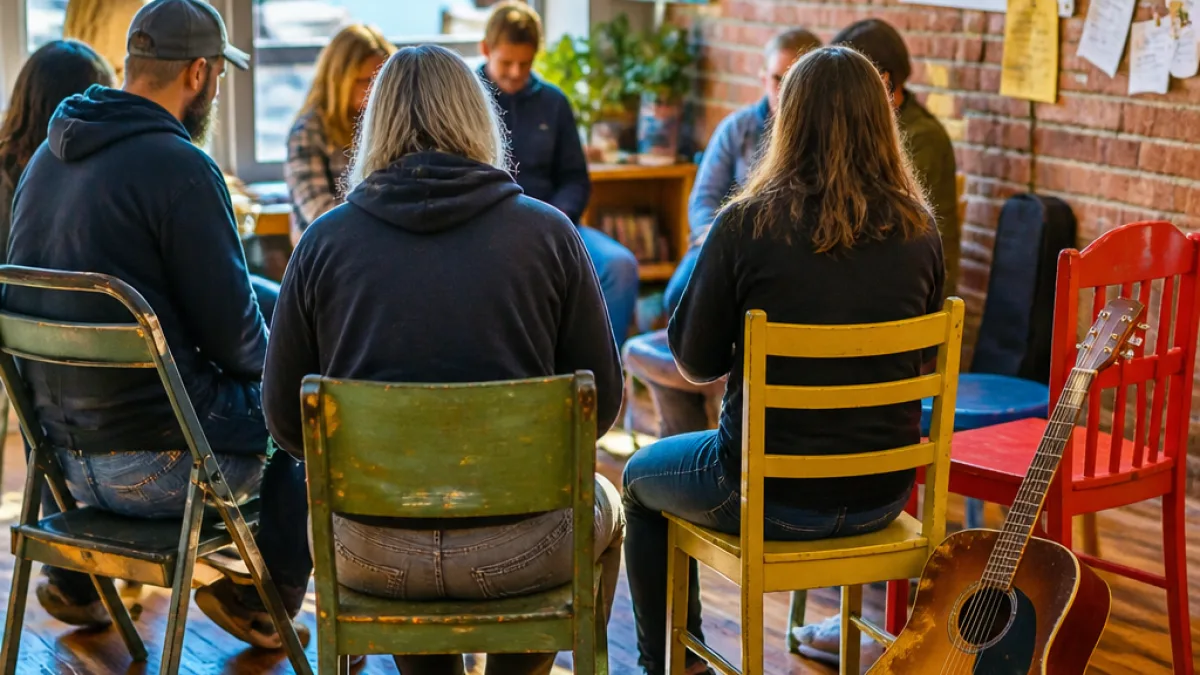
HeadCase is a grassroots effort framed around the idea that community and shared experience are vital to recovery. The group’s co-founder has spoken about how his personal path through addiction and mental-health challenges revealed the importance of people coming together — not just for services, but for understanding, music and family.
Peer supports complement formal care
In St. John’s and across Newfoundland and Labrador, formal mental-health and addiction services are offered by provincial health authorities and community agencies. Peer-run initiatives such as HeadCase fill a different, but complementary, role: they provide spaces where lived experience is central and mutual support is the primary intervention.
Members and organisers say peer communities can reduce isolation, normalise help-seeking and create low-barrier pathways to broader care. In many cases, those connections can be the difference between someone reaching out for clinical help and continuing alone.
Creativity, roots and recruitment
One of the things that sets HeadCase apart is the background of its co-founder. Greenoff’s life has included phases that are far from the stereotypical image of a mental-health advocate — including a past playing in a doom metal band — and that eclectic history shapes how the community presents itself: inclusive, music-friendly and pragmatic.
HeadCase has also placed family and music at the heart of its story, signalling to people who might be sceptical about traditional supports that recovery spaces can be culturally resonant and personal.
Local implications and next steps
Peer-run communities like HeadCase carry particular weight in Newfoundland and Labrador, where social ties and small-community networks are central to day-to-day life. For St. John’s residents, HeadCase offers another avenue of support at a time when demand for mental-health services remains high.
While provincial and community organisations provide clinical treatment, counselling and crisis services, peer groups offer ongoing connection and a shared language that many people find essential. That combination — formal care plus humane, experience-led community — is increasingly recognised by experts and service planners as a pragmatic approach to improving outcomes.
- Origin: HeadCase launched after its co-founder recognised the importance of community in his own recovery.
- Approach: Peer-led, with emphasis on lived experience, music and family supports.
- Local role: Complements existing mental-health and addiction services in St. John’s.
| Feature | Detail |
|---|---|
| Founder background | Moved from Blackpool to Newfoundland nearly 16 years ago; past in a doom metal band |
| Focus | Community, music, family and lived-experience peer support |
Why St. John's should take note
People in St. John’s who have navigated mental-health or addiction challenges often point to the power of human connection — a neighbour, a family member or a peer who has 'been there'. HeadCase takes that everyday truth and structures it into a community resource. For a city that prizes its tight social fabric and cultural life, that is no small thing.
As HeadCase moves forward, its continued success will depend on how it maintains accessibility, how it works alongside established services and how it stays true to the lived-experience ethos that gave it birth. For many, the most important promise is simple: a place to be heard, to make music, and to keep walking the hard road of recovery with others.