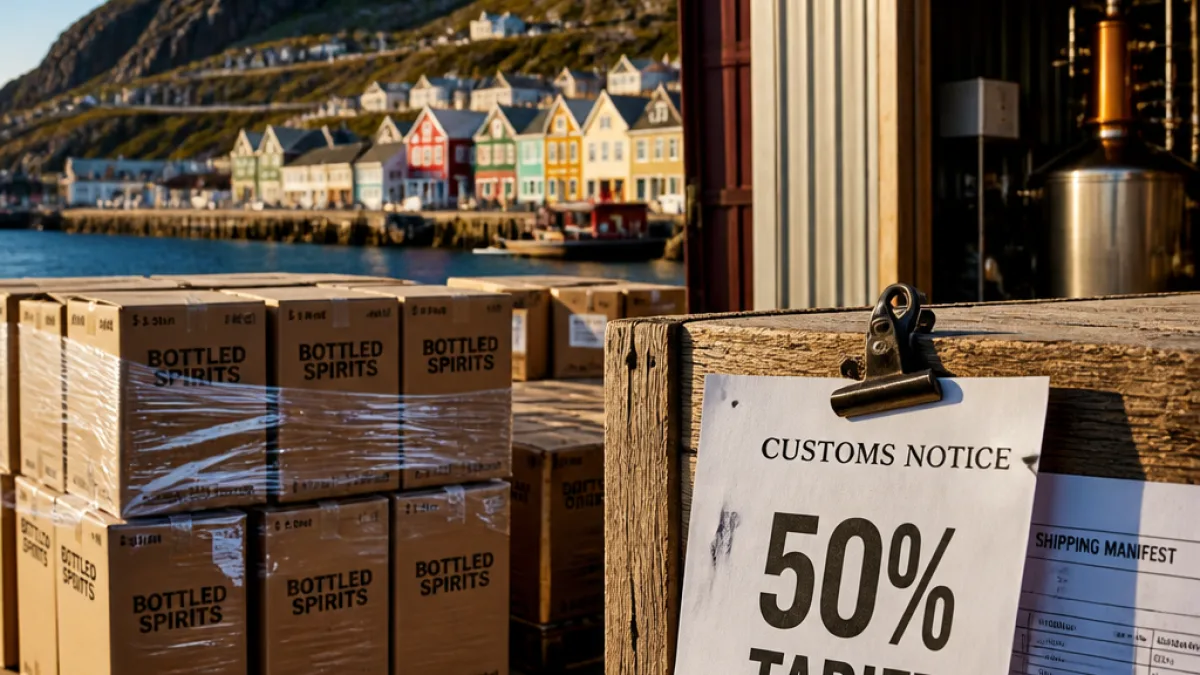
Small-batch distillers and internationally distributed spirit brands based in Newfoundland and Labrador are scrambling to assess the damage after the United States imposed a new round of punitive tariffs that took effect on Aug. 22. Local producers warn the move could all but eliminate access to the U.S. market for some Newfoundland-bottled beverages.
Immediate hit to sales and growth plans
Jonathan Hemi, managing partner of Crystal Head Vodka and Signal Hill Whisky, told CBC News the new 50 per cent tariffs will have a “significant” impact on business. For brands that already rely heavily on U.S. sales, Hemi said the duty is too steep to absorb without jeopardizing their business model.
“When tariffs are 10 or 15 per cent from a business standpoint, everyone can cut a little, everyone makes a little less money, things like that. But when they're hitting like 50 per cent, it basically puts you out of business in that market.”
Hemi noted Crystal Head — co‑founded by actor Dan Aykroyd — is sold around the world, but the United States represents a substantial portion of its revenue. The managing partner estimated the U.S. accounts for about half of the company’s profits, a concentration that now threatens the brand’s bottom line.
Smaller producers face stalled expansion
Smaller outfits that had been planning to enter the U.S. market say those plans are now effectively on hold. Hemi said Signal Hill Whisky had been in talks with a U.S. importer when the tariffs were announced; that discussion has been paused indefinitely. For businesses without deep capital reserves, the sudden shift in market access can curtail growth for months or longer.
Asked whether relocation of production to the United States might be considered if the duty looks permanent, Hemi said he “hoped not,” implying the move would be a last resort for Canadian producers facing long-term trade barriers.
Why the tariffs matter to Newfoundland and Labrador
The province’s craft spirits sector is small but growing, and access to the U.S. market is a common route to scale. When a producer’s largest export destination is suddenly subject to a dramatic tariff increase, the effects are immediate and concrete:
- Revenue loss: Reduced sales where margins can’t absorb the duty.
- Export disruption: Importers shelving deals and delaying distribution.
- Investment uncertainty: Producers postponing plans for expansion or hiring.
Numbers at a glance
| Metric | Reported figure |
|---|---|
| New U.S. tariff level | 50% |
| Estimated share of Crystal Head’s profits from U.S. | ~50% (company estimate) |
Broader implications and next steps
Trade disputes that lead to steep duties reverberate beyond the balance sheet. Local distillers depend on importers and retail partners to place their products on shelves and build brand recognition. When importers face a sudden cost surge, they often halt shipments and reconsider distribution strategies.
For Newfoundland and Labrador’s industry, the outlook will depend on whether the tariffs are temporary leverage in a larger trade negotiation or become a sustained barrier. In the near term, producers can pursue several options without guaranteeing relief:
- Negotiate price adjustments with U.S. partners (often difficult at 50%).
- Seek alternative export markets to diversify sales.
- Lobby provincial and federal officials for trade remediation or supports.
Federal and provincial trade officials have been asked for comment on the new duties and their potential supports for affected businesses. At the time of publication, no official provincial comment had been provided.
Local industry watching closely
For the owners of smaller Newfoundland and Labrador distilleries, the tariffs are not an abstract headline — they are a potential threat to livelihoods and to the province’s nascent export sector. Whether companies absorb the cost, pass it to consumers, or withdraw from the U.S. market will shape the industry’s trajectory for years to come.
The next weeks will show whether negotiations at higher government levels ease the pressure or whether producers will need to retool their export strategies. For now, the mood among local spirits makers is cautious and concerned as they wait for clarity on a market that has been central to their growth.
Reporting from St. John's.