
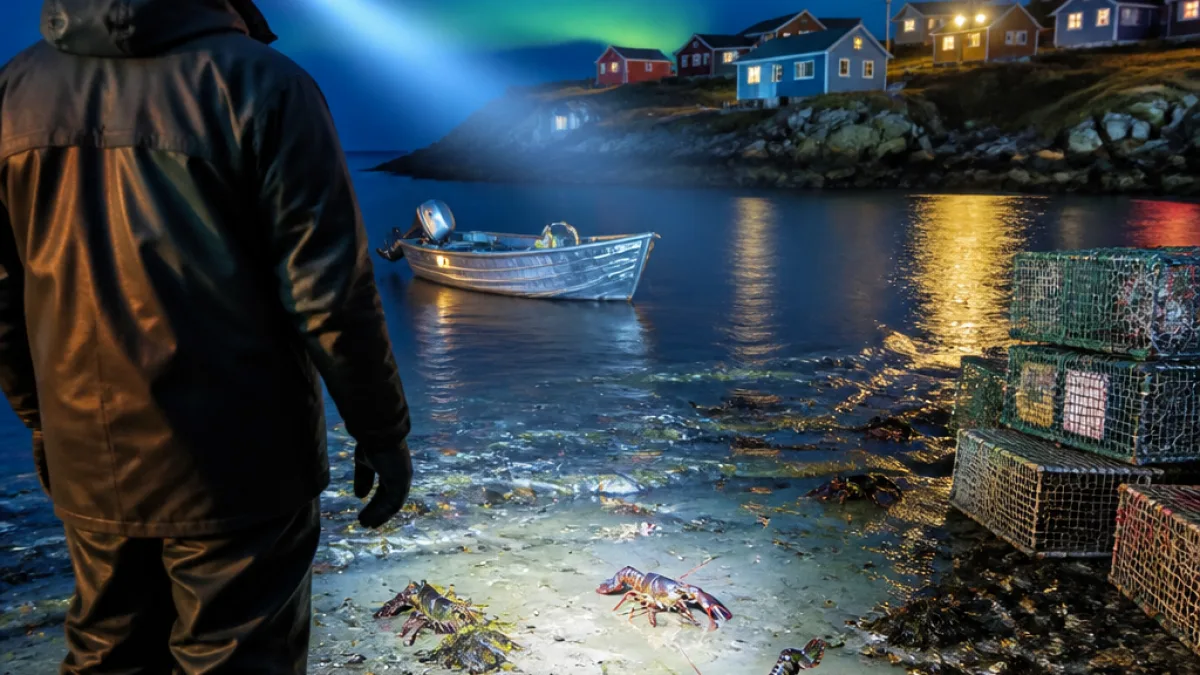
There’s a slow, steady shift taking place along Newfoundland and Labrador’s coasts: lobsters are turning up where they once were rare, and fishers in outport communities are taking notice.
From the shoreline to the landing
For many veteran fishers on the Great Northern Peninsula, the sight of lobsters crawling along beaches at night would once have been unheard of. Carl Hedderson, a Noddy Bay resident who has been hauling nets and traps for five decades, says recent years have felt different.
“I never ever saw a lobster, but now you do it and you see lobsters crawl around by the beach in the nighttime,”
Hedderson attributes the change to warmer conditions and better survival rates for the crustaceans. Those observations are echoed by researchers who say the preferred temperature window for lobster — a marine "Goldilocks zone" — is shifting northward as ocean waters warm.
Changing value of a fishery
Historically, Newfoundland and Labrador has lagged behind the other Atlantic provinces in lobster value. But that is changing: reported landings in the province rose markedly between 2018 and 2024.
| Year | Newfoundland and Labrador landings (tonnes) | Estimated value |
|---|---|---|
| 2018 | about 3,300 | about $48-million |
| 2024 | about 9,400 | $137-million |
By contrast, neighbouring provinces remained far larger in landed value in 2024: Nova Scotia reported nearly $962 million, New Brunswick about $323 million, and Prince Edward Island almost $318 million.
Science and stories align
Darrell Mullowney, a research scientist with the provincial fisheries department, describes lobster habitat as bounded by temperatures that are "not too hot or too cold." He says the centre of that preferred zone has moved north in recent years, increasing the relative importance of lobster to Newfoundland and Labrador's fisheries economy.
“It’s becoming very important to us in terms of rankings of economic returns from important fisheries in Newfoundland,”
Mullowney notes that lobster has climbed toward second or third place in economic value, rivaling other key species such as northern shrimp. Those shifts have important consequences for fishing communities that have long relied on other stocks.
Local impacts and practical implications
For fishers, a growing lobster presence can mean new income opportunities — but also new challenges. Transitioning into a different fishery requires gear, licences and knowledge of lobster biology and markets. Community co-operatives and fishers’ associations will need to consider training, capital costs and quota arrangements.
- Gear and infrastructure: lobster traps and handling facilities differ from those used for shrimp and crab.
- Regulation and access: licences, seasons and quotas are controlled by Fisheries and Oceans Canada and provincial regulators.
- Market development: buyers and supply chains must be in place to convert increased landings into stable revenue.
Those practical matters will shape how much coastal communities can benefit from the changing distribution of lobster. Without planning and resources, early gains could be unevenly distributed.
Outlook and caution
While the northward movement of lobster brings potential economic upside, scientists caution that warming waters also carry risks for other species and for ecosystem balance. Lobster abundance can be sensitive to temperature extremes, predation and disease, and long-term trends remain uncertain.
For now, the sight of lobsters in places where elders never remember seeing them has galvanised curiosity and cautious optimism among fishers. The industry’s rise in value in Newfoundland and Labrador — from roughly $48 million in 2018 to around $137 million in 2024 — underlines how quickly fortunes can shift on the edge of a changing ocean.
As communities weigh new possibilities, local knowledge, scientific monitoring and thoughtful policy will be key to turning a warming sea into sustainable opportunity for the province’s coastal people.