PASADENA — What began as a summer community celebration at the Humber Valley Strawberry Festival on Aug. 7 turned into a natural spectacle that organisers and musicians described as both wondrous and disconcerting when thousands of spruce budworm moths descended on Pasadena Place.
‘It literally looked like a blizzard’
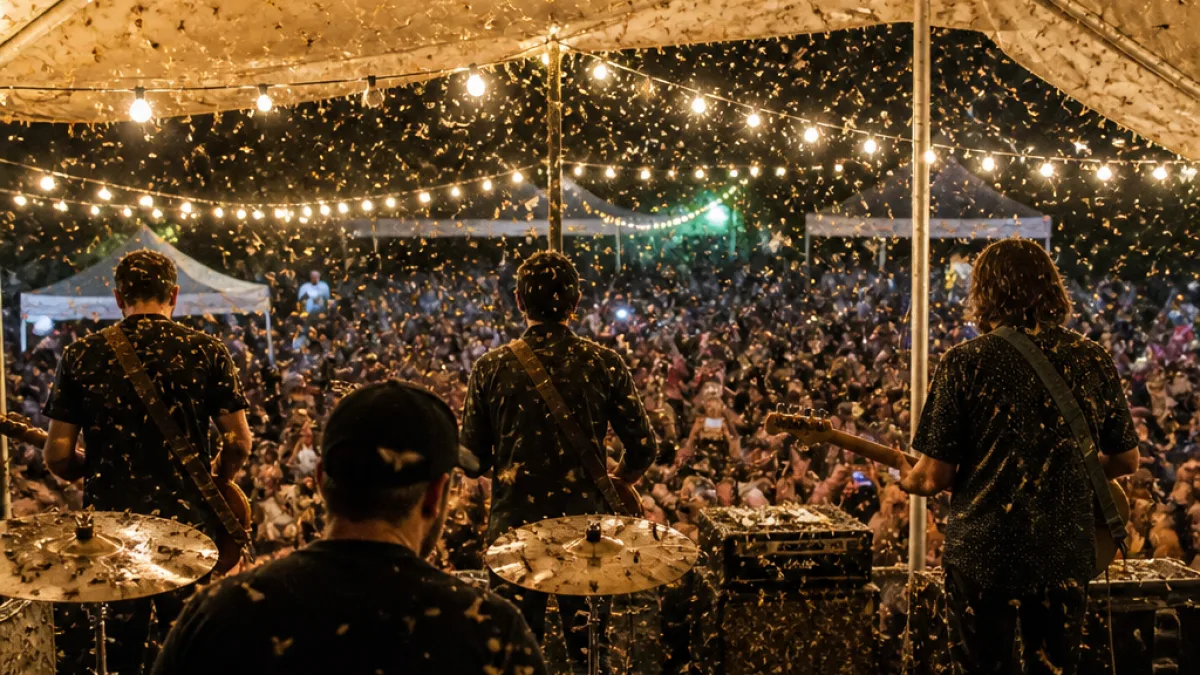
Performers on stage found themselves playing beneath a drifting mass of insects. Vanessa Newman, of Corner Brook band Merrymaker, said the sight was like nothing she had seen before and made performing a challenge.
"It literally looked like it was a blizzard. It was a snowstorm,"
Newman told CBC Radio the moths gathered around lights, layered the outside of a white tent and landed on instruments and in hair. She even realised a moth had been in her drink after she took a sip and spat it out.
Despite the disruption, she said the audience remained, describing the crowd as resilient and engaged through the whole night. "The crowd stuck around the whole night. Right until the very end it was a really big crowd," she said, adding that the band discovered "a whole new level of concentration" to keep moths from mouths and eyes during the set.
A natural display amid an ongoing outbreak
The arrival of the moths at the festival came as part of an ongoing spruce budworm situation in the area. Attendees photographed and shared images of the swirling insects, and organisers were left to contend with an unusual and widespread presence of moths at an otherwise routine summer event.
Photographer Melanie Wells captured scenes of the moths layering the tent and fluttering around lights, images that underline the scale and density of the insect movement that evening.
What happened at the festival
The event in Pasadena became memorable for the intersection of celebration and nature. Performers managed their sets amid the insects, and the audience largely remained, turning what could have been a dispersal into a shared, if odd, experience.
- Musicians reported moths on instruments, in hair and even in beverages.
- Lights and white tents drew the insects, creating dense carpets of moths on surfaces.
- Attendees stayed through the evening despite the disturbance; organisers carried on with programming.
Local reaction and implications
For many festival-goers, the night was an unusual natural phenomenon — a visual murmur like a flock of birds, only made of insects. For those working the event, it posed practical challenges for sound, lighting and food service.
While anecdotes from the night are vivid, the photos and accounts also serve as a reminder that communities across parts of Newfoundland and Labrador are living alongside outbreaks of forest insects. The spruce budworm is known to occur in the province and, during population surges, can appear in large numbers that affect both wilderness areas and settled communities.
Practical advice for residents and visitors
Organisers and performers who face similar situations may consider basic measures to reduce nuisance and maintain safety:
- Cover food and beverages when not in use.
- Use enclosed tents or barriers for food service and performers where possible.
- Reduce attractant lighting or adjust light direction away from gathering areas.
- Carry a light hand towel or soft brush to remove insects from instruments and equipment.
| Detail | Information |
|---|---|
| Event | Humber Valley Strawberry Festival (Pasadena Days) |
| Date | Aug. 7, 2026 |
| Species observed | Spruce budworm moths (large numbers) |
Looking ahead
For now, the night in Pasadena will be remembered for a mix of community spirit and an unscripted encounter with the natural world. Residents who witnessed it described the sight as "strangely beautiful" even as it tested the patience and steadiness of those tasked with keeping a concert running.
As communities across the province continue to manage insect outbreaks of various kinds, local festival organisers and outdoor event planners may increasingly need to factor sudden natural occurrences into their logistics and emergency plans.
The moth-filled night in Pasadena was an unusual footnote to a summer festival — an event where, for a few hours, nature took the stage.