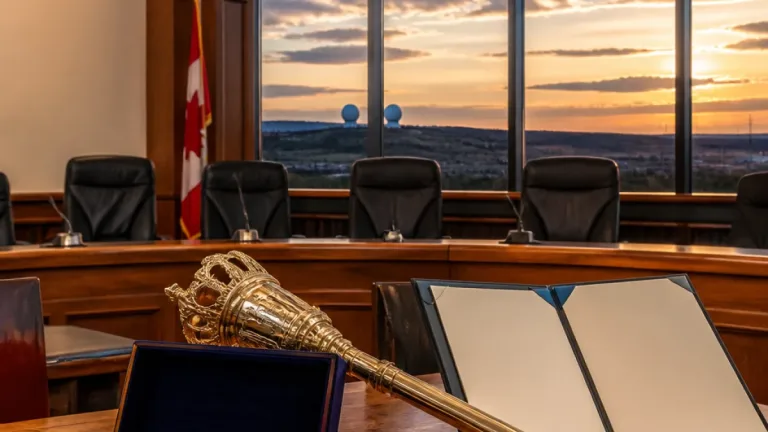
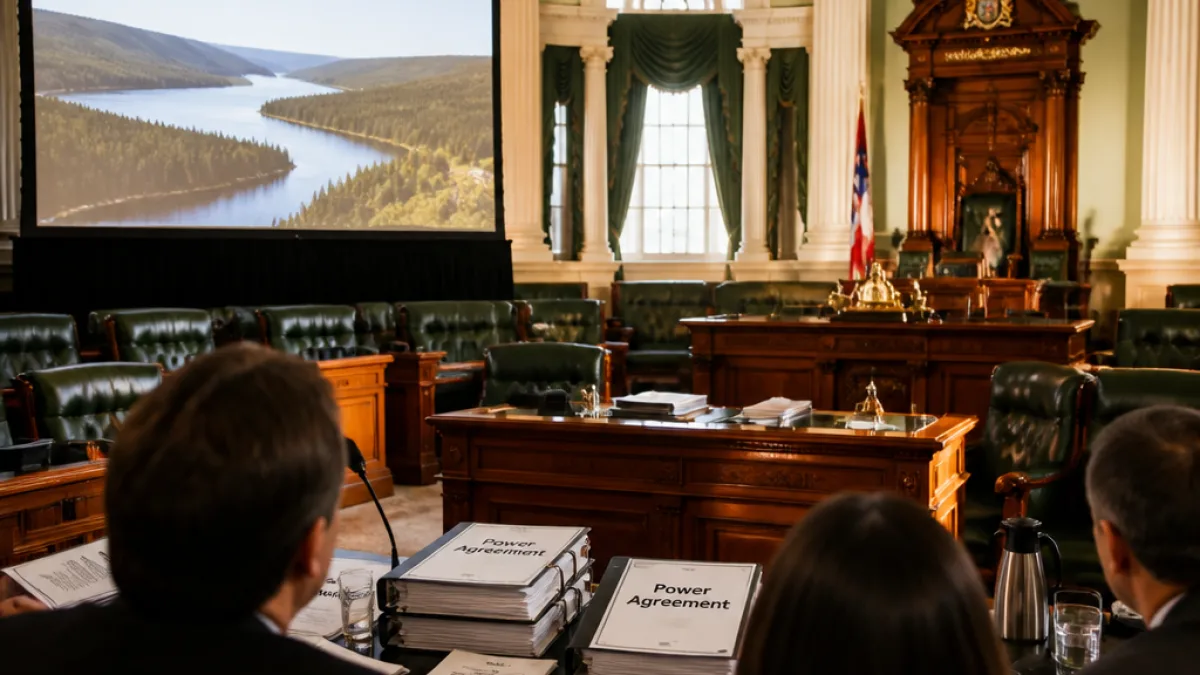
The Newfoundland and Labrador House of Assembly opened a four-day special sitting on Sept. 14 focussed entirely on the proposed arrangement for development and power sales on the Churchill River. The session will centre on the province’s recently announced tentative deal between Newfoundland and Labrador Hydro, Hydro-Québec and the jointly owned Churchill Falls (Labrador) Corporation (CFLCo) — the so-called Definitive Cooperation and Implementation Agreement (DCIA).
What this week’s sitting will cover
Members agreed the Churchill Falls file will be the sole subject for questions, opening remarks and witness testimony over the coming days. Government opening statements are expected from the premier and the energy minister, while opposition parties will deliver their own remarks.
Early expert witnesses listed to appear include the province’s lead negotiator on the deal, Barry Perry, who will face questions from MHAs about the terms and implications of the DCIA.
| Date | Planned activity |
|---|---|
| Sept. 14 | Opening statements from government and opposition; start of expert witness testimony |
| Sept. 14–17 | Questioning, witness panels and debate focused solely on Churchill Falls/DCIA |
Key elements at issue
The DCIA as announced on Aug. 17 covers several interlinked measures. Among the principal elements under scrutiny:
- Renegotiation of the existing Churchill Falls power sales contract between CFLCo and Hydro-Québec.
- Plans for a potential new hydro development at Gull Island, also on the Churchill River in Labrador.
- Investments in new transmission infrastructure in Labrador to move power as required.
- A study into possible future wind development in the region.
The deal has stirred questions from across the political spectrum about the fairness of terms, potential costs and benefits to the province, and the prospect of large-scale infrastructure work in Labrador.
Opposition posture and public scrutiny
The NDP has already signalled resistance to endorsing any form of support for the agreement unless the proposals are subject to an independent review process. Other parties will use the special sitting to probe the detail of the agreement and to press the government on transparency, fiscal impacts and long-term benefits for residents of Newfoundland and Labrador.
Because the sitting is limited to a single subject, it provides an unusual — and public — forum for detailed examination. The presence of officials who negotiated the agreement means members will be able to directly question the architects of the DCIA about assumptions, timelines and contingencies.
Why the Churchill Falls file matters locally
Churchill Falls and the existing power contract with Hydro-Québec have been a defining economic and political issue for generations of Newfoundlanders and Labradorians. Any alteration to the status quo — including a renegotiation of long-term power sales or new development at Gull Island — could affect power rates, regional employment and the province’s economic planning for decades.
For Labrador, the potential for new transmission and generation infrastructure carries weighty questions about local involvement, environmental assessment and benefits for communities closest to the projects.
What to watch this week
- Details emerging from witness testimony, particularly from Barry Perry and other negotiators.
- Any commitment from government to an independent review or additional public consultation.
- Positions firming among opposition parties that could affect any vote or endorsement related to the agreement.
The special sitting will run through the week with the public afforded an uncommon close-up view of one of the province’s most consequential files. As debate continues, MHAs will test not only the technical merits of the DCIA but also its broader implications for Newfoundland and Labrador’s power sovereignty and economic future.