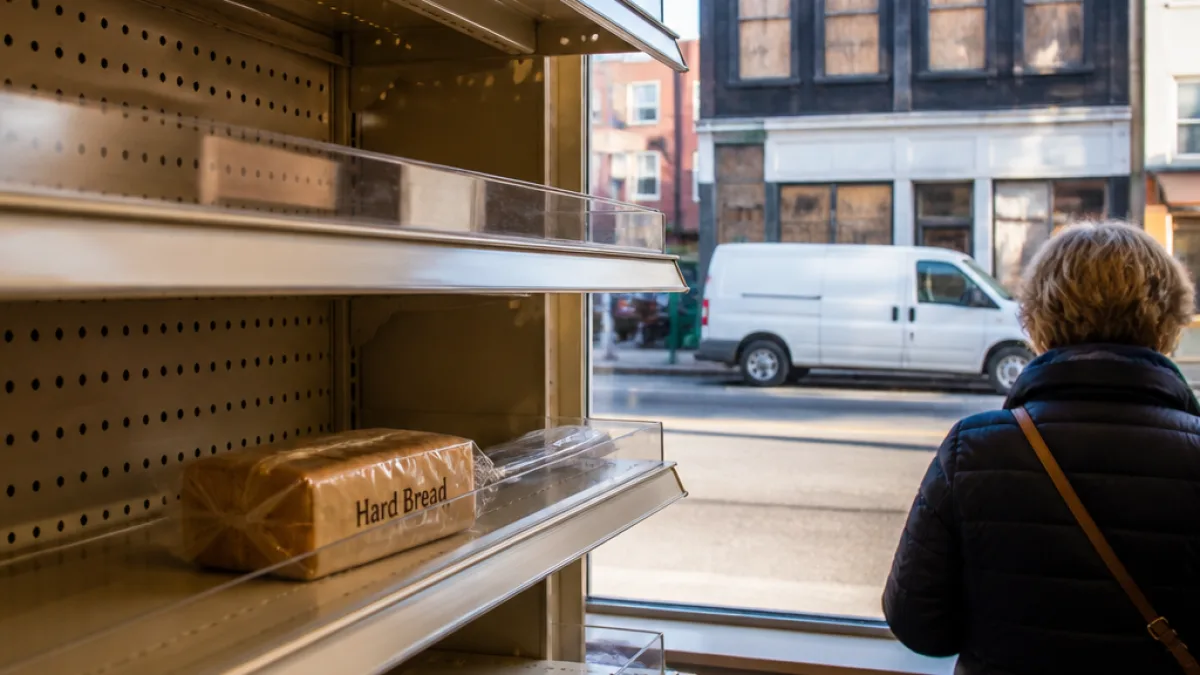
Grocery stores across Newfoundland and Labrador continue to struggle to keep hard bread — also known as hard tack, ship's biscuit or sea biscuit — on their shelves after a March fire at the Purity bakery disrupted the company's baking operations.
What we’re missing and why it matters
Hard bread is a simple, dry, unleavened biscuit made of flour, water and salt. That spare recipe has made it remarkably long-lived and portable; the biscuit survived centuries at sea and on long journeys and remains part of kitchen cupboards and fishery culture across the province. But when a major local producer is taken off-line, the effects are felt quickly in towns and outports.
Shoppers and grocers report empty spots where the familiar rectangular or circular blocks of hard bread usually sit. For many households it is not an occasional treat but an everyday ingredient — used with fish, in soups, or simply broken apart and soaked. The shortage has revived questions about supply resilience for regional staples and exposed how reliant the province is on a small number of producers for culturally important foods.
History baked into the biscuit
The durability that made hard bread invaluable centuries ago is the same quality that has embedded it into Newfoundland culture. Dehydrated bread has been a mainstay of travellers' diets since ancient times — Roman legionaries had bucellatum, King Richard the Lionheart's ships were stocked with “biskit,” and Basque fishermen introduced a version to Newfoundland's coasts in the 1500s. In local archives, old photos and accounts depict children and crews gnawing on big chunks of the tough snack — sometimes affectionately described as following “the gospel of hard bread.”
“the gospel of hard bread”
That long relationship helps explain why the current scarcity matters beyond convenience. Hard bread is woven into the province’s foodways, used in traditional recipes and tied to memories of fishing stages, kitchen tables and long voyages.
What’s in a biscuit — and what we can use instead
Purity has been a primary provider of hard bread in the province; when its production was curtailed by the March fire, retailers had few immediate alternatives. Smaller local bakeries and specialty producers can make similar products, but scaling up to meet provincial demand takes time and ingredients like flour became more complicated to source during peak supply-chain pressures.
- Ingredients: flour, water, salt — simple, shelf-stable and traditionally twice-baked or thoroughly dried.
- Uses: accompaniment to fish dishes, base for bread-and-butter preparations, emergency rations and cultural recipes.
- Substitutes: dry crackers, pilot bread produced elsewhere, or home-made oven-dried biscuits — suitable in a pinch but not identical.
For households looking to adapt, simple recipes for oven-dried biscuits can replicate texture if not the exact flavour and mouthfeel of commercial hard bread. Smaller producers around the province have reported increased inquiries from grocers and consumers, but production remains limited.
Supply chain and local industry impacts
The disruption highlights vulnerabilities in local supply chains: when a single large producer is affected, availability across the province can wobble. Retailers say they are rationing inventory and asking customers to be patient. For older residents and those in remote communities who rely on staples with long shelf life, shortages add another layer of inconvenience.
Officials at Purity have acknowledged the fire curtailed operations earlier this year and have been working to restore capacity. However, rebuilding or recommissioning bakery lines and reestablishing full distribution can be a slow process, especially for products that require specific drying and packaging methods.
What comes next
Local producers and retailers are exploring options to increase production or import pilot bread from outside the province while Purity’s output is reduced. Consumers are urged to check with their regular grocer for availability and consider reasonable substitutions where appropriate.
| Item | Typical use |
|---|---|
| Hard bread | Traditional accompaniment to fish, long-term storage |
| Crackers / pilot bread (imported) | Short-term substitute for texture; more fragile |
The shortage has a cultural sting beyond the empty shelf: hard bread is more than a biscuit here — it’s part of how Newfoundland and Labrador remembers its maritime past and keeps those tastes alive. Restoring steady supply will be a priority for grocers, producers and communities that have come to depend on that hard, unyielding comfort.