Small businesses across Newfoundland and Labrador are adjusting to a sudden escalation in trade tensions after the United States imposed new 50 per cent tariffs on billions of dollars of Canadian goods.
Local makers focus on home markets
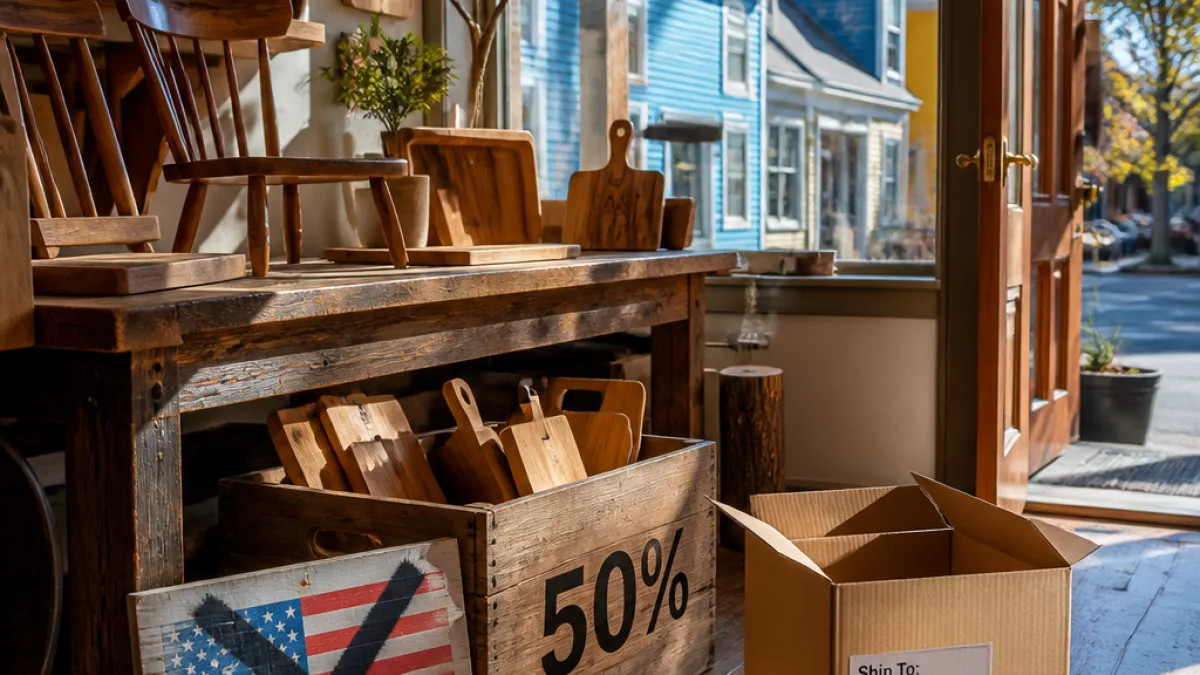
For some local producers the change has meant a rapid reorientation. Karen Thorpe, who runs Karen’s Woodworking, said her sales have strengthened over the past two years as Canadians increasingly choose local suppliers. She no longer ships products south of the border.
“Where Canadians have decided to support local and support their own within their own country, my business is actually up over the last two years,”
Thorpe told CBC News she hopes the federal government will continue to push for a fair outcome for businesses such as hers.
Some exporters already pulled back
Others have taken an even sharper turn away from U.S. customers. Bryan Godfrey, owner of the Caribou Beard Company, said he stopped most sales to U.S. buyers in response to tariffs, a move that reflects the immediate commercial pain for firms that previously relied on cross-border demand.
The tariffs came into effect shortly after midnight on Saturday, following failed last-minute negotiations between the two countries. According to reporting, Prime Minister Mark Carney has indicated Canada will retaliate by matching U.S. measures “dollar for dollar” after Labour Day.
Local impact is small but real
On paper, Newfoundland and Labrador’s exposure is modest: officials estimate only 0.4 per cent of the province’s exports will be affected. But that figure masks pockets of vulnerability and the practical realities for small producers who face steep new costs or sudden loss of a market.
For businesses without scale to absorb extra charges, tariffs can be a blunt instrument — either forcing them to raise prices, erode margins, or withdraw from markets entirely.
- Some firms report increased local demand as customers favour Canadian-made goods.
- Others have halted most U.S. sales because the additional costs make exports uncompetitive.
- Provincial exposure is limited overall, but individual businesses can feel significant strain.
What the trade picture looks like
The situation remains fluid. Ottawa’s plan to mirror U.S. duties is intended to signal resistance to what the federal government regards as unjustified measures, and to protect Canadian industries — but it also risks prolonging a tit-for-tat cycle that can unsettle supply chains and raise costs for consumers and businesses on both sides of the border.
| Measure | Detail |
|---|---|
| U.S. tariff rate | 50 per cent on selected Canadian goods |
| Expected provincial impact | 0.4% of Newfoundland and Labrador exports affected |
| Ottawa response | Retaliation planned: matching duties “dollar for dollar” after Labour Day |
Business owners and observers say the practical remedies for small companies are often straightforward but not easy: diversify customers, market more strongly at home, and reduce reliance on vulnerable export routes. Those shifts can take time and investment — commodities in short supply for many proprietors.
For firms like Karen’s Woodworking and the Caribou Beard Company, the immediate priority has been preserving cash flow and serving a local clientele whose support has become increasingly important in recent months.
Whether Ottawa’s strategy of retaliation will deliver a quicker return to stable trade relations or simply entrench the dispute is a question provincial business owners are watching closely. For now, many in Newfoundland and Labrador appear prepared to rely on homegrown demand while waiting to see how federal and international diplomacy unfolds.
From St. John’s to smaller coastal communities, the story is one of adaptation: nimble businesses reshaping their markets to survive — and urging the federal government not to yield under pressure.