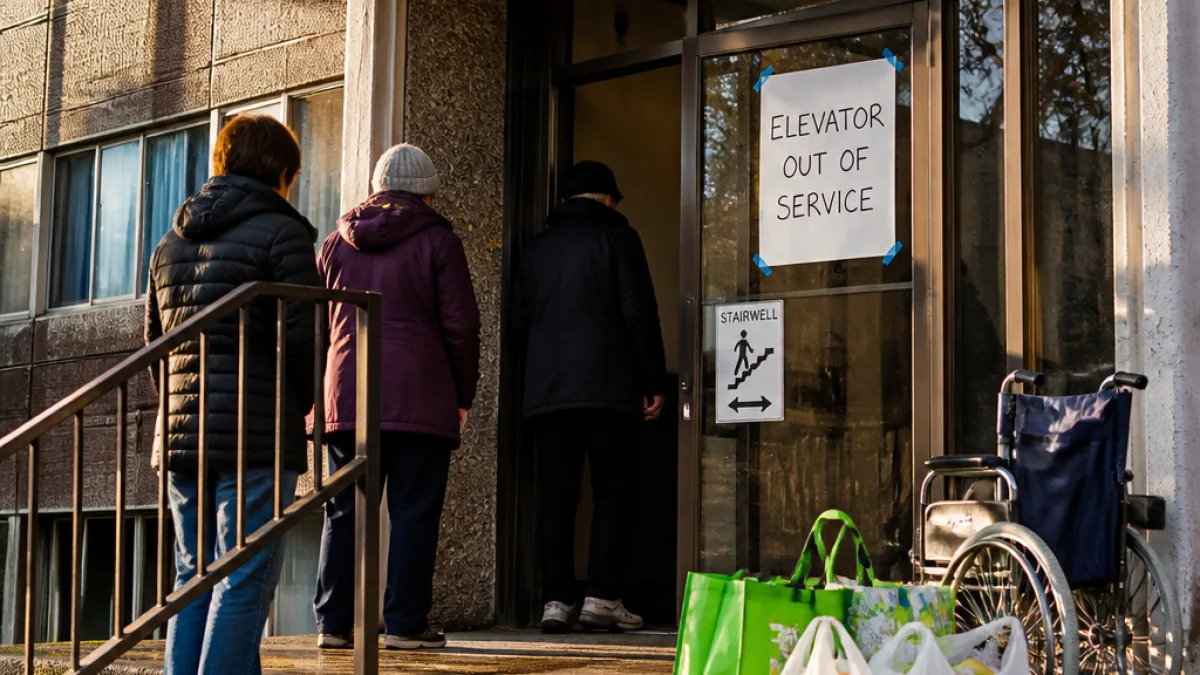
ST. JOHN'S — Several residents in an apartment building in St. John’s have been left with severely restricted mobility after the building’s only elevator stopped functioning, according to local media reports on Aug. 20, 2026.
Access cut off in building’s single lift
The breakdown of the sole elevator has meant that people who live above the ground floor and rely on the lift for day-to-day movement are now facing obstacles to leaving their homes, receiving deliveries and accessing services. The stoppage was reported by NTV in a brief evening item, which highlighted the immediate impact on tenants.
Elevator outages in buildings that depend on a single lift raise particular concerns for seniors, people with disabilities and anyone recovering from illness or injury, because alternatives such as stair use may be unsafe or impossible.
Practical and safety concerns
When an elevator is out of service in a multi-storey residential building, a range of practical problems can follow:
- Limited mobility: Residents who cannot use stairs may be effectively confined to their units.
- Delivery and services: Couriers, home-care providers and maintenance crews may face barriers to access.
- Emergency response: Emergency medical transfers and evacuations become more complex when stair-only access is the only option.
Local housing advocates and accessibility experts say building managers and owners have a responsibility to ensure reliable access and clear contingency plans when essential services fail. Under provincial building and fire codes, residential complexes are expected to maintain safe means of egress and to ensure that elevator equipment is kept in good working order. However, codes do not remove the immediate human cost when an elevator becomes inoperative.
What is known so far
| Aspect | Known details |
|---|---|
| Location | Apartment building in St. John’s |
| Issue | Building’s only elevator stopped working |
| Reported | NTV, Aug. 20, 2026 |
| Impact | Residents facing restricted mobility and access challenges |
Questions for building operators and authorities
With elevator outages, tenants and the broader public reasonably expect prompt communication and remedial action from property managers, including:
- Clear timelines for repair and regular updates to tenants.
- Temporary measures to assist residents with mobility needs — for example, coordinated in-building support or alternative relocation if necessary.
- Coordination with emergency services and social supports when residents cannot safely use stairs.
Local government and provincial departments that oversee housing standards can be asked to clarify their roles in ensuring tenants are not left without safe access for an extended period.
Residents left to adapt
News reports did not quantify how many people were affected or how long the elevator has been out of service. The account from NTV focuses on the human impact of being unable to leave one’s home through no fault of one’s own. That experience is particularly acute in older city neighbourhoods and in buildings where there is only a single vertical access point.
Until repairs are complete or alternative arrangements are made, affected residents face disruptions to everyday life — from picking up prescriptions and groceries to attending medical appointments and employment obligations.
As the story develops, WE NEWS will seek comment from the building’s management, provincial housing authorities and any tenant advocacy groups involved. Ensuring people can safely enter and leave their homes is a basic expectation; when that is put at risk, the community has a stake in quick, transparent solutions.
Further coverage will aim to clarify timelines for repair, the scope of affected tenants, and the measures being taken to support those most vulnerable while the elevator is out of service.