The Ontario Court of Appeal has cleared the provincial government to proceed with legislation that allows it to remove protected bicycle lanes on some of Toronto’s busiest streets, overturning a superior court decision that had temporarily blocked the move on constitutional grounds.
What the ruling means
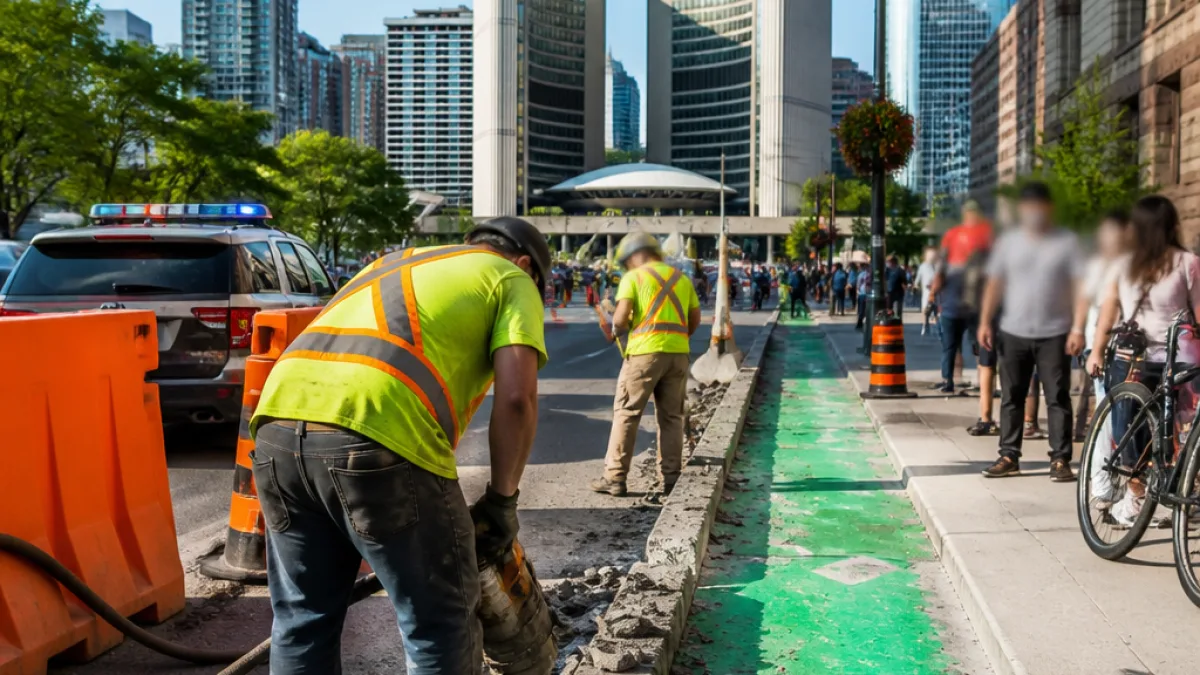
In a decision released Friday, the appellate court found there is no constitutional right to dedicated bike lanes and concluded courts should not declare legislation unconstitutional simply because experts predict a policy will fail. The judgment removes the legal barrier that had paused the Ford government’s plan to dismantle sections of protected cycling infrastructure that were installed by the city.
The contested network covers about 19 kilometres of roadway in Toronto and has been a focal point in a long-running dispute between the province and the city. The Ford government enacted legislation in 2024 to give the province the power to remove those protected lanes despite municipal installation.
Legal history and appeals
Cycling advocacy groups, including Cycle Toronto, challenged the province’s authority to tear up the lanes. In July 2025, a superior court judge sided with the challengers, finding removal would create a heightened risk of death or injury and therefore would infringe on rights protected by the Canadian Charter of Rights and Freedoms — specifically the right to life and security of the person.
The Court of Appeal reversed that finding. Writing for the panel, Justice Huscroft said neither the government nor the legislature is obliged to adopt the policy recommendations of experts and that courts cannot strike down legislation based on predictions of policy failure.
Reactions from advocates and city leaders
Advocates for protected cycling infrastructure voiced disappointment at the appellate decision. Michael Longfield, executive director of Cycle Toronto, said he was dismayed by the ruling and emphasised the broader benefits of separated lanes.
“This isn’t just about keeping people on bikes safe. It helps pedestrians. It helps other drivers. It has a very strong traffic calming effect that we need in major cities,”
Toronto’s mayor, Olivia Chow, responded by saying she is engaging with provincial officials to find a way forward that preserves safety for everyone using the roads. “I have been working with the province to negotiate a path forward that keeps every road user safe,” she said.
Political context
The ruling is a notable legal victory for Premier Doug Ford and his government, which have been vocal critics of Toronto’s protected lanes for years, arguing they worsen congestion. The dispute has become emblematic of tensions between Queen’s Park and the City of Toronto over municipal autonomy, urban planning and traffic management.
Supporters of the lanes argue the infrastructure reduces vehicle speeds, protects vulnerable road users and encourages cycling as a transportation option. Opponents in the provincial government say the lanes impede traffic flow on major arteries, contributing to jams and delays.
What happens next
With the appeal court decision in hand, the province now has the legal latitude to remove protected lanes under the 2024 statute. That sets the stage for negotiations between Toronto and the province; city officials have signalled a preference for securing alternatives that maintain safety benefits for cyclists, pedestrians and drivers.
- Legislation passed: 2024 giving province power to remove lanes
- Length of lanes involved: about 19 kilometres
- Previous ruling: July 2025 superior court found removal unconstitutional
- Current status: Court of Appeal reversed superior court; province free to act
Legal analysts say the decision narrows the circumstances in which courts will apply Charter protections to public infrastructure disputes — especially where the outcome relies on forecasting policy impacts. The appeal judges emphasised that predicting whether a policy will succeed or fail is not a role for the judiciary.
Local implications
For Toronto residents, the ruling raises immediate questions about the future of cycling routes used for commuting and recreation. Any removal or alteration will affect how people travel across the city, potentially altering traffic patterns, transit interfaces and pedestrian conditions on major corridors.
City staff and councillors will face pressure to respond quickly with plans that address safety concerns while attempting to preserve active-transportation networks. For now, uncertainty remains until municipal and provincial leaders reach any agreement or until the province takes concrete action to modify the roads.
| Item | Detail |
|---|---|
| Length of protected lanes at issue | 19 km |
| Key provincial move | Legislation passed in 2024 |
| Previous court finding | July 2025: superior court said removal would risk life and security |
| Current ruling | Ontario Court of Appeal reversed the July 2025 decision |
As talks continue, residents on both sides of the debate will be watching closely. The case illustrates the friction between provincial authority and municipal decision-making in Ontario’s largest city — and how choices about city streets can become legal and political flashpoints with implications beyond transportation policy.