
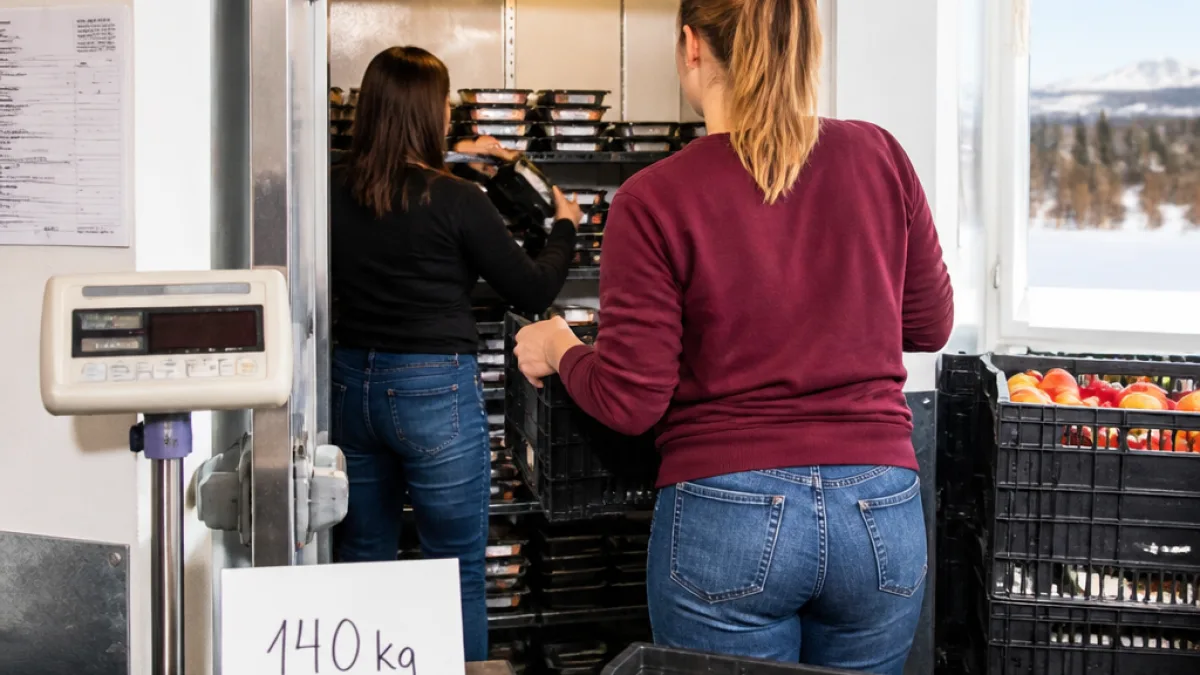
Whitehorse’s principal community food provider received a timely delivery last week when Save‑On‑Foods dropped off 140 kilograms of perishable items after a refrigeration problem at the grocery store.
Immediate help for a growing demand
The donation arrived on Aug. 26 and consisted largely of pre‑made microwave meals and other perishables that fit into the food bank’s standard hamper program. Staff moved the items into the walk‑in fridge right away to prepare them for distribution.
- Donation weight: 140 kilograms
- Date received: Aug. 26
- Typical daily people served: 60–70
- Hampers provided: Seven days’ worth of food per person
The food bank’s executive director said the extra stock translates to roughly an additional meal for every person who visits that day and the following distribution. That relief comes as demand has climbed steadily over the past year, the executive director added, with more people seeking support not only in Whitehorse but throughout the territory.
“Folks today and folks again on Tuesday are going to be super excited that they’re going to see a little bit extra in their hampers,” the executive director said.
Local stores playing a role
Front‑line charities in Whitehorse regularly rely on partnerships with grocery stores to reduce waste and boost local food supplies. According to the food bank executive director, most local grocers are willing to donate excess stock or items affected by fridge or freezer issues rather than see them discarded.
“I don’t think anybody in the Yukon, especially with food prices these days, wants to see any kind of food go to waste,” the executive director said, underlining a shared community interest in diverting edible food to people who need it.
Numbers that show the impact
The practical effect of the 140‑kilogram donation can be summarised in straightforward terms. On a day when the Whitehorse Food Bank usually serves between 60 and 70 people, the extra perishables were enough to add about one extra meal per person through the hamper program, which is designed to provide seven days’ worth of food.
| Measure | figure |
|---|---|
| Donation weight | 140 kg |
| People served daily | 60–70 |
| Hampers | Seven days’ worth per person |
| Estimated extra meals delivered | ~1 per person on distribution days |
Those figures help explain why even a single, one‑off donation can ripple through the food bank’s operations: perishables slot directly into hampers, providing variety and nutritional value that non‑perishable staples alone cannot supply.
What this means for the community
While this shipment was prompted by an equipment issue at a grocery store, it highlights the informal safety net woven between businesses and community groups in Whitehorse. For residents relying on the food bank, the extra meal will be immediate relief. For the city’s social supports, it underscores ongoing pressures—rising food prices and greater need mean such donations are more valuable than ever.
Food bank staff continue to coordinate with local retailers to accept suitable donations when they are available. The scene at the walk‑in fridge—volunteers moving perishable boxes into cold storage—was a practical display of how community partners respond quickly when surplus food is available.
As demand for food assistance climbs across the Yukon, the role of grocery stores, food‑rescue efforts and the food bank remains central to preventing waste and supporting residents who face food insecurity. The recent Save‑On‑Foods donation is a small but tangible example of that local cooperation.
Contact information for the food bank and details about regular donation drives were not provided with the report on the Aug. 26 delivery.