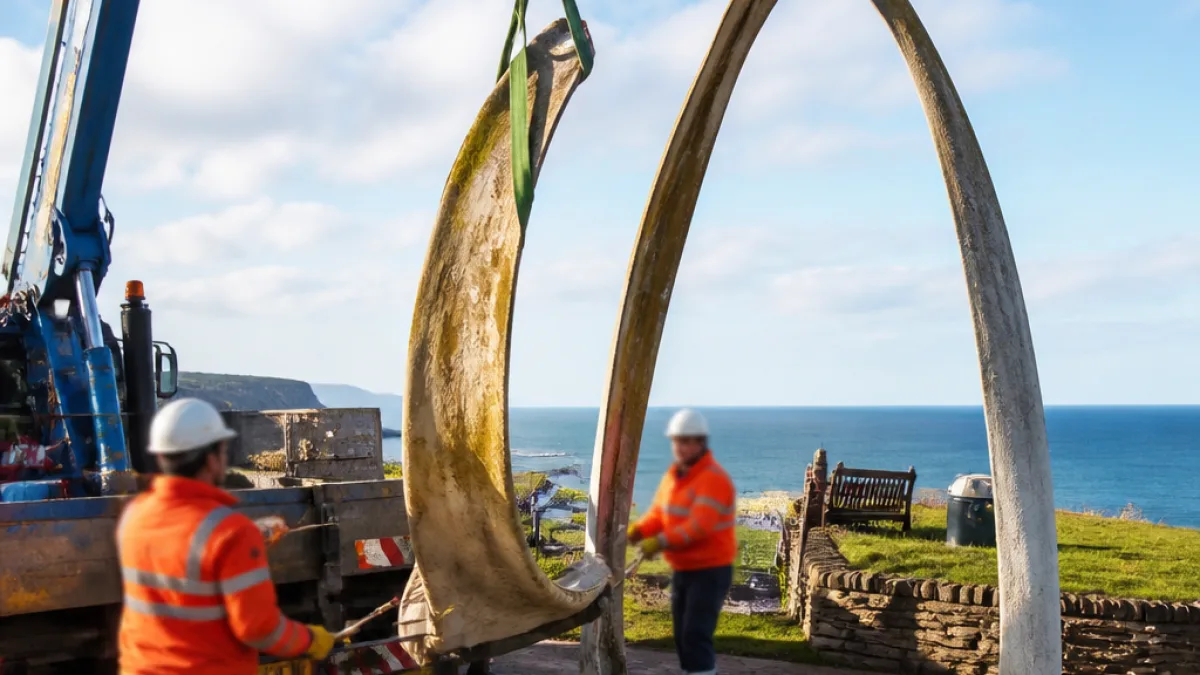
Historic jawbones taken down from West Cliff; bronze replica planned
The pair of whale jawbones that for generations framed the view over Whitby have been taken down from their clifftop site, council officials confirmed. The removal follows years of exposure to the elements and comes as plans are finalised to install a weather‑resistant replica next year.
The original whale bone arch has a history stretching back to the mid‑19th century, with the first recorded installation coming after 1853. The most recent set of bones was put in place in 2002 after being gifted to Whitby by its Alaskan twin town of Barrow. Those bones were removed on Tuesday morning because of deterioration caused by prolonged weather exposure.
North Yorkshire Council says the bones will be replaced with an "ethical bronze replica" that will be more durable in Whitby’s coastal climate. The planned installation will stand 19 feet tall and is being produced through a process of moulding the existing bones and constructing an internal framework. The council has budgeted £70,000 for the work.
- Historic origin: first arch recorded after 1853
- Most recent bones installed: 2002, gifted by Barrow, Alaska
- Replacement: 19‑foot bronze replica, cost £70,000, scheduled for installation early next year
The decision to use bronze was explained by council representatives as an effort to balance respect for Whitby’s maritime heritage with contemporary conservation and ethical standards. Bronze is cited as providing greater strength, longer life and improved resistance to the coastal weather that has contributed to the decay of the original bones.
“Importantly, the bronze replicas provide an ethical alternative to the use of whale bones, allowing this iconic landmark and its connection to Whitby’s maritime heritage to be preserved in a way that reflects modern conservation values,”
Those were the words of Mark Crane from North Yorkshire Council. The council said it expects the bronze structure to remain on the West Cliff for decades, offering “a focal point” for residents and visitors.
Whitby Town Mayor Sandra Turner also commented on the change, acknowledging the emotional attachment the community has to the arch and welcoming the durability the replica should provide.
“The whale bone arch means a great deal to residents and visitors alike. While it is sad to see the current bones reach the end of their life, the new bronze arch will ensure this landmark continues to celebrate Whitby’s history and provide a focal point on West Cliff for future generations.”
The arch occupies a prominent position on Whitby’s West Cliff, part of the town’s network of historic views and attractions that draw both day‑trippers and longer‑stay visitors. For many locals the jawbones have been a symbol not only of the town’s whaling and maritime past but also of continuity on the clifftop promenade.
Replacing organic material with metal raises questions of heritage authenticity and conservation trade‑offs, issues that have prompted debate in other coastal communities. Proponents of the replica argue it is a pragmatic response to the realities of climate exposure and modern ethical standards, while some residents and heritage advocates sometimes prefer original material where feasible.
North Yorkshire Council did not, in its announcement, outline any formal public consultation beyond statements from council representatives and the town mayor. The council did say the replica would be created by moulding the existing bones, a process that aims to retain the familiar shape and contours of the original arch while ensuring the new structure meets safety and longevity requirements.
| Item | Detail |
|---|---|
| Original arch first recorded | After 1853 |
| Most recent bones installed | 2002 (gift from Barrow, Alaska) |
| Replacement material | Bronze replica |
| Replica height | 19 ft |
| Estimated cost | £70,000 |
| Installation expected | Early next year |
For Whitby, a town that balances tourism with local community life, the change will be visible and immediate: a familiar landmark temporarily absent from the clifftop and, if plans proceed as described, a new, long‑lasting version in its place. How residents and visitors respond to the substitution of bronze for bone will unfold once the new arch is installed.
In the meantime the removed bones will presumably be retained as part of the moulding process, which council officials say will be essential to producing an accurate replica that honours the form of the original arch.
The project is part of ongoing efforts by local authorities to maintain the town’s historic assets while adapting them to modern conservation expectations and the practical demands of coastal exposure.