CARMACKS, YT — Cascadia Minerals Ltd. has reported new drilling that pushes copper‑gold mineralization well beyond the known limits of the Carmacks deposit and includes one of the highest‑grade intervals recorded on the property.
Step‑out drilling doubles strike of Zone 2000S
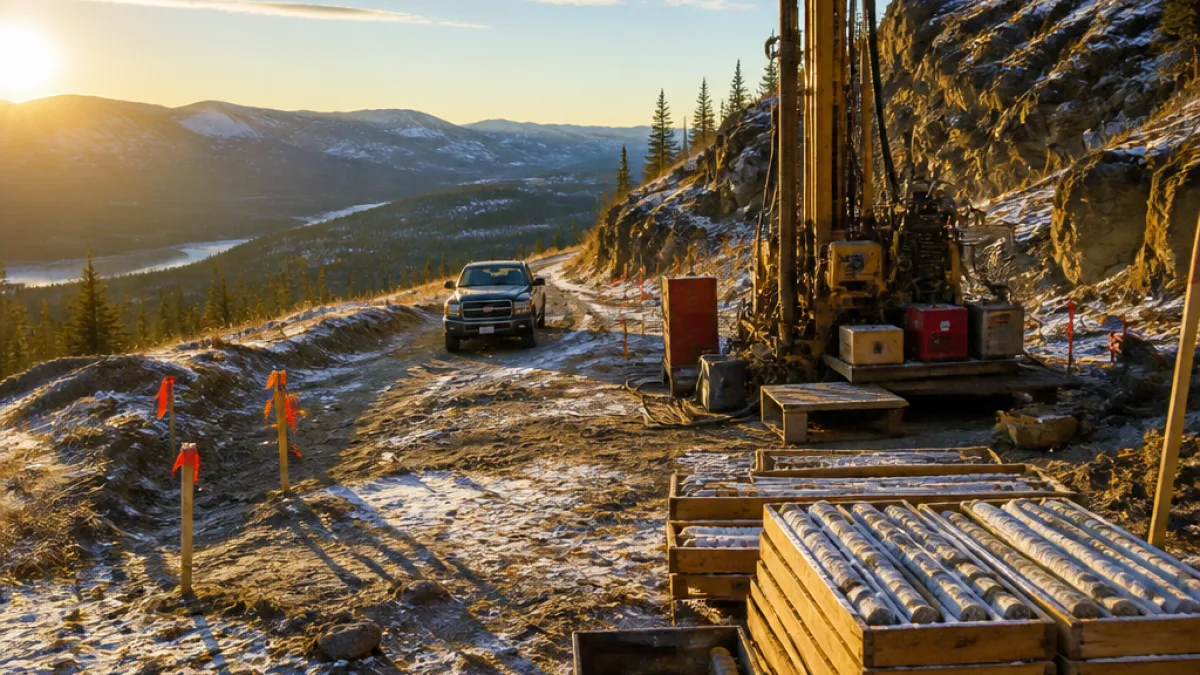
The company announced results from five additional holes drilled during its fully funded 2026 program at the road‑accessible central Yukon project. The standout intersection came from hole CD‑26‑056, which returned 82.69 metres averaging 1.12 per cent copper and 0.64 grams per tonne gold (a copper‑equivalent of about 1.78% CuEq). Within that interval, a higher‑grade core of 49.16 metres at 1.63% copper and 0.95 g/t gold (about 2.62% CuEq) was reported.
Those results were obtained roughly 70 metres northwest of a previously reported hole (CD‑26‑050) and indicate that sulphide mineralization extends at least 300 metres beyond the current mineral resource boundary for Zone 2000S — effectively doubling its known strike length, Cascadia said.
"The interval drilled in hole 56 is one of the strongest intersections ever returned on the property," said Graham Downs, president and CEO of Cascadia.
What the numbers mean locally
For a jurisdiction like Yukon, where road access is relatively scarce, a discovery that expands a road‑accessible deposit carries practical importance for any future development scenarios. Higher concentrations of gold relative to copper in these new holes also change the deposit’s metal balance, which can affect project economics and how future exploration is prioritised.
Cascadia has responded by increasing the scope of its program. The firm said the 2026 drill campaign has been enlarged from 15,000 metres to about 18,000 metres to accommodate follow‑up work on the northern extension of Zone 2000S. Results are still pending for an additional six step‑out holes in the area.
Regional follow‑up and next targets
Besides the Zone 2000S expansion, Cascadia reported recent activity at other targets. Three holes were completed at Zone 14, located roughly 500 metres east of the main Carmacks deposit, and drilling has begun at Zone A, approximately 11 kilometres northwest of the deposit. Those programs reflect a broader push to test satellite targets across the property.
Key highlights from the update are summarised below:
- Hole CD‑26‑056: 82.69 m @ 1.12% Cu, 0.64 g/t Au (49.16 m @ 1.63% Cu, 0.95 g/t Au inside)
- Sulphide mineralization encountered ~300 m beyond existing Mineral Resource at Zone 2000S
- 2026 drill program increased to ~18,000 m to allow follow‑up drilling
- Regional holes at Zone 14 completed; drilling underway at Zone A, 11 km away
Table: Select drill results reported by Cascadia
| Hole | Interval (m) | Copper (%) | Gold (g/t) |
|---|---|---|---|
| CD‑26‑056 | 82.69 | 1.12 | 0.64 |
| CD‑26‑056 (high‑grade core) | 49.16 | 1.63 | 0.95 |
| CD‑26‑050 (previous) | 52.84 | 1.04 | 0.37 |
The company noted the new holes in the northern portion of Zone 2000S show a relatively higher gold‑to‑copper ratio than most of the deposit. That geochemical shift could have implications for how future metallurgical and economic studies are designed.
Implications and next steps
From a regional perspective, the Carmacks project sits within a corridor of ongoing exploration activity in central Yukon. Positive step‑outs that expand known mineralised strike lengths often prompt a combination of infill drilling to better define resource boundaries and additional step‑outs to test the limits of new zones.
Cascadia’s decision to boost metres drilled this season signals confidence in the northern extension and a desire to accelerate delineation work. The results still require integration into updated resource models, and any forward move toward feasibility or permitting would need more extensive technical studies, baseline environmental work and engagement with local communities and Indigenous governments.
For now, the company’s results add to a string of encouraging exploration updates from Yukon projects and affirm continued industry interest in the territory’s copper‑gold potential.