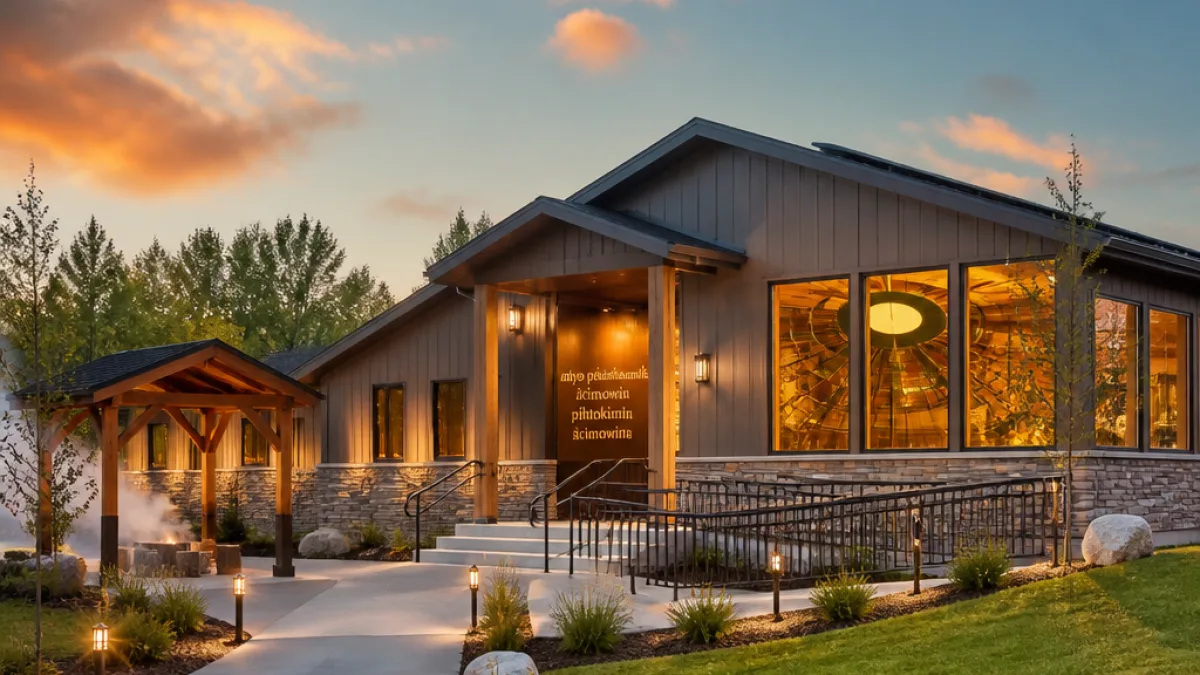
The Tr’ondëk Hwëch’in First Nation has opened a new family services building in Dawson City aimed at supporting children, youth and new parents while strengthening ties to Hän language and culture.
Built for families, opened on a day of remembrance
The facility, named Ni’ehłyat Nidähjì’ — which translates as “Our Families, Our Future” in the Hän language — was officially opened on the National Day for Truth and Reconciliation. Local leaders described the timing as a deliberate recognition of the healing work the space is intended to support.
At the ceremonial opening, an elder and a child walked through the doors together as the first guests, a moment Acting Family Services Director Donald Robert called “beautiful, and powerful.” Robert said the gesture captured what both the building and the program aspire to be.
“It gave the meaning of what our building wants to be, but also gave the meaning of what our program should be,”
Deputy Chief Erin McQuaig framed the new building as part of a broader definition of reconciliation that includes concrete support and infrastructure.
“True reconciliation means funding, building and maintaining spaces for the harms to be repaired and for brighter, happier futures to grow,”
Services and goals
The Ni’ehłyat Nidähjì’ department was established around 2022. The new space will deliver voluntary wrap‑around services intended to help citizens reconnect with history and culture while providing practical supports to families.
Services highlighted by Tr’ondëk Hwëch’in include supports before and after birth, cultural programming, and family wellness initiatives. The emphasis is on voluntary participation and on reuniting families with cultural knowledge and practices.
- Pre‑ and post‑natal supports
- Cultural programming and language connection
- Family wellness and reconnection services
The department’s creation in 2022 and the subsequent development of a dedicated building mark a step from program formation to a permanent community presence where services can be coordinated and accessed.
Community context and significance
Opening the building on a national day dedicated to remembering residential school survivors underscores the community’s focus on healing. For many Indigenous communities, the physical and programmatic spaces to support young families and to restore cultural continuity are central to long‑term recovery from colonial harms.
Leaders framed the facility as both practical and symbolic: practical because it centralizes family supports; symbolic because the name and programming aim to restore language and intergenerational connections that were weakened by past policies.
Looking ahead
Officials say the building will be used for programs that centre on family resilience and cultural renewal. While the department has operated since 2022, having a permanent, purpose‑built site is expected to widen access and provide continuity for programs and participants.
| Feature | Purpose |
|---|---|
| Ni’ehłyat Nidähjì’ name | “Our Families, Our Future” (Hän) |
| Primary focus | Children, youth, new parents; cultural reconnection |
| Program model | Voluntary, wrap‑around services |
As the community begins to use the space, Tr’ondëk Hwëch’in leaders have connected the opening to broader calls for sustained funding and infrastructure to address the legacy of residential schools and other colonial policies.
The ceremonial first walk‑through by an elder and child was offered as a concrete image of the centre’s mandate: building intergenerational connections and supporting families as they reclaim language, culture and well‑being.
The Ni’ehłyat Nidähjì’ building is now available as a central hub for the First Nation’s family services, and officials say it will be a site for both healing and practical supports in the years ahead.