
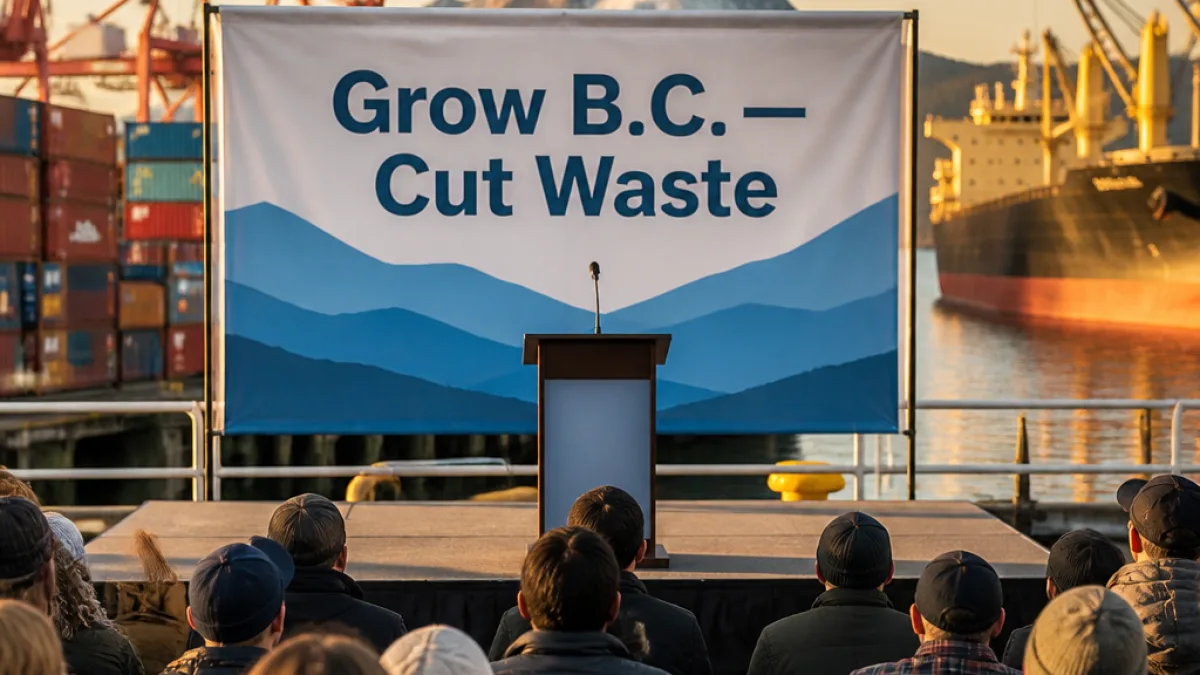
PRINCE RUPERT, B.C. — British Columbia New Democrat leader David Eby told a campaign crowd here that his government would reduce the province's multibillion-dollar deficit on a year-over-year basis by focusing on economic growth while cutting what he described as wasteful spending.
Fiscal pledge tied to resource and port growth
Speaking during a campaign stop in the north coast city, Eby outlined a twin approach: spur the economy to generate more revenue and strip out inefficient or unnecessary government expenditures. He accompanied that pledge with an announcement that the provincial government would work to double exports of critical minerals and expand the Port of Prince Rupert, aiming to make it the second-largest harbour in Canada by 2030.
The announcement comes as B.C. heads toward a snap provincial election set for Oct. 24, and as the province faces a projected deficit of $13.8 billion. The Conservative interim leader, Lorne Doerkson, made a related fiscal promise on the campaign trail, saying his party would not introduce new taxes or raise existing ones.
“We would not introduce new taxes or raise existing ones,”
That remark by Doerkson was made while he was promoting his party’s approach to deficit reduction, which he also tied to economic growth.
Local impact and economic context
Prince Rupert is a deep-water port strategically positioned on Canada’s west coast and has been the subject of infrastructure investments and expansion debates for years. Eby’s pledge to boost critical-minerals exports signals a provincial interest in positioning B.C. as a gateway for minerals that are increasingly sought for batteries and other clean-technology supply chains.
The policy proposal blends two appeals common in this election campaign: job creation tied to resource-sector growth, and fiscal responsibility aimed at easing the gap between revenue and spending. How the government would quantify or sequence the spending cuts Eby referenced was not detailed during the Prince Rupert stop.
Numbers at a glance
| Item | Figure / Goal |
|---|---|
| Projected provincial deficit | $13.8 billion |
| Port ambition | Second-largest Canadian harbour by 2030 |
| Critical-minerals exports | Double current levels |
Questions remain on how to achieve targets
Economists and municipal leaders will likely press for specifics: what spending would be cut, how quickly export volumes could be scaled up, and what environmental and First Nations consultations would look like around port expansion. Provincial announcements of large-scale resource export plans typically trigger regulatory reviews and negotiations with Indigenous governments and local stakeholders.
During election campaigns, competing parties often converge on the rhetoric of growth and balanced budgets while proposing different mechanisms. Eby emphasised a blend of strategic economic expansion and internal government efficiencies. His remarks contrasted with the Conservatives’ categorical pledge against tax increases; both parties framed growth as the primary vehicle for deficit reduction.
- What voters should watch for: detailed fiscal plans outlining specific cuts or efficiencies;
- Infrastructure implications: timelines, funding sources and approvals needed for port expansion;
- Community and Indigenous engagement: processes for consultation and environmental assessment.
With the Oct. 24 election looming, statements from party leaders are likely to be followed quickly by policy papers or additional announcements as each side seeks to persuade voters about the best path to economic stability and growth. Eby’s announcement in Prince Rupert positions the NDP to connect fiscal discipline with jobs tied to B.C.’s resource and transportation advantages, but it leaves room for scrutiny on the specifics and sequencing of those plans.
As the campaign unfolds, municipalities hosting major infrastructure—like Prince Rupert—could become focal points for debate over provincial priorities, especially where environmental, economic and Indigenous rights intersect.
















