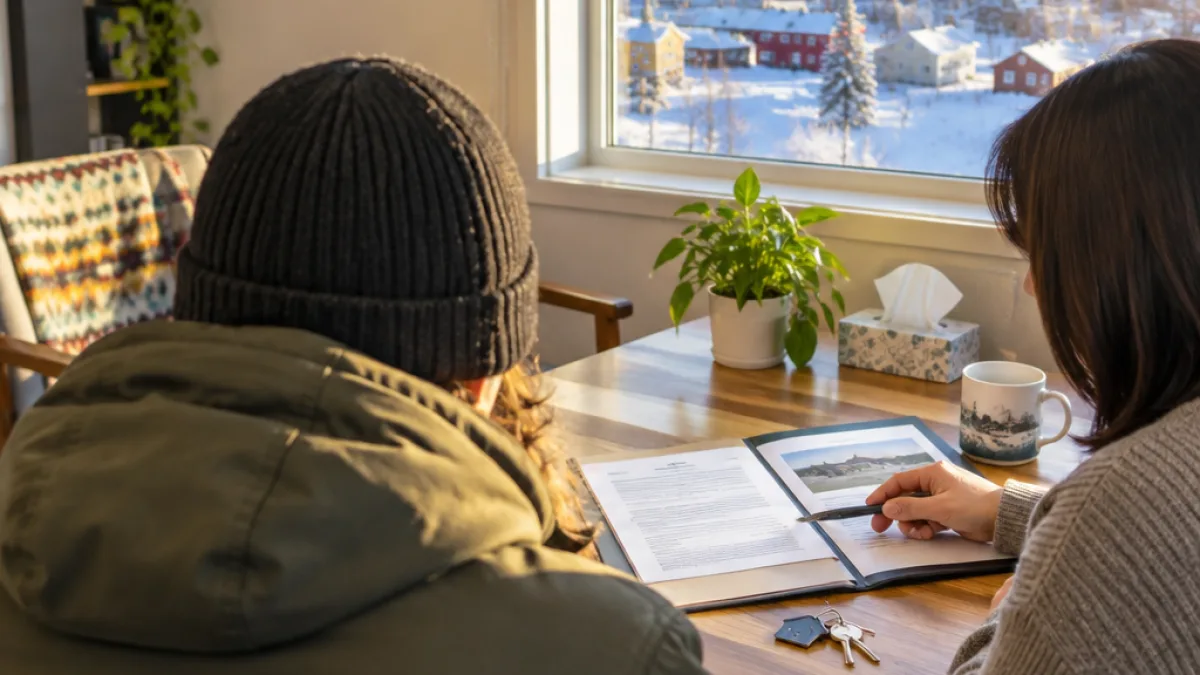
For many people in the Northwest Territories, entering an addiction treatment program is not the end of recovery. It is the point at which another difficult stage begins: returning home and trying to build a different life in the same community, surroundings and social networks where substance use took hold.
That experience is familiar to Maria Hajcik, who spent about 20 years struggling with addiction in Yellowknife. After receiving treatment in Calgary, she returned to the territory without a place where she felt safe and supported. The transition left her vulnerable at a time when she was trying to avoid returning to the patterns that had shaped her life.
“I couldn’t go to my mom’s house and I couldn’t go somewhere that I knew because I was so vulnerable and so scared,” Hajcik said. “I was frightened that I’d get back into the same old things.”
Hajcik has now been clean and sober for 13 years. She is the community and wellness supervisor at the Tree of Peace Friendship Centre in Yellowknife, where she works with people dealing with active addiction as well as people in recovery. Her own experience informs the support she provides, particularly for those facing the uncertainty that can follow residential treatment.
Aftercare is part of the recovery process
Hajcik said treatment cannot be viewed as an isolated intervention. Without meaningful assistance once a person returns home, the habits and relationships associated with substance use may still be close at hand.
“If there’s no aftercare, there’s nothing,” Hajcik said. “If people go to treatment and they come back and there’s nothing to do afterwards, they’ll get back into the same old routine, the same old people, the same old lifestyle that they know.”
Her comments point to a challenge that is particularly important in northern communities, where people may leave the territory for care and then come back to the same communities without a clear bridge between residential treatment and daily life. The source material does not identify a single solution. Instead, it centres the need for continuing support and recognizes that recovery does not follow one standard path.
Hajcik said treatment must be adapted to the individual. People who use the same substance can still arrive with very different histories, including different experiences of trauma, upbringing and social connections. Those differences, she said, affect what kind of help a person needs while leaving addiction behind.
“Every person is different when they’re coming off whatever substance you’re using because of their trauma, because of the way that they were raised, because of who they hung around,” she said. “Even if they’re on the same drug, in my experience, every person that walks into my office is different.”
Community support highlighted during awareness week
The need for support beyond treatment was part of the discussion during activities for National Addictions Awareness Week in Yellowknife. Those conversations examined how substance use is connected to a person’s broader experiences and circumstances, rather than occurring in isolation.
Hajcik took part in a wellness walk hosted by the Tree of Peace Friendship Centre. People in recovery, friends and other community members joined the event to share messages of support and raise awareness about addiction in the North. The gathering placed recovery in a public, community setting and emphasized that people dealing with addiction should not be defined only by their substance use.
For the Tree of Peace, that kind of gathering also reflects the range of people involved in recovery. Support can include people with lived experience, family members, friends, community workers and those currently navigating active addiction. The source does not describe the walk as a treatment program, but as an opportunity for awareness, connection and encouragement.
Territorially funded options are outside the N.W.T.
Northwest Territories residents can apply for access to territorially funded treatment facilities in southern Canada. The facilities identified in the source include:
| Facility | Where it is described in the source |
|---|---|
| Aventa | Southern Canada |
| Fresh Start | Southern Canada |
| Sunrise Healing Lodge | Southern Canada |
| Renasant | Southern Canada |
| Cedars Recovery | Southern Canada |
Residents seeking those services must complete an application package with an authorized professional, according to the source material. The list illustrates the distance that some territorial residents may have to travel to receive treatment and why the return home can be a major part of the recovery journey. Treatment away from the territory may provide an important period of separation from familiar pressures, but that separation eventually ends.
Hajcik’s account puts the focus on that point of return. A person may leave Yellowknife, or another N.W.T. community, to receive care, then face the practical and emotional challenge of coming back. Her message is that the support available after treatment must be considered alongside the treatment itself. Without that continuity, recovery can be placed under pressure before it has had time to take root.
The wellness walk and the discussions during National Addictions Awareness Week offered a public reminder that addiction affects more than the person using a substance. Recovery involves the conditions around that person, including relationships, past experiences and the community they return to. For Hajcik, the central lesson from her own experience and her work is clear: continuing care is not an optional extra after treatment; it is part of helping people remain in recovery.