The Supreme Court’s refusal to certify a proposed national class action has left Indigenous people in the Northwest Territories without an active case in the territory over the so-called Millennial Scoop.
The lawsuit concerns Indigenous children who, between 1992 and 2019, were taken into government care and placed in non-Indigenous homes. The claim alleges that those placements could sever children’s connections to their identity, culture and families, while also affecting access to federal benefits.
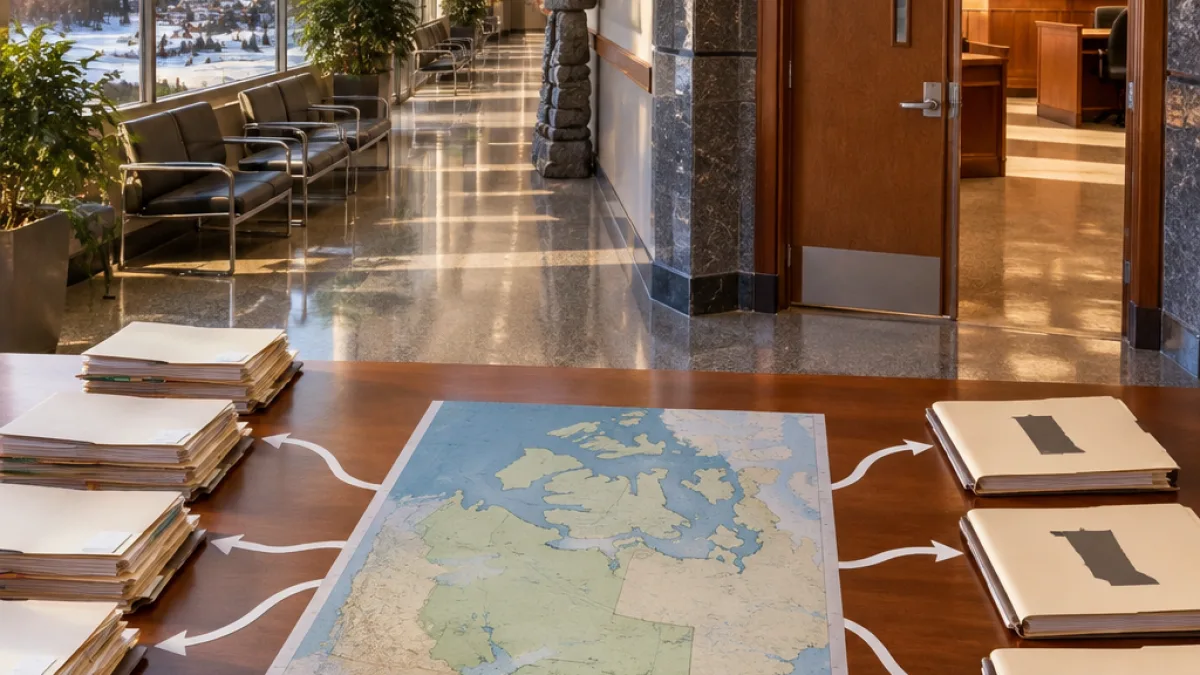
A national proceeding would have offered a single route for people across Canada to take part. Instead, related cases are continuing through provincial courts, where proceedings are developing separately and may produce different approaches to the same broad issue.
A national case would have included every jurisdiction
David Sterns, a partner at Sotos LLP who is involved in the litigation, said the federal route would have made it easier for people in all provinces and territories to be covered by one proceeding. The absence of a current case in the N.W.T. is particularly significant for potential claimants here, he said.
“It would have been convenient to proceed in the federal court because it would have provided coverage.”
Sterns said that does not prevent a lawsuit from being started in the territory. But at present, there is no N.W.T. case among the proceedings he identified. Litigation is underway in Ontario, Quebec, British Columbia, Manitoba, Alberta and Saskatchewan, with each province following its own legal path.
How the case reached the Supreme Court
The proposed national action had previously cleared an important procedural hurdle. On June 20, 2022, the Federal Court certified the lawsuit, allowing it to move forward as a class proceeding rather than requiring every affected person to bring an individual claim.
That decision was later overturned by the Federal Court of Appeal. The appeal court’s concern, as described in the source material, was that much of the documentation and information relevant to the allegations would be held not by the federal government, but by the provinces, territories and child-welfare agencies that made the placement decisions.
The Supreme Court’s refusal to certify the proposed national action means the litigation will not proceed through that single federal framework. It does not, however, resolve the underlying allegations or end the cases already before provincial courts.
What the decision means in the N.W.T.
For people in the territory who believe they were affected, the immediate practical result is uncertainty about where and how a claim could be brought. The cases outside the N.W.T. remain active, but their reach is tied to the courts and legal structures in those provinces.
The issue is also complicated by the number of institutions involved. The lawsuit concerns federal responsibility, but the placement decisions and related records may be held by different governments and agencies. That division of responsibility was central to the appeal that overturned certification of the national case.
- There is currently no related case in the N.W.T.
- Proceedings continue in six provinces named by the lawyer involved in the litigation.
- The cases may proceed differently because each province is taking its own approach.
- Further court guidance could eventually contribute to a case being brought in the territory.
Further guidance may shape the next step
Sterns said the differing provincial proceedings could eventually prompt the Supreme Court to provide guidance. That guidance could help establish how the claims should be handled and may lead to a future case in the Northwest Territories.
He also argued that the experiences described in the litigation have been broadly similar across jurisdictions. In his view, that consistency is one reason a national class action was being pursued in the first place.
“From what we’ve seen, virtually all of the Indigenous youth have been subject to similar treatment in each of the jurisdictions.”
| Development | Date or status |
|---|---|
| Period covered by the proposed claim | 1992 to 2019 |
| Federal Court certification | June 20, 2022 |
| Related provincial proceedings | Ontario, Quebec, British Columbia, Manitoba, Alberta and Saskatchewan |
| N.W.T. proceeding | No current case identified |
The ruling therefore changes the route, rather than closing the broader legal dispute. Indigenous people in the N.W.T. who may identify with the allegations do not receive an immediate benefit from the provincial cases, while lawyers and courts continue to work through questions of responsibility, evidence and jurisdiction.
For now, the territory remains outside the list of jurisdictions with an identified proceeding. Whether that changes will depend on future litigation, the direction emerging from cases elsewhere and any guidance from the Supreme Court. The Millennial Scoop issue remains before the courts, but the national vehicle that could have brought claimants together will not be the path forward.