A familiar idea with a different route
An Alberta energy company is putting forward a new plan to move natural gas through the Northwest Territories, reviving a concept that has repeatedly fallen short in the Mackenzie Valley. Northern Dancer Energy is proposing the Rising Sun Corridor, a large-scale pipeline and liquefied natural gas project that remains in its early stages and is still seeking essential partners.
The proposal echoes earlier efforts to build a Mackenzie Valley pipeline, including initiatives pursued in the 1970s and early 2000s. Those attempts ultimately collapsed, with the most recent effort ending as recently as 2017. Northern Dancer Energy says its current concept differs from those earlier projects, in part because it would carry gas northward rather than send Mackenzie Delta production south to Alberta.
Barry Tunzelmann, the company’s chief executive officer, said the political moment may be more favourable because of renewed federal attention to the North. He described the project as an opportunity that could extend across generations.
“There’s been a lot of talk about opening up the North,” Tunzelmann said.
That argument places the proposal within a broader debate over northern infrastructure, resource development and economic independence. But the company’s optimism is being tested by the project’s enormous cost, its unresolved ownership structure and the practical challenge of building a major export system in a remote and environmentally sensitive region.
A $35-billion proposal
Northern Dancer Energy is currently estimating the capital cost at between $33 billion and $35 billion. The proposed system would consist of a 1,430-kilometre high-pressure pipeline carrying dry natural gas underground from Zama City, Alta., north through the territory.
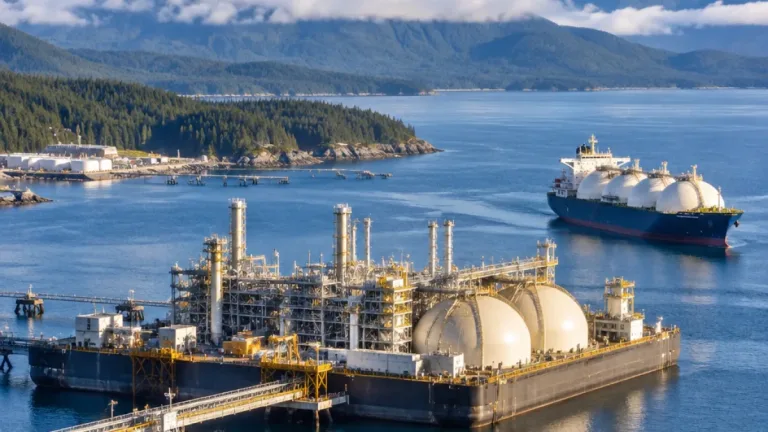
The line would continue to Richards Island, where the company proposes to build an LNG terminal on the Beaufort Sea. The facility would be supplied by gas travelling through the pipeline and would be designed to support exports of 10 million tonnes of LNG each year, according to the company’s proposal.
| Element | Current proposal |
|---|---|
| Route | From Zama City, Alta., through the N.W.T. to Richards Island |
| Pipeline length | 1,430 kilometres |
| Estimated capital cost | $33 billion to $35 billion |
| Proposed export volume | 10 million tonnes of LNG per year |
| Construction target | 2029 |
Northern Dancer Energy estimates annual earnings before interest, taxes, depreciation and amortization of US$5.5 billion from LNG exports. Those figures are projections from the company, not an approved public return or a guaranteed economic outcome.
Ownership remains unsettled
The company is proposing to divide the project into three ownership portions. Northern Dancer Energy would retain one-third, while another third would go to a pipeline operator and the final third would be held by an Indigenous owners group from the Northwest Territories.
Neither the pipeline operator nor the Indigenous ownership group has been finalized. That leaves important questions unanswered about who would finance, govern and ultimately benefit from the infrastructure if it moved beyond the proposal stage.
The proposed Indigenous stake is significant because a project of this scale would cross northern lands and affect communities and regions along the corridor. The source material does not identify the participating Indigenous governments or organizations, and no final ownership agreement has been announced.
Support is not guaranteed
The Dehcho grand chief has indicated that discussions remain possible, but also sees advantages and disadvantages in the proposal. That position reflects the competing pressures surrounding major resource projects in the territory: the possibility of jobs, investment and long-term revenue on one side, and concerns about environmental effects, land use and local control on the other.
An energy analyst cited in the source material said the project would face a difficult commercial case, particularly while LNG infrastructure already exists on Canada’s West Coast. That comparison is central to the proposal’s prospects. Building a new northern route would require investors to accept the cost and logistical risks of a remote project while competing with established export arrangements elsewhere in the country.
The company’s proposed northern destination would also bring the project into the Beaufort Sea region, adding marine and Arctic considerations to an already lengthy overland route. The plan’s scale means that construction, operation and export would involve more than the pipeline itself, including the proposed terminal and the arrangements needed to move LNG into international markets.
Early stage, long road ahead
Northern Dancer Energy is aiming to begin construction in 2029, but that target is not the same as a construction approval. The proposal is still being assembled, key partners have not been secured and ownership remains incomplete. The company has not yet demonstrated that the project has cleared the commercial, regulatory or regional hurdles that ended earlier Mackenzie Valley pipeline efforts.
For the territory, the proposal is therefore both potentially transformative and highly uncertain. It places the Mackenzie Valley back in a familiar national conversation about energy corridors, but with a different direction of travel and a proposed export outlet on the Arctic coast.
The next test will be whether Northern Dancer Energy can turn its concept into a partnership that includes an operator, Indigenous owners and the financing required for a multibillion-dollar project. Until those pieces are in place, the Rising Sun Corridor remains an ambitious proposal rather than a project under construction.