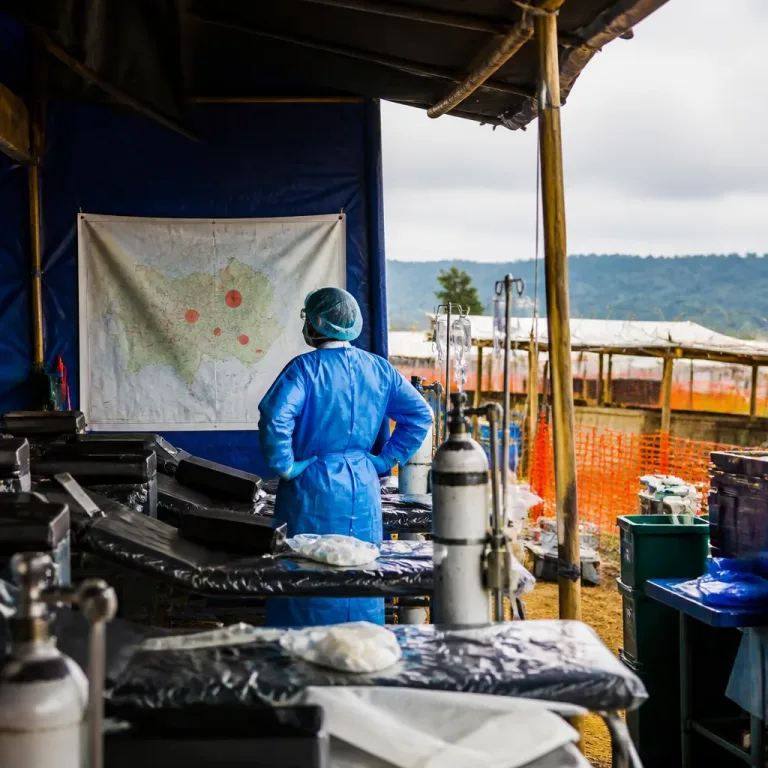
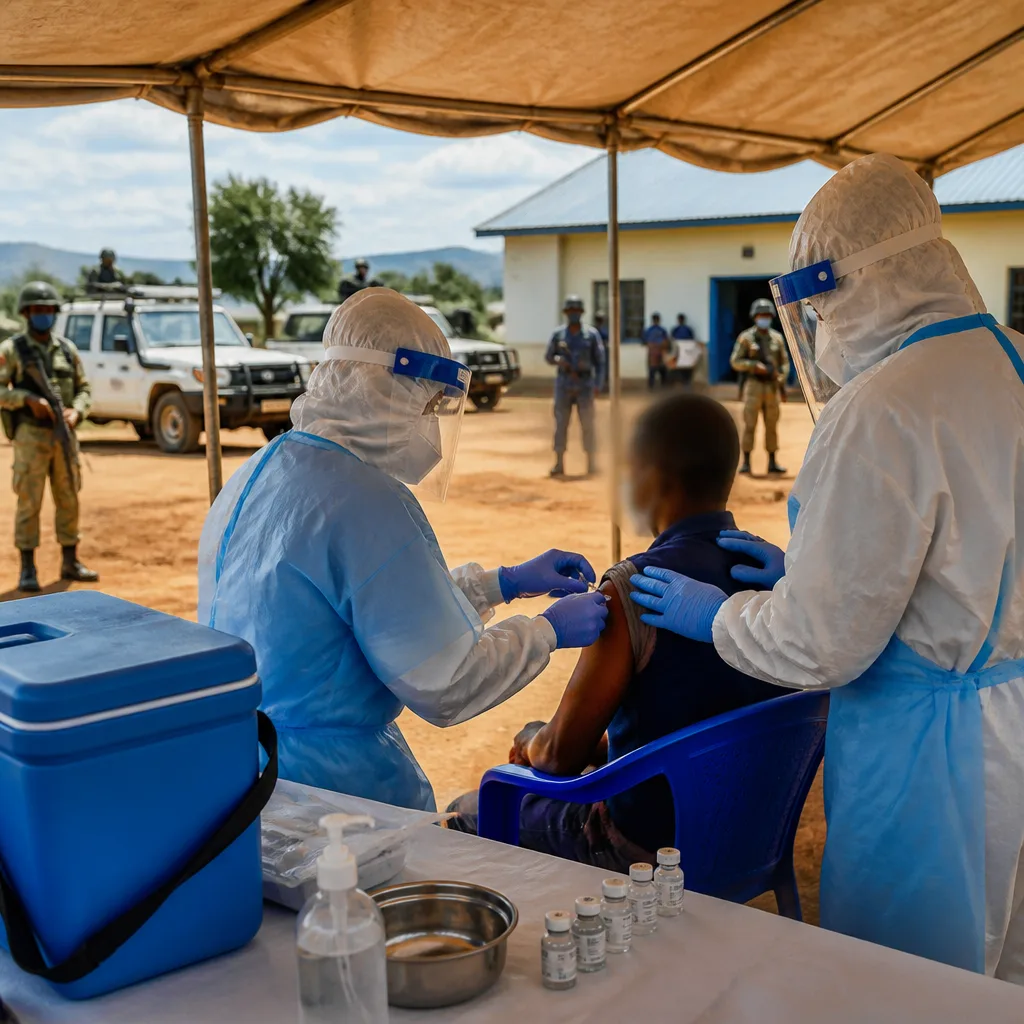
BUNIA, Democratic Republic of Congo — Health authorities on Saturday started vaccinating frontline health and response personnel against Ebola in Bunia, the epicentre of the country’s most rapidly expanding outbreak on record.
Protecting workers where transmission is highest
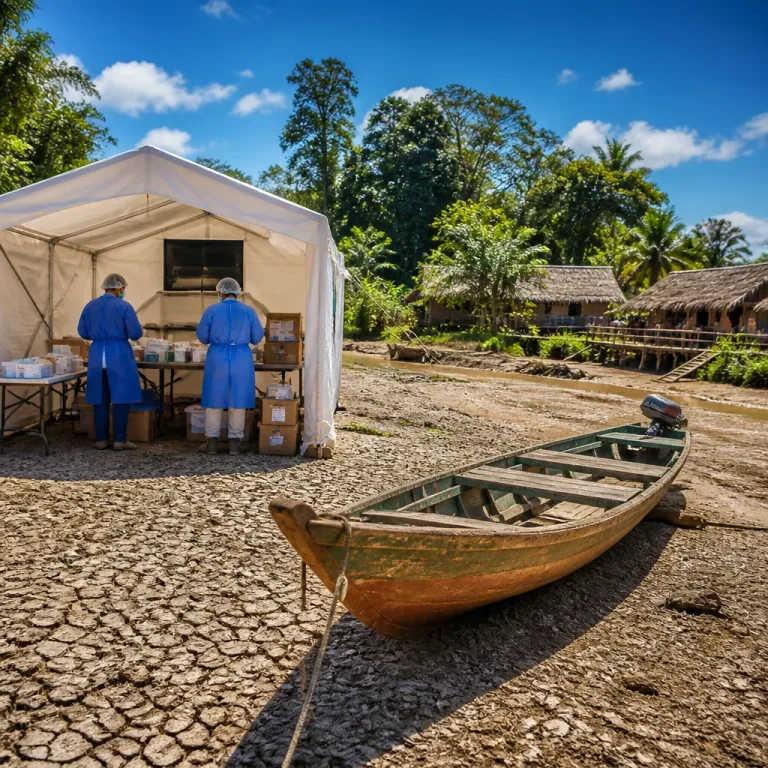
The initial drive focuses on staff and other front‑line responders in the Bunia and Mongbwalu zones of Ituri province — among the areas hardest hit by this outbreak. Officials said the campaign will prioritise those most exposed through direct involvement in clinical care, case investigation and burials.
Authorities are using the Ervebo vaccine, which was shown to be effective in earlier outbreaks caused by a different and more common Ebola species. Clinical studies are still under way to evaluate and develop a licensed vaccine specifically against the current strain, identified as the Bundibugyo virus, for which no approved vaccine or treatment exists.
“Our collective duty is to protect life. Launching this vaccination drive for front‑line staff in Ituri is not an arbitrary choice, as these workers are particularly exposed and deeply involved in the response,”
said Maj. Gen. Gaby Kasongo Mulumba, the military governor of Ituri.
Scale and timeline of the campaign
Health officials said the campaign in Ituri and neighbouring North Kivu province is planned to reach 20,000 front‑line workers over a period of approximately six to nine months. The drive aims to reduce occupational risk among the workforce essential to outbreak control and to preserve strained health services.
| Metric | Figure |
|---|---|
| Confirmed cases | 7,541 |
| Deaths | 3,639 |
| Recovered | 1,823 |
Context: an outbreak unfolding under severe strain
Government figures show the outbreak has so far produced 7,541 confirmed infections with 3,639 deaths and 1,823 recoveries. Health officials and international observers warn that the epidemic is spreading under exceptionally difficult conditions that complicate every aspect of response.
Factors cited by authorities and the World Health Organization include ongoing insecurity, large population movements, displacement of communities and a strike by health workers, all of which hamper surveillance, contact tracing and treatment efforts. The WHO has described the outbreak as out of control and said it may surpass the scale of the 2014–2016 West Africa epidemic, the region’s deadliest recent crisis.
- Vaccine limits: The Ervebo product being used was developed against a different Ebola species; it is not licensed for the Bundibugyo virus.
- Operational challenges: Security and workforce shortages complicate safe delivery of care and vaccines.
- Priority groups: Front‑line health and response workers are the first to be offered vaccination to protect both personnel and the functioning of the response.
At a health facility in Bunia, at least one clinician who spoke with visiting reporters described the vaccine as helpful and noted that many workers felt they had little choice but to accept immunisation, given their exposure. Some staff had previously received an earlier Ebola vaccine used in past outbreaks.
Implications for the regional and global response
Vaccinating health workers is a critical step to limit nosocomial spread — transmission that occurs in health‑care settings — and to preserve the workforce needed for case management, contact follow‑up and safe burials. But experts caution that vaccinating responders alone will not halt transmission without parallel measures: community engagement, secure access to affected areas, rapid detection and isolation of cases, and sustained support for local health services.
The current outbreak’s scale and severity underscore gaps in preparedness for less common Ebola species for which licensed countermeasures do not yet exist. The prioritisation of front‑line staff recognises both their vulnerability and their central role in controlling further spread.
International agencies and donor governments continue to monitor the situation closely while supporting Congolese authorities’ efforts to expand vaccination coverage and strengthen containment operations amid a challenging security and humanitarian environment.