
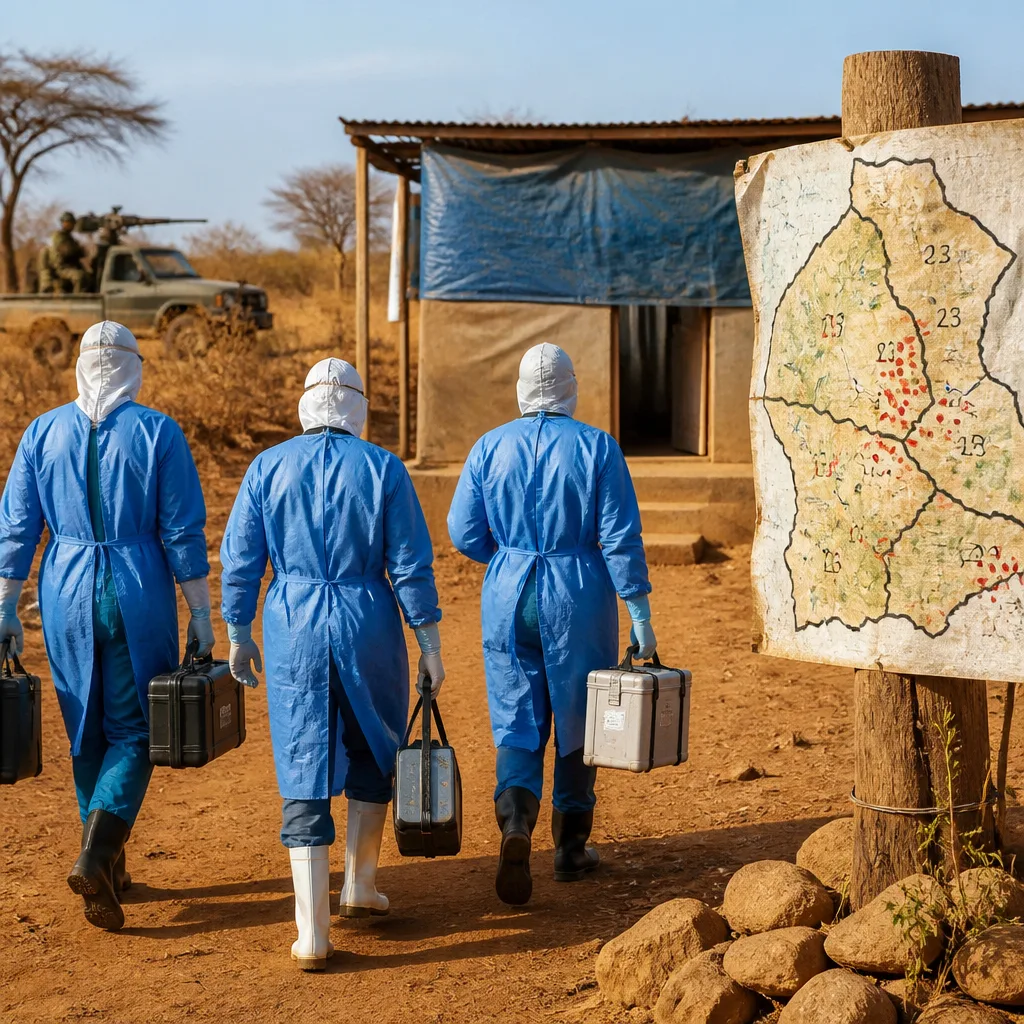
GENEVA — The World Health Organization says the Ebola outbreak in eastern Democratic Republic of Congo is advancing so rapidly it is “on track to eclipse the West African Ebola outbreak of 2014 to 2016,” a comparison that underlines both the scale and urgency of the current crisis.
Scale and timeline
WHO officials reported that the outbreak has produced more than 4,300 cases and has killed over 2,000 people. Although the situation was officially declared on May 15, genetic sequencing indicates transmission began months earlier, in February.
The outbreak is occurring in a remote and conflict‑affected part of eastern Congo, near the borders with South Sudan, Uganda and Rwanda, a location that has complicated case finding and response efforts.
Unusual virus, limited countermeasures
Unlike many previous Ebola events, this outbreak is caused by the rare Bundibugyo virus. WHO notes there are currently no approved vaccines or specific treatments for that strain, though work to identify and deploy countermeasures is under way.
| Reported data | Figure |
|---|---|
| Cases | More than 4,300 |
| Deaths | Over 2,000 |
| Outbreak declaration | May 15 (sequencing indicates start in February) |
Operational challenges
WHO officials described multiple barriers hampering the response:
- Active conflict and insecurity in the affected region limiting access for response teams.
- Poor infrastructure and under‑resourced health centres struggling to manage caseloads.
- Strikes by some health workers over unpaid pay, undermining local capacity.
- Misinformation and community mistrust that keep some people away from clinics.
"At its current pace, it’s on track to eclipse the West African Ebola outbreak of 2014 to 2016," WHO Director‑General Tedros Adhanom Ghebreyesus said.
WHO’s director for health emergency alert and response operations, Dr. Abdirahman Mahamud, told reporters the agency expects the outbreak to reach a peak in about six months under a “moderate scenario.” He added there is an alternative timeline in which the outbreak could persist for nine to 12 months.
Why communities are hard to reach
WHO emphasised that most new cases and deaths are occurring in communities that are currently difficult for health workers to access. Poor roads, limited local health infrastructure and active hostilities contribute to delays in case detection, contact tracing and safe patient care.
Public‑health officials also point to social factors that impede control measures. In areas where people are wary of outsiders, misinformation about the virus circulates more readily and discourages some residents from seeking care or cooperating with response teams.
Implications and next steps
The comparison with the 2014–2016 West Africa epidemic — which resulted in more than 11,000 deaths — reflects concern not only about raw case numbers but about the speed of spread and the limits of current medical countermeasures for this strain. WHO and partners are scaling up surveillance, laboratory sequencing, community engagement and efforts to develop treatments and vaccines targeted at Bundibugyo, but officials warned that the outbreak had a substantial head start.
The evolving situation will continue to test international response systems. For now, WHO’s public statements underscore the need for rapid access to affected communities, sustained funding and local support to interrupt transmission and reduce fatalities.
Reporting for this story is based on WHO comments and Associated Press dispatches from Geneva.















