OTTAWA — Canada’s minister responsible for artificial intelligence says he has raised the creation of an international oversight body with G7 partners to evaluate AI systems for safety before they are released.
Speaking after the All‑In 2026 conference in Montreal, Minister of Artificial Intelligence and Digital Innovation Evan Solomon said he discussed the proposal with counterparts at the G7 and touched on the matter with other G20 countries. The move mirrors public calls by senior Canadian figures for an international mechanism to manage risks from advanced AI models.
What the minister proposed
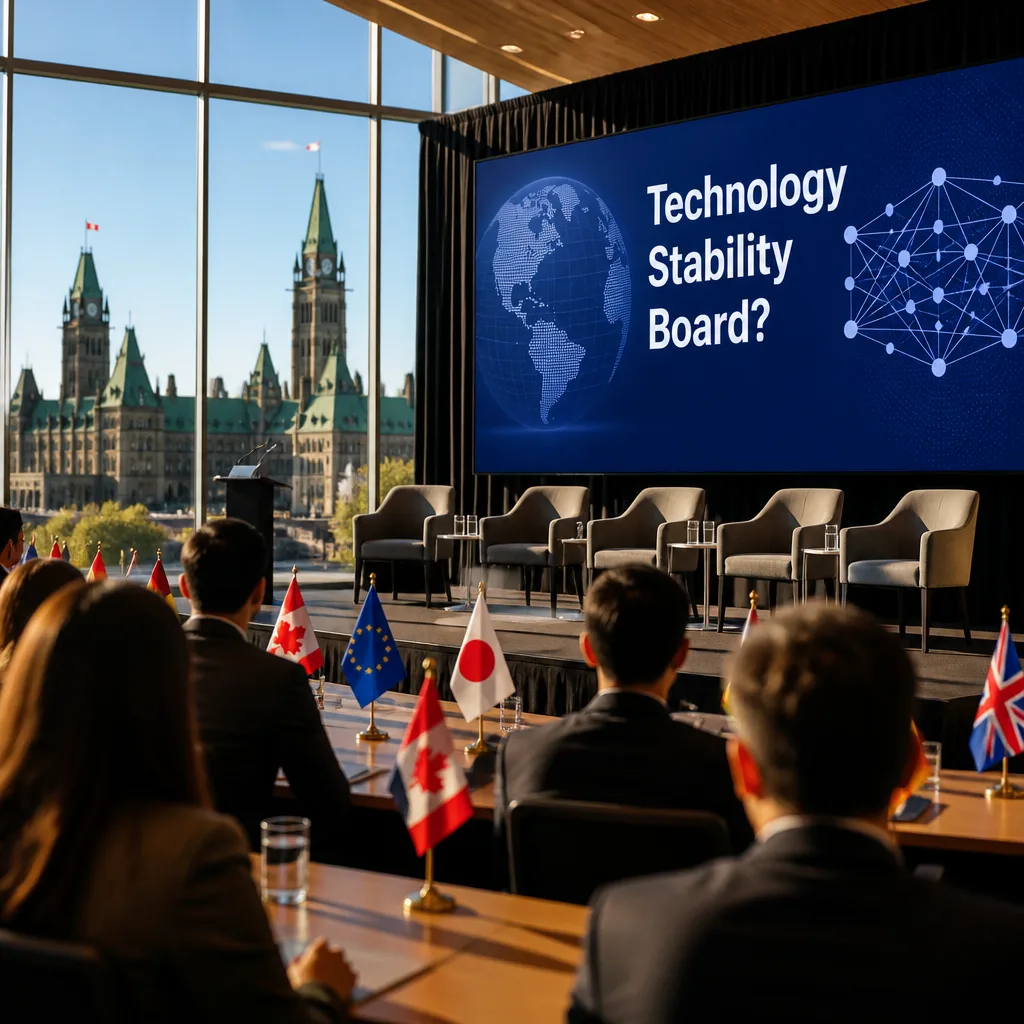
Solomon described the initiative as the establishment of an international “technology stability board” that would carry out model evaluations and testing before AI systems are deployed. The proposal seeks to create a central forum for assessing risk and co‑ordinating responses across jurisdictions.
“He spoke with counterparts at the G7 today about establishing an international ‘technology stability board,’”
The minister’s comments follow recent public warnings about AI risks and earlier suggestions from senior Canadian policymakers. Former Bank of Canada governor and current prime minister, Mark Carney, has previously said a global body similar to the Financial Stability Board would be sensible for technology.
International traction and context
Solomon said the safety of AI is a key government priority and confirmed that conversations extended beyond the G7, noting discussions with G20 partners. While he did not provide a timetable or design details for the proposed body, the announcement signals Ottawa’s interest in pushing for international co‑operation on AI governance.
- Scope: Evaluate AI models for safety and testing before release.
- Forum: Initial discussions held with G7; outreach to G20 also under way.
- Rationale: Respond to growing global warnings about AI risks and harmonize cross‑border oversight.
The idea of a multilateral body echoes calls from policymakers and experts who argue that national rules alone will be insufficient to manage the rapid development of powerful AI systems. A centralised assessment mechanism could help set shared standards and coordinate regulatory responses, proponents say.
Implications for Canada and allies
An international testing and oversight mechanism could affect several areas of policy and industry practice:
- How AI companies conduct pre‑release testing and certification.
- Cross‑border co‑operation on incident response and harm mitigation.
- Standard‑setting that influences domestic regulation and procurement policies.
For Ottawa, pushing the idea at the G7 level seeks to build a coalition of like‑minded democracies that could set minimum expectations and technical standards. For industry, such a board could mean additional compliance steps ahead of product launches; for civil society, it may offer a clearer route to hold companies and governments to account.
| Actor | Role described |
|---|---|
| Canada (Minister Evan Solomon) | Proposed discussions to create an international technology stability board |
| G7 | Forum where Solomon raised the proposal |
| G20 | Additional partners Solomon said he spoke with about AI safety |
The available reporting does not yet include the board’s mandate, membership rules, governance structure, or funding model — all of which will be crucial if discussions advance. Officials in Ottawa and abroad will need to resolve how such a body would interact with existing national regulators and international organisations.
As governments weigh tighter rules and new institutions, the practical details will determine whether a technology stability board could be a meaningful safety mechanism or simply a forum for diplomacy. Canada’s move to propose the concept at the G7 level marks a step toward that debate, signalling that Ottawa wants to help shape global norms for the next generation of AI systems.