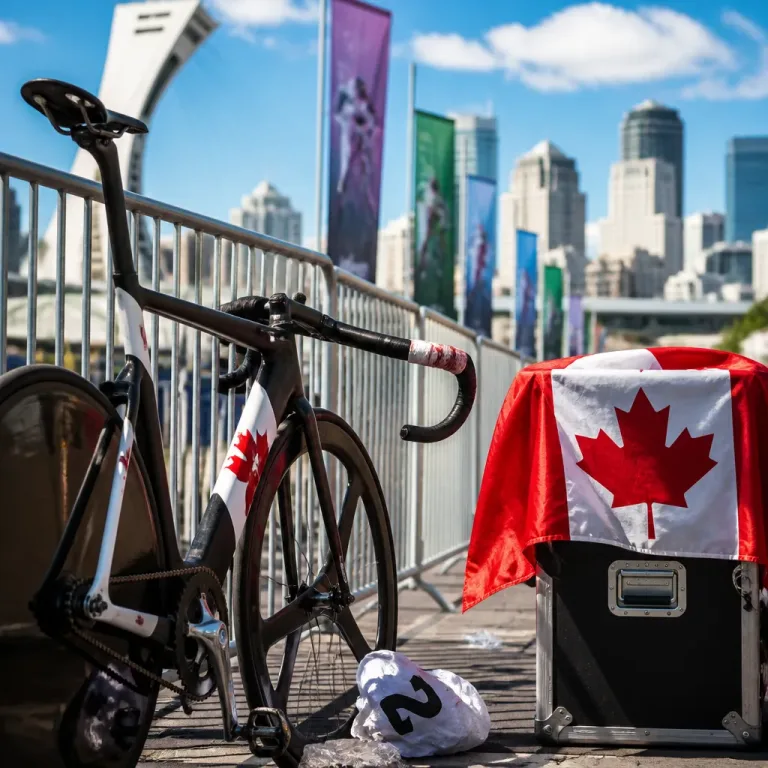
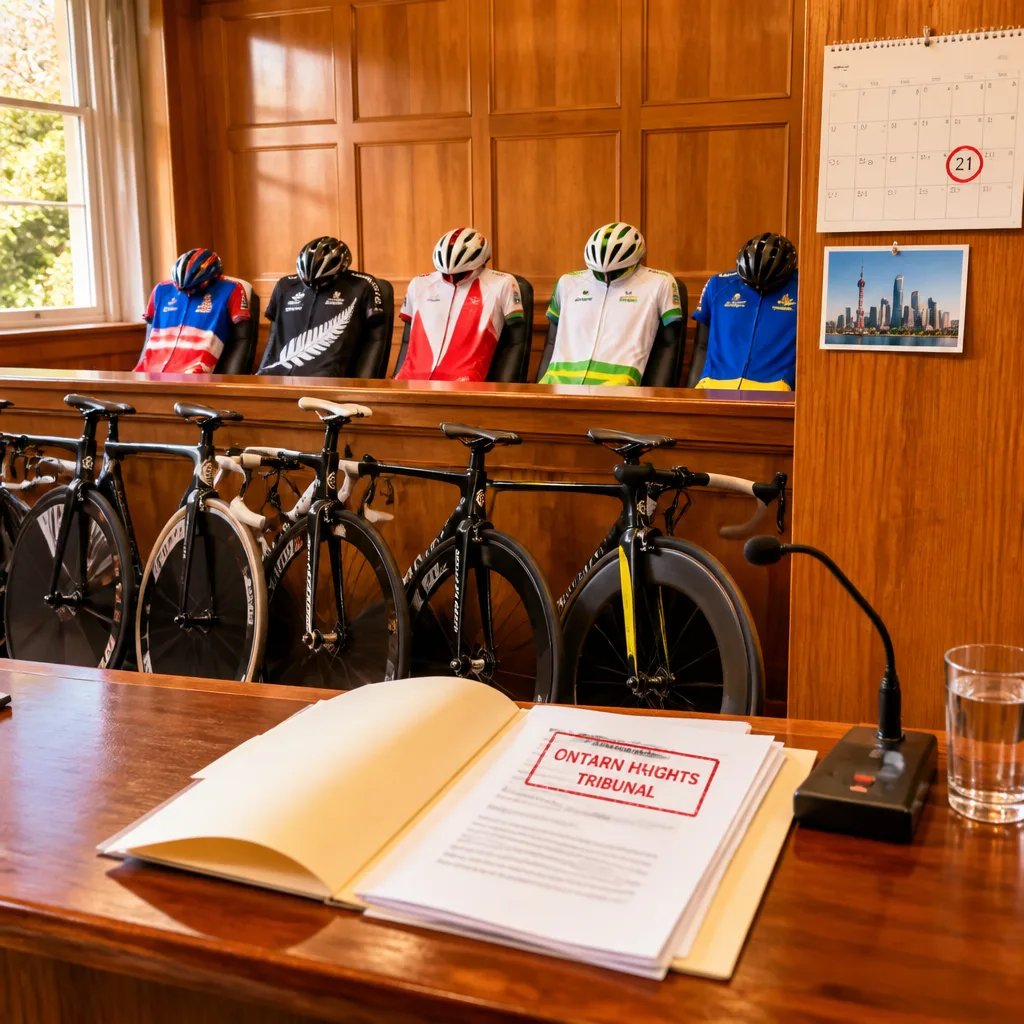
Five Canadian track cyclists have applied to the Ontario Human Rights Tribunal seeking an interim order to compel Cycling Canada to register a women’s team pursuit at next month’s world championships in Shanghai — the first qualifying opportunity for the 2028 Olympic Games.
Athletes seek immediate intervention ahead of registration deadline
The cyclists — Fiona Majendie, Skyler Goudswaard, Jenna Nestman, Lily Plante and Justine Thomas — say they face an irreversible loss of ranking points and a disruption to their development path if a team is not entered for the Oct. 2026 championship. The deadline to register teams is Sept. 21, leaving a narrow window for the tribunal to act.
“[They] will permanently lose the ranking points available at the first Olympic qualifying event and a critical component of the training, competition and development pathway necessary to pursue qualification for the 2028 Olympic Games.”
The athletes are not asking the tribunal to select individual riders or set a team line-up; rather, their application requests that the federation be required to enter a Canadian women’s pursuit squad so the team can compete and earn qualification points.
Federation cites performance analysis and limited resources
Cycling Canada has signalled it will field a men’s team pursuit in Shanghai but has moved the women’s pursuit program to a development model rather than maintaining it as a high-performance team. The federation told athletes that, based on performance analysis, the men are closer to achieving a world top-six ranking — the metric used to assess Olympic qualification prospects — and noted budget constraints as a factor in its decision-making.
The athletes previously appealed the decision to the Sport Dispute Resolution Centre of Canada (SDRCC). On Aug. 10, arbitrator Carol Roberts dismissed their appeal, finding Cycling Canada’s choice was neither unreasonable nor inequitable and aligned with the federation’s published criteria and objectives.
In May, Cycling Canada chief executive officer Mathieu Boucher indicated the federation would consider pursuing qualification for Los Angeles in 2028 for the women’s pursuit if exceptional talent emerged and sufficient evidence of competitiveness could be demonstrated, saying the organisation would seek funds to support such a bid. Yet internal correspondence from Boucher and national coach Phil Abbott later told athletes that qualification for L.A. was unlikely for the women’s pursuit team and that the federation would pivot toward development.
What’s at stake and potential consequences
If the tribunal grants the interim order, Cycling Canada would be required to register a women’s team for the Shanghai worlds before the Sept. 21 deadline. That would preserve athletes’ opportunity to earn early Olympic qualification points and to compete in the high-performance environment needed for development toward Paris 2024 and Los Angeles 2028.
- Athletes involved: Fiona Majendie, Skyler Goudswaard, Jenna Nestman, Lily Plante, Justine Thomas
- Key action sought: Interim order requiring Cycling Canada to enter a women’s team pursuit in Shanghai
- Registration deadline: Sept. 21
| Event | Date / Deadline |
|---|---|
| UCI Track Cycling World Championships (Shanghai) | October 2026 (first Olympic qualifier) |
| Team registration deadline | Sept. 21, 2026 |
The dispute puts a spotlight on how national sporting bodies balance performance targets, gender equity and finite resources. For athletes, exclusion from a qualifying event can have cascading effects: missing ranking points can alter the trajectory of selection, scholarship or funding decisions and reduce access to high-level competition necessary for athlete development.
The SD R C C’s prior ruling in August underscores the tension between an organisation’s published objectives and athletes’ expectations of equitable access to qualification opportunities. The tribunal application now raises novel legal questions about whether the federation’s duty to its athletes includes entry to specific events when funding and performance metrics are cited as reasons to limit participation.
At stake are more than immediate competitive opportunities. The outcome could influence how other national sports organisations structure development pathways, allocate limited budgets, and justify prioritization between men’s and women’s programs as nations prepare for the next Olympic cycle.
As the tribunal considers whether to grant interim relief, Canadian cycling stakeholders, athletes and policy-makers will be watching closely. A decision before the Sept. 21 registration cutoff would determine whether the women’s pursuit squad can compete in Shanghai and preserve their chance to pursue Olympic qualification in the crucial opening event of the 2028 cycle.