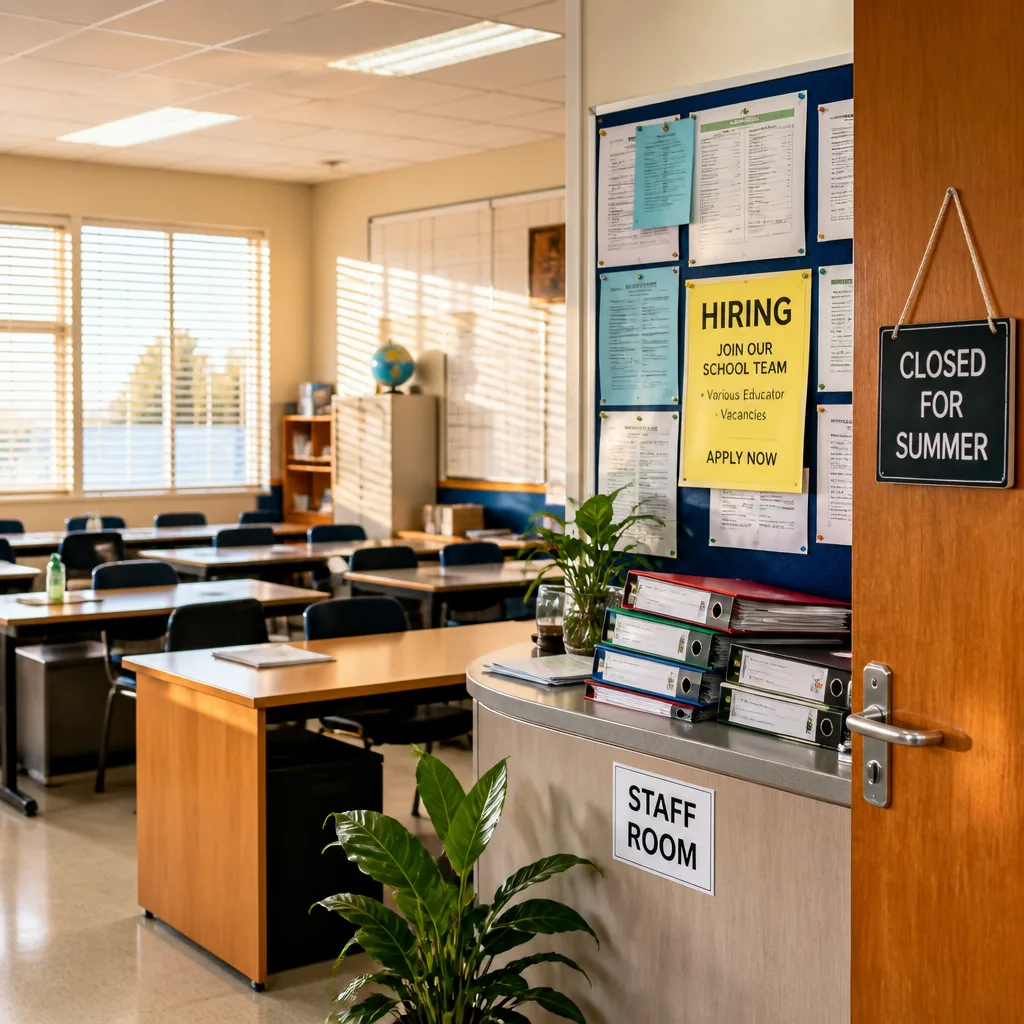
The latest employment data from the US Bureau of Labor Statistics (BLS) show that public K–12 schools lost jobs over the summer, with preliminary figures pointing to the first year‑on‑year decline in total school employees since the pandemic.
What the numbers show
According to the BLS report, seasonally adjusted payrolls for K–12 schools fell by 50,000 from June to July. May figures were also revised downward by 47,000. When examined without seasonal adjustment — a useful perspective given the large, predictable summer turnover in school staffing — public school employment in July was roughly 29,000 lower than at the same point in 2025, a drop of about 0.4%.
“These represent the first year‑over‑year declines that we’ve seen since the pandemic,”
The BLS cautions the figures are preliminary and subject to revision. Seasonal patterns typically see about 1 million school employees come off payrolls each summer, only to be rehired when the school year resumes. The current decline, while small in percentage terms, signals a departure from recent post‑pandemic growth trends.
Why this matters for classrooms and learners
School districts generally make staffing changes at the margins: part‑time hours are trimmed, support roles are reduced or positions are left vacant rather than immediately cutting full‑time posts. That means initial impacts often show up among education support staff — such as classroom assistants, bus drivers and food‑service workers — before affecting teachers. Yet even modest contractions in total employment can translate into larger operational pressures in busy schools:
- Fewer support staff can increase non‑instructional burdens on teachers and school leaders, taking time away from teaching and learner support.
- Reduced hours or vacancies in specialist roles (therapists, counsellors, literacy coaches) can impair interventions for vulnerable learners.
- Local recruitment challenges may be exacerbated if districts defer hiring or rely on temporary appointments, potentially affecting continuity for learners.
For South African readers, the US trend is a reminder that staff shortages and budgetary constraints can quickly ripple into classroom experiences. Where provincial education departments or schools face tight budgets, the pattern of trimming part‑time or support roles first is familiar.
Data at a glance
| Measure | Figure |
|---|---|
| June–July seasonally adjusted change | −50,000 |
| May revision (downward) | −47,000 |
| Year‑on‑year non‑seasonally adjusted change (July) | −29,000 (≈ 0.4%) |
| Typical summer off‑payroll pattern | ~1,000,000 employees |
Context and consequences
After several years of payroll growth following the COVID‑19 shock, the new data interrupt that trajectory. The modest scale of the decline should not be overstated numerically, but it is significant in signalling the potential start of a downward trend. If districts face sustained fiscal pressure or choose to reshape staffing models, the cumulative effect over successive hiring cycles could be more pronounced.
Policymakers and education managers monitoring staffing levels will want to see subsequent BLS revisions and fall rehiring figures to judge whether this is a temporary summer dip or the beginning of a larger contraction. For schools and unions, the priorities remain protecting teacher presence in classrooms, safeguarding essential support roles for learners with additional needs, and ensuring rehiring processes preserve continuity.
For educators and parents, the lesson is practical: even small shifts in employment totals can alter how work is divided in a school, affecting time for teaching, assessment and learner support. In planning and advocacy, emphasising the link between staffing stability and learning outcomes will help keep learners at the centre of discussions about budgets and workforce strategy.